This week, three developments from across the globe deserve the close attention of anyone working in Hyderabad's technology and business sectors: Anthropic's impending public listing and its candid warning about artificial intelligence risk, the unfolding electoral cycles in two geopolitically consequential democracies, and the instructive story of how Brazil's digital mobilisation reshaped a national election. Taken together, they sketch a world in which technology, democratic accountability, and capital markets are becoming ever more tightly — and sometimes uncomfortably — intertwined.
Anthropic's IPO: The AI Industry Confronts Its Own Conscience
Anthropic, the San Francisco-based AI safety company and maker of the Claude family of large language models, is preparing to become what analysts are calling the first pure-play artificial intelligence company to list publicly on a major stock exchange. The listing is expected to generate a valuation that places it among the most capitalised technology firms in the world. Yet what is striking — and genuinely rare in the history of technology IPOs — is that the company itself has chosen to lead its public communications with a frank warning: unchecked AI development poses a catastrophic risk to humankind.
This is not merely a regulatory boilerplate disclaimer buried in a prospectus. It reflects a genuine philosophical tension at the heart of the AI industry. Anthropic was founded partly as a corrective response to what its founders saw as insufficiently cautious development practices elsewhere in the sector. That a company holding this position is now seeking billions of dollars from public markets raises a legitimate question: does the pressure of quarterly earnings and shareholder returns ultimately bend even the most safety-conscious organisations toward faster, less careful deployment?
For Hyderabad's IT professionals, the implications are immediate and layered. First, the IPO will likely trigger a fresh wave of institutional capital into AI infrastructure globally — cloud computing, GPU clusters, data annotation, and AI-adjacent software services. Indian IT majors with significant operations in Hyderabad, including Infosys, Tech Mahindra, and Cyient, are already positioning their AI service lines. A publicly listed Anthropic with access to deep capital markets accelerates the competitive pressure on these firms to integrate AI tooling or risk margin erosion.
Second, and more substantively, Anthropic's public warning about catastrophic risk ought to inform the policy conversation that Indian regulators and industry bodies are just beginning to have. A world in which AI development is driven by capital market incentives — rather than safety-first principles — is one in which workers in AI-adjacent roles face the greatest disruption with the least institutional protection.
Two Elections, One Fortnight: The Geopolitical Stakes
Within the next two weeks, voters in Israel and the United States will head to the polls. As BBC diplomatic correspondent James Landale observes, the outcomes will shape both geopolitics and the global economy in ways that extend far beyond those two countries' borders.
The US election, in particular, carries enormous consequence for the global technology sector. The two candidates represent starkly different regulatory philosophies — one more inclined toward antitrust enforcement and worker protection, the other historically friendlier toward consolidated corporate power and deregulation. For India's IT export economy, which remains deeply dollar-denominated and heavily exposed to US client spending and visa policy, the electoral outcome will influence everything from H-1B visa availability to the pace of onshoring mandates that some US legislators have championed.
The Israeli election, meanwhile, occurs against the backdrop of an ongoing regional conflict that has already disrupted energy markets and global shipping lanes. Instability in the Middle East has historically translated into oil price volatility — a variable that affects India's import bill, the rupee's exchange rate, and consequently the operating costs of every business headquartered in Hyderabad. Startup founders managing dollar-denominated expenses and rupee-denominated revenues understand this exposure viscerally.
Neither election offers a clean or comfortable outcome for those who favour stable, rules-based global order. But informed professionals are better served by watching these contests carefully than by treating them as distant noise.
Brazil's WhatsApp Election: A Lesson in Digital Mobilisation
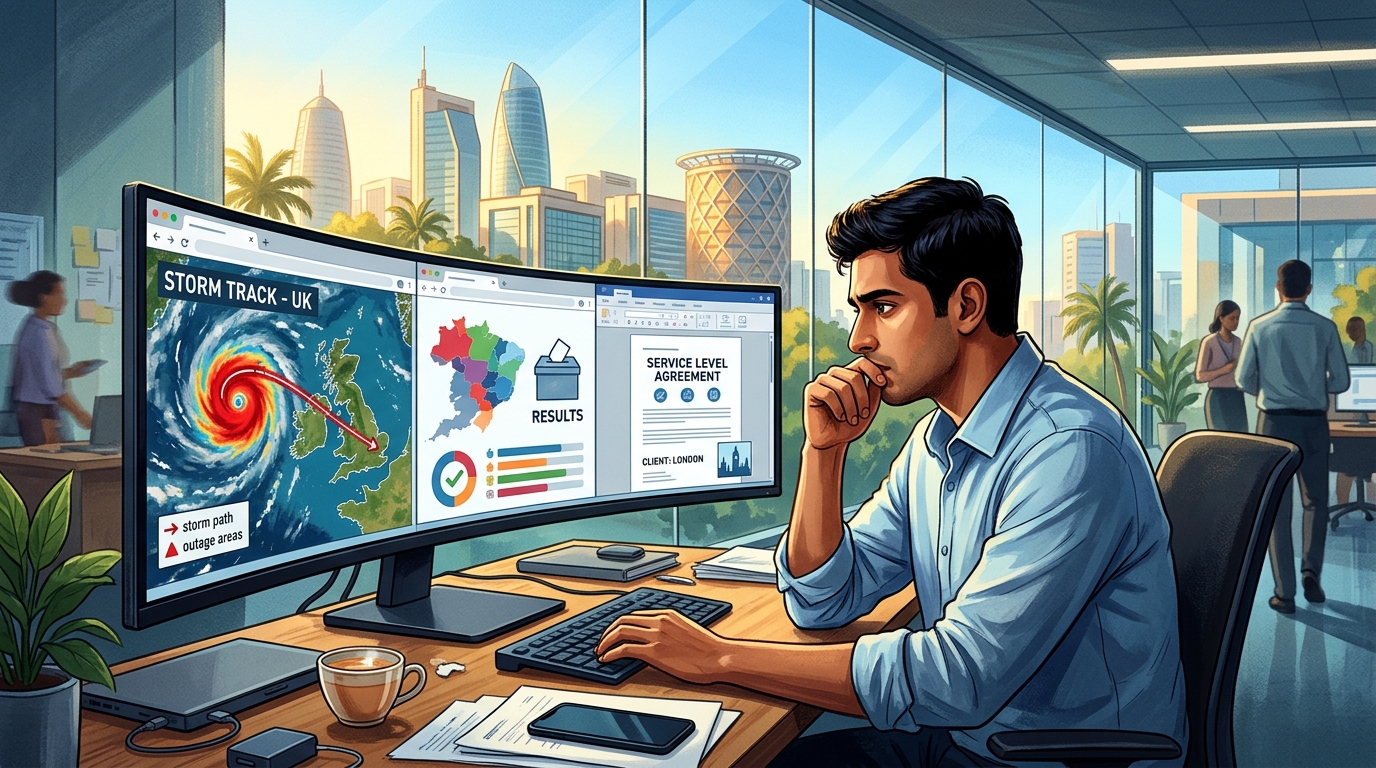
A less-discussed but analytically rich development concerns Brazil's recent electoral cycle, in which a WhatsApp channel called Lula's Army attracted millions of subscribers and helped convert online engagement into tangible, real-world political participation. The channel's success in turning passive digital audiences into active ground-level mobilisers offers a significant case study in platform-driven civic engagement — and its limits.
Brazil and India share structural similarities that make this story relevant beyond mere curiosity. Both are large, multilingual democracies where WhatsApp functions as a primary news distribution channel for hundreds of millions of citizens. Both have experienced the weaponisation of encrypted messaging for disinformation. That a progressive political campaign found a way to use the same infrastructure constructively — for genuine information sharing and community organising — is a finding that civil society groups, journalists, and yes, tech professionals building civic-tech products, should study seriously.
For Hyderabad's startup ecosystem, particularly those working on media-tech, govtech, or social platforms, Brazil's experience is a reminder that platform design shapes political outcomes. This is not a neutral engineering problem. The choices developers and product managers make about algorithmic amplification, group size limits, and content moderation have downstream consequences for democratic health.
What This Means for You
- AI professionals and data scientists: Anthropic's IPO will accelerate capital flows into AI, raising both opportunity and competitive pressure. Upskilling in AI safety, responsible AI frameworks, and interpretability research will become differentiating credentials — not just ethical idealism — as enterprise clients increasingly demand accountability from their AI vendors.
- IT service sector employees: The US election outcome will directly influence client budgets, visa policy, and the pace of offshoring versus onshoring decisions. Build scenario awareness into your career planning over the next quarter.
- Startup founders and investors: Middle East instability and currency volatility are live risks for any venture with dollar exposure. Hedging strategies and diversified client geographies are worth revisiting now, not after the next shock.
- Product and platform builders: Brazil's digital election story is a masterclass in intentional platform design for civic engagement. If your product touches how people receive or share information, you carry a design responsibility that market metrics alone will not capture.
- Everyone: Anthropic's public acknowledgement of catastrophic AI risk is an invitation — to technologists, policymakers, and citizens — to demand that the governance of transformative technology keeps pace with its development. That conversation needs informed voices from Hyderabad's professional community, not just from Silicon Valley.