Two of Western Europe's most consequential economies are under visible strain this week — France from the streets up, and Britain from the skies down. While these events may appear distant from Hyderabad's glass-and-steel tech corridors, the ripple effects on global business sentiment, outsourcing pipelines, and financial markets are real and worth tracking carefully.
France on the Edge: Nearly 1,000 Arrests as Protests Sweep the Country
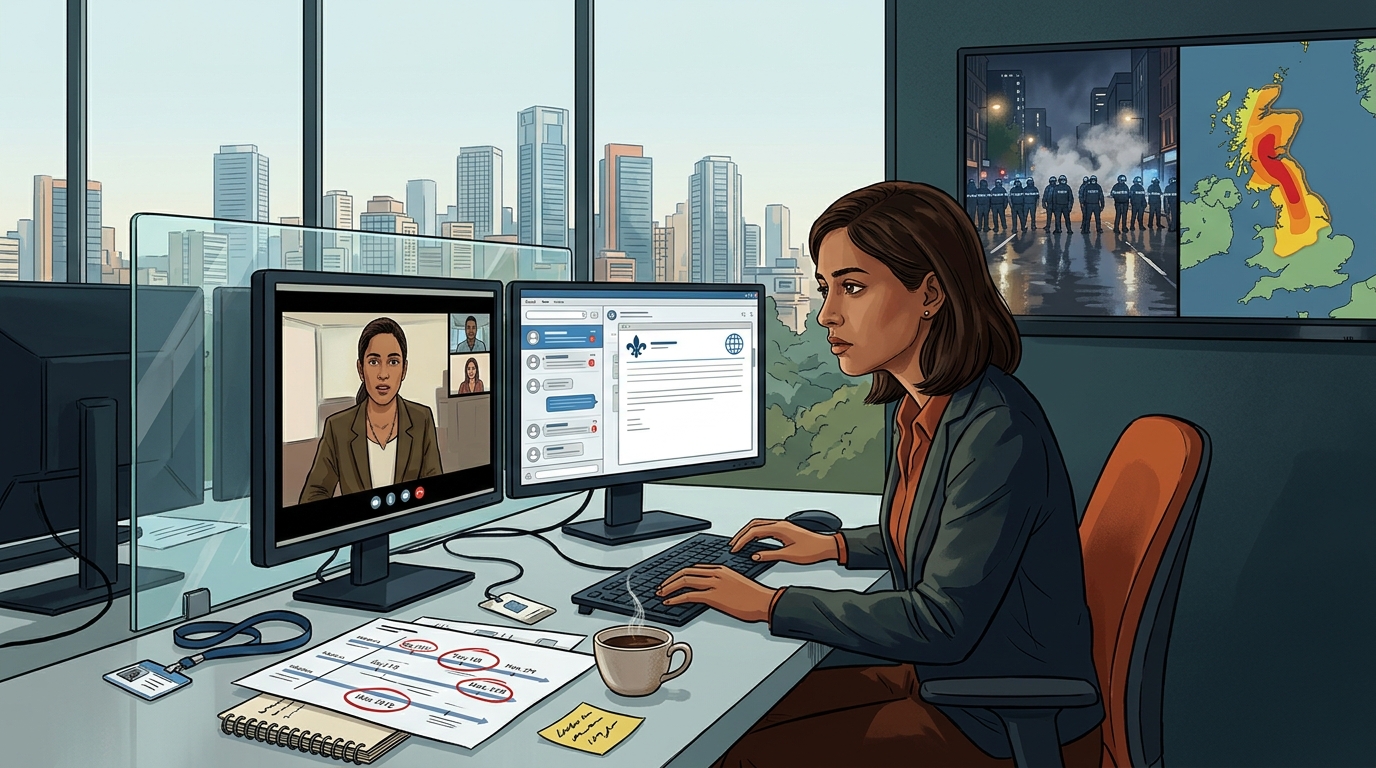
Hundreds of thousands of protesters have taken to the streets across France in what observers are describing as one of the most significant episodes of civil unrest the country has seen in years. While the protests have been largely peaceful during daylight hours, nights have brought clashes with police, with authorities deploying tear gas and making close to 1,000 arrests. Europe correspondent reporting from Paris underscores the tension between a citizenry demanding accountability and a state stretched thin trying to contain it.
France is not a peripheral actor in the global economy. It is home to major technology, luxury, energy, and financial services firms, and is a key node in the European Union's regulatory and economic architecture. When French streets are unstable, boardrooms across Europe hesitate. Investment decisions slow. Contracts get delayed. For Hyderabad-based IT services firms and GCCs (Global Capability Centres) with European delivery mandates or clients headquartered in France — companies like Capgemini, Atos, or Societe Generale's tech arms — prolonged unrest translates into uncertain project timelines and cautious client communication.
More structurally, the French protests reflect a broader European mood: working people are exhausted by austerity, inequality, and the perception that governments serve capital before citizens. This sentiment is reshaping labour policy across the EU, with implications for how European tech companies manage their global workforces, including offshore teams in India.
Storm Boelo Batters Britain: Climate Instability Has Economic Costs
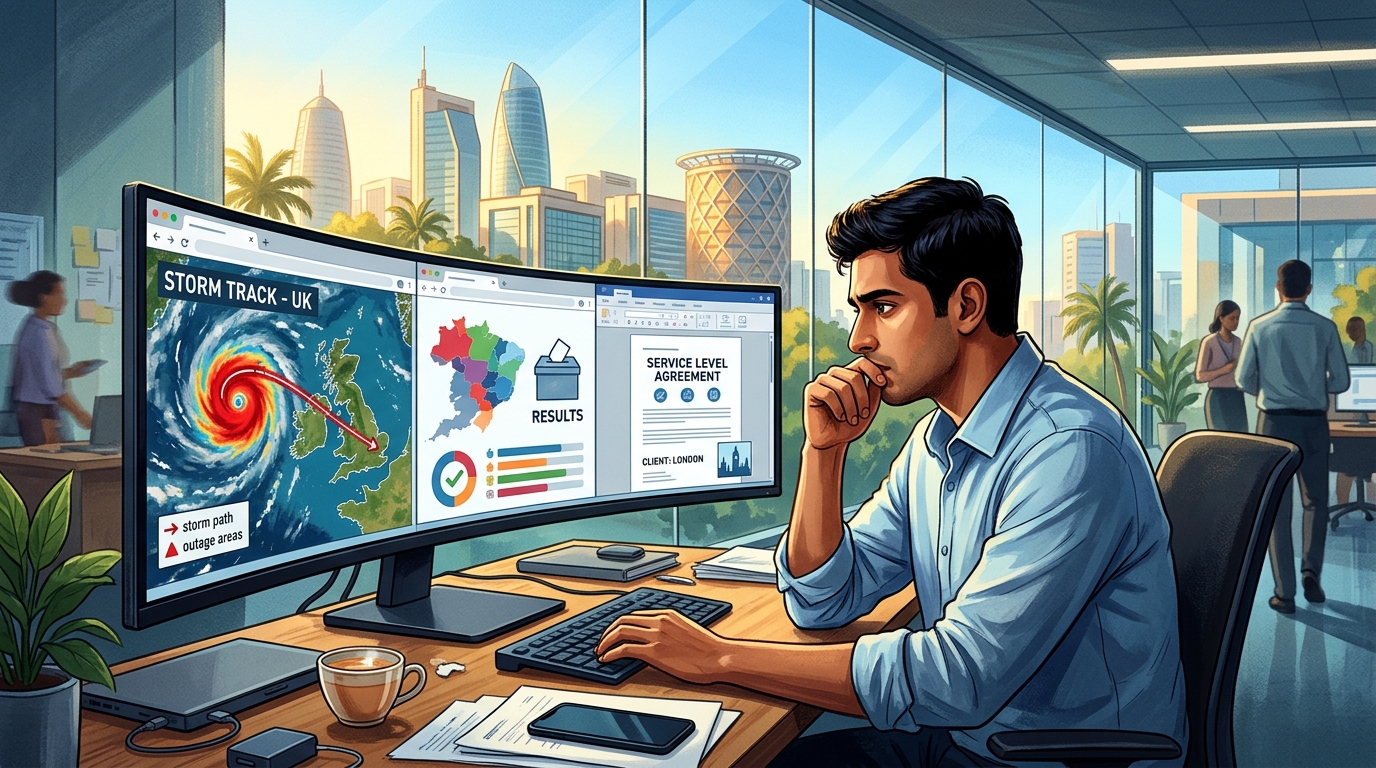
Meanwhile, the United Kingdom is facing its second major storm in as many days. Storm Boelo has triggered amber weather warnings across Scotland, parts of northern England, and Northern Ireland, with gusts forecast to reach 80mph. Infrastructure disruptions, transport cancellations, and energy grid stress are the immediate consequences.
Britain remains one of the single largest sources of IT outsourcing revenue for Indian tech firms. Cities like Hyderabad host sprawling delivery centres servicing UK-based banks, insurers, retailers, and public sector bodies. When extreme weather events repeatedly disrupt the UK economy — and they are becoming more frequent, not less — client-side operations slow, budgets get reviewed, and discretionary IT spending is often the first casualty.
This is not a one-off weather event to be dismissed. The pattern of intensifying storms across Europe is consistent with the accelerating climate science. For Hyderabad's technology professionals, whose careers are deeply intertwined with European and British client ecosystems, the climate crisis is not an abstract moral concern — it is a business continuity variable.
What This Means for You
- IT Services Professionals: If your project portfolio includes French or British clients, initiate proactive check-ins. Document any scope or timeline sensitivities that may arise from client-side disruptions. Business continuity planning is no longer optional in volatile geographies.
- Startup Founders Eyeing European Markets: The political and social volatility in France signals a shifting regulatory environment. Labour protections are likely to tighten as governments respond to public pressure. Factor this into your GTM (go-to-market) and hiring strategies for the EU.
- Investors and Fund Managers: European equities and the pound sterling face headwinds from both political unrest and climate-related infrastructure costs. Diversify exposure accordingly and watch EU policy responses closely over the coming weeks.
- Climate-Conscious Professionals: The frequency of named storms hitting Britain is a data point, not an anomaly. Firms that embed climate risk into their operational planning — not just their ESG reports — will be better positioned in the decade ahead.
Global stability is a precondition for the kind of sustained, equitable growth that benefits workers and entrepreneurs alike. When it frays — whether through social inequality spilling onto French streets or carbon emissions reshaping British weather — the consequences are not contained by geography. They travel through supply chains, client relationships, and market sentiment, arriving eventually at your desk.