This week's national headlines, while individually distinct in geography and circumstance, paint a collective portrait of institutional gaps that India's professional class — including Hyderabad's large IT and startup workforce — cannot afford to ignore. From road safety failures to the deepening mental health crisis among young people under financial stress, these are not isolated tragedies. They are signals.
Mental Health Under Financial Pressure: A Crisis Without a Policy Net
The story of a teenager who died by suicide in Maharashtra's Chhatrapati Sambhajinagar — reportedly after distress over an iPhone EMI, though reports now suggest a longer history of mental health struggles — has reignited a critical conversation about the intersection of consumer debt, financial anxiety, and youth mental health in India. New reporting confirms the teen had attempted suicide from the same location a year prior, and that family stress had been building for some time.
For Hyderabad's IT professionals, this story resonates uncomfortably close to home. The city's tech workforce — particularly younger employees in the 22–32 age bracket — frequently carries significant EMI burdens across gadgets, vehicles, and housing in a high cost-of-living environment driven partly by the sector's own salary inflation. India still lacks a robust, publicly funded mental health infrastructure. The Mental Healthcare Act of 2017 remains underimplemented, and workplace mental health mandates for corporates are essentially voluntary. The absence of a national employee assistance programme standard means that whether a worker receives mental health support depends almost entirely on which company they work for.
This is a policy failure with real human costs. Progressive economies mandate employer-funded counselling access. India's IT industry, which prides itself on global standards, should be leading that conversation domestically — not waiting for regulation to catch up.
Road Safety: A Recurring Emergency on India's Streets
Two separate vehicular incidents made national news this week. In Delhi, a CNG cylinder explosion caused a car to ram an SUV carrying two MLAs, injuring six people. In Chhattisgarh, a speeding vehicle struck the convoy of Forest Minister Kedar Kashyap, injuring four police personnel.
These are not merely political news items. They underscore a chronic, systemic failure in India's road safety ecosystem. India recorded over 1.68 lakh road accident deaths in 2022, according to the Ministry of Road Transport — one of the highest tolls in the world. CNG vehicle safety standards, vehicle fitness certification, and convoy traffic management all fall under central regulatory purview, yet enforcement remains deeply inconsistent.
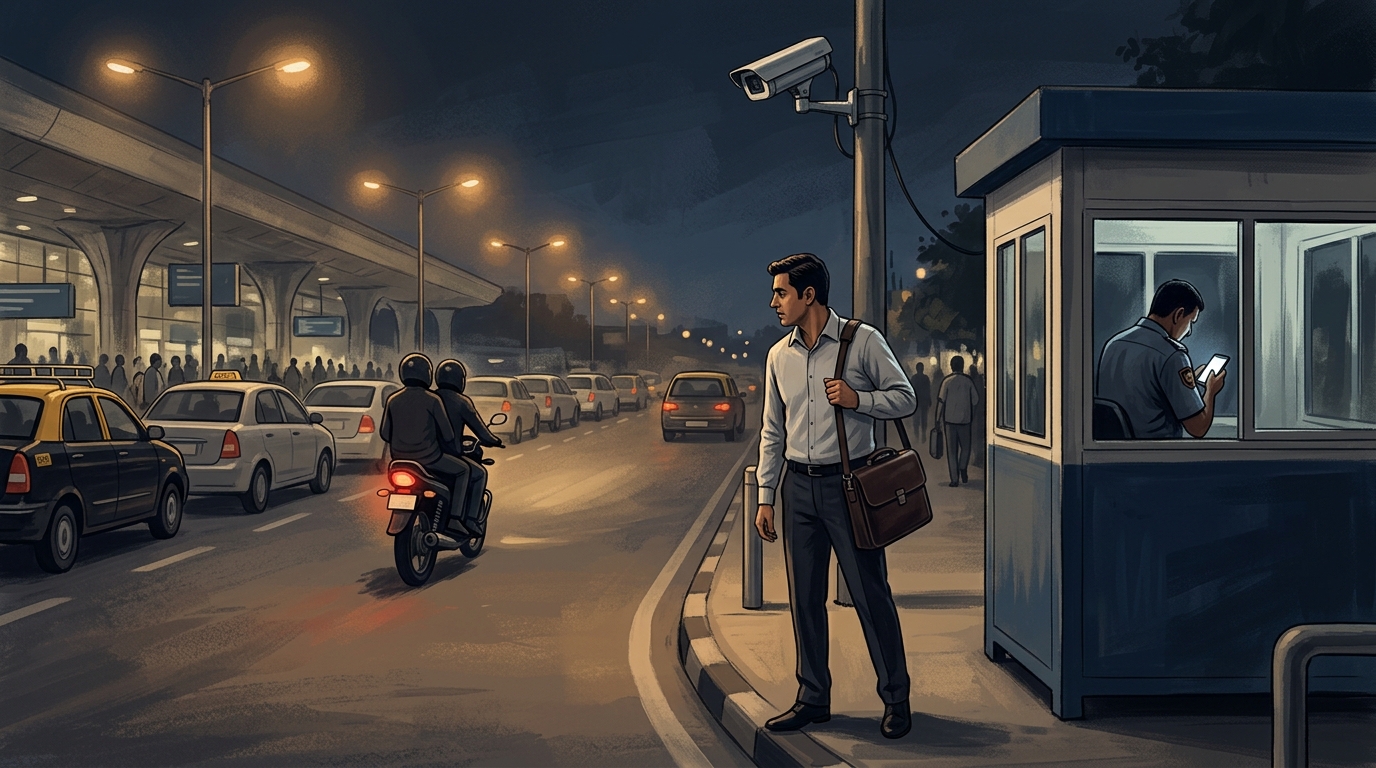
For Hyderabad's professionals who commute daily — many by cab aggregators, personal vehicles, or two-wheelers — road safety is not an abstraction. The city's Outer Ring Road and major arterial corridors see high-speed traffic with inadequate enforcement. The broader national pattern of regulatory gaps in vehicle safety directly affects every professional navigating urban India's roads.
Petty Crime and Infrastructure Vulnerability
A somewhat unusual story from Punjab — where transformer theft led to a farcical sequence of a car and recovery truck both getting stuck in mud — points to a more serious underlying issue: the vulnerability of India's rural and peri-urban power infrastructure to theft and sabotage. Power infrastructure theft, though often treated as a law-and-order footnote, has real economic consequences. Outages caused by vandalism affect small businesses, cold chains, and increasingly, the distributed workforce of remote IT workers operating outside metro centres.
As Hyderabad's tech ecosystem expands into satellite towns like Sangareddy, Shadnagar, and Medchal, power infrastructure reliability becomes a direct business continuity issue — not just a rural inconvenience.
Online Harassment and the Safety of Digital Spaces
The tragic death by suicide of Vanishree, a woman in Bengaluru who left a note alleging sustained blackmail and harassment by a named individual, is a stark reminder that India's digital safety frameworks remain dangerously underpowered. Bengaluru, like Hyderabad, is home to a large population of young professional women navigating both online and offline spaces. The IT Amendment Rules, cybercrime helplines, and platform grievance mechanisms exist on paper — but response times, accountability, and victim support remain grossly inadequate.
For women in Hyderabad's tech workforce — who already navigate gender pay gaps, underrepresentation in leadership, and workplace microaggressions — the absence of fast, effective recourse against digital harassment is both a safety issue and a professional equity issue.
What This Means for You
- If you manage a team: Advocate internally for structured, confidential employee mental health support — not just an EAP brochure in the HR handbook. Financial stress among junior employees is real and rising.
- If you commute daily: India's road safety enforcement is inconsistent at best. Document and report unsafe driving behaviour through the iRAD app or local traffic police portals. Collective civic pressure does move the needle.
- If you work remotely outside Hyderabad city limits: Factor power infrastructure reliability into your contingency planning. Backup internet and UPS systems are now professional necessities, not luxuries.
- If you are a woman professional or know one facing online harassment: The National Cyber Crime Reporting Portal (cybercrime.gov.in) and Hyderabad's own Cyber Crime police unit are entry points — though imperfect ones. Document everything, and do not wait.
- For founders and HR leaders: India's regulatory environment on worker wellbeing is tightening slowly. Getting ahead of it — on mental health, road safety reimbursements, and digital safety policies — is both ethical and strategically sound.
The week's headlines may seem disparate. But read together, they describe an India where economic ambition is racing ahead of the social and institutional infrastructure needed to sustain it safely and equitably. Hyderabad's professional community, as one of the country's most concentrated nodes of human capital, has both the standing and the responsibility to demand better.