As Hyderabad's monsoon deepens and the city's infrastructure faces its seasonal stress test, this Tuesday brings a cluster of stories that touch on public health, civic accountability, and the quiet erosion of the city's cultural fabric. For the professionals who power Hyderabad's economy — from Hitec City's glass towers to Gachibowli's startup corridors — these are not distant civic abstractions. They land close to home.
Yellow Alert in Effect: Plan Your Commute Accordingly
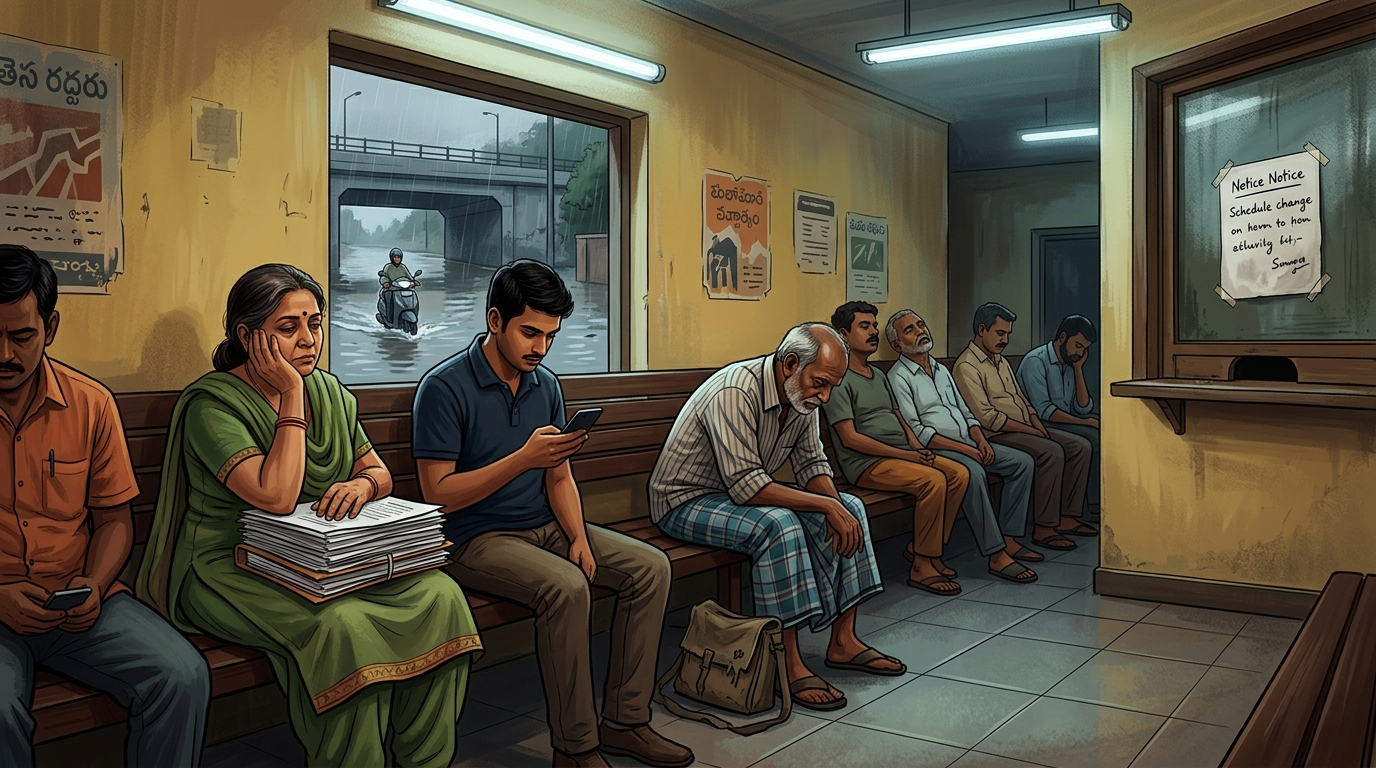
The India Meteorological Department has issued a yellow alert for Hyderabad, forecasting light to moderate rainfall across all zones on Tuesday. While Hyderabad's tech workforce has grown accustomed to hybrid work arrangements since the pandemic, a significant portion of employees in IT parks at Madhapur, Gachibowli, and the HITEC City cluster still commute daily — many via the Outer Ring Road and arterial roads that are notoriously prone to waterlogging and traffic snarls during heavy showers.
For founders and team leads, this is a practical reminder: activating work-from-home protocols on high-rain days is not a luxury but a productivity and safety measure. GHMC's drainage infrastructure in key tech corridors has historically struggled to cope with sustained downpours, and the civic body's track record on pre-monsoon drain desilting remains patchy at best. Yellow alerts have a way of turning amber very quickly on Hyderabad's roads.
Lead Exposure and Urban Health: A Study That Should Alarm Every City Dweller
A new study from Hyderabad's own National Institute of Nutrition (NIN) has found that environmental lead exposure significantly worsens nerve cell damage — compounding cellular stress in ways that could have long-term neurological consequences. The findings are particularly relevant for a city that has seen rapid, often poorly regulated, industrial and construction expansion alongside its technology boom.
Lead contamination in urban environments typically originates from old paint in ageing buildings, contaminated soil near former industrial sites, and poorly monitored construction activity. Hyderabad's peri-urban areas — many of which house the workforce that services the city's IT economy — are especially vulnerable. Workers in delivery, construction, and support roles, who spend long hours outdoors in these zones, face disproportionate exposure.
This NIN study is a call to action for GHMC and the Telangana Pollution Control Board to prioritise environmental health monitoring in residential and mixed-use zones adjacent to the city's growth corridors. Employers, too, have a role: corporate ESG commitments that stop at the office boundary are incomplete if the neighbourhoods where employees live are quietly poisoning them.
Paigah Tombs in Decay: The Cost of Ignoring Heritage
Historians and conservationists are raising fresh alarms over the deteriorating state of the Paigah Tombs, one of Hyderabad's most architecturally distinctive Nizami-era monuments. Of particular concern is the tomb of Hussain Unnisa Begum, identified as the resting place of Nizam V. The site, already listed as a protected monument, suffers from chronic neglect — encroachment, poor maintenance, and insufficient funding for restoration.
For a city that increasingly markets itself as a global destination for investment and tourism, the irony is sharp. Hyderabad's identity as a culturally rich metropolis is part of what makes it attractive to multinational companies and talent from across India. The slow destruction of its heritage infrastructure is not just a cultural loss — it is an economic one. Cities like Ahmedabad have leveraged UNESCO heritage status to build significant tourism and civic pride ecosystems. Hyderabad has the raw material; it consistently lacks the institutional will.
Civil society groups and heritage advocates have repeatedly flagged these concerns to the Archaeological Survey of India and state authorities. The response has been largely bureaucratic inertia. The Paigah Tombs deserve better — and so does the city that bears their history.
What This Means for You
- Commuters and hybrid workers: With a yellow alert in place, coordinate with your teams early. Waterlogging on key arterial roads near HITEC City and Gachibowli is likely. Build buffer time or activate WFH if your role allows.
- Health-conscious professionals: The NIN lead exposure study is a reminder to pay attention to air and environmental quality in your residential neighbourhoods, particularly if you live in areas near older construction or industrial activity. Support local campaigns for better environmental monitoring.
- Business leaders and ESG teams: Consider whether your corporate sustainability frameworks account for the environmental health of the communities your workforce lives in — not just your office premises.
- Investors and urban entrepreneurs: Heritage tourism is an underleveraged sector in Hyderabad. The ongoing neglect of sites like the Paigah Tombs represents both a civic failure and a missed economic opportunity worth advocating for publicly.