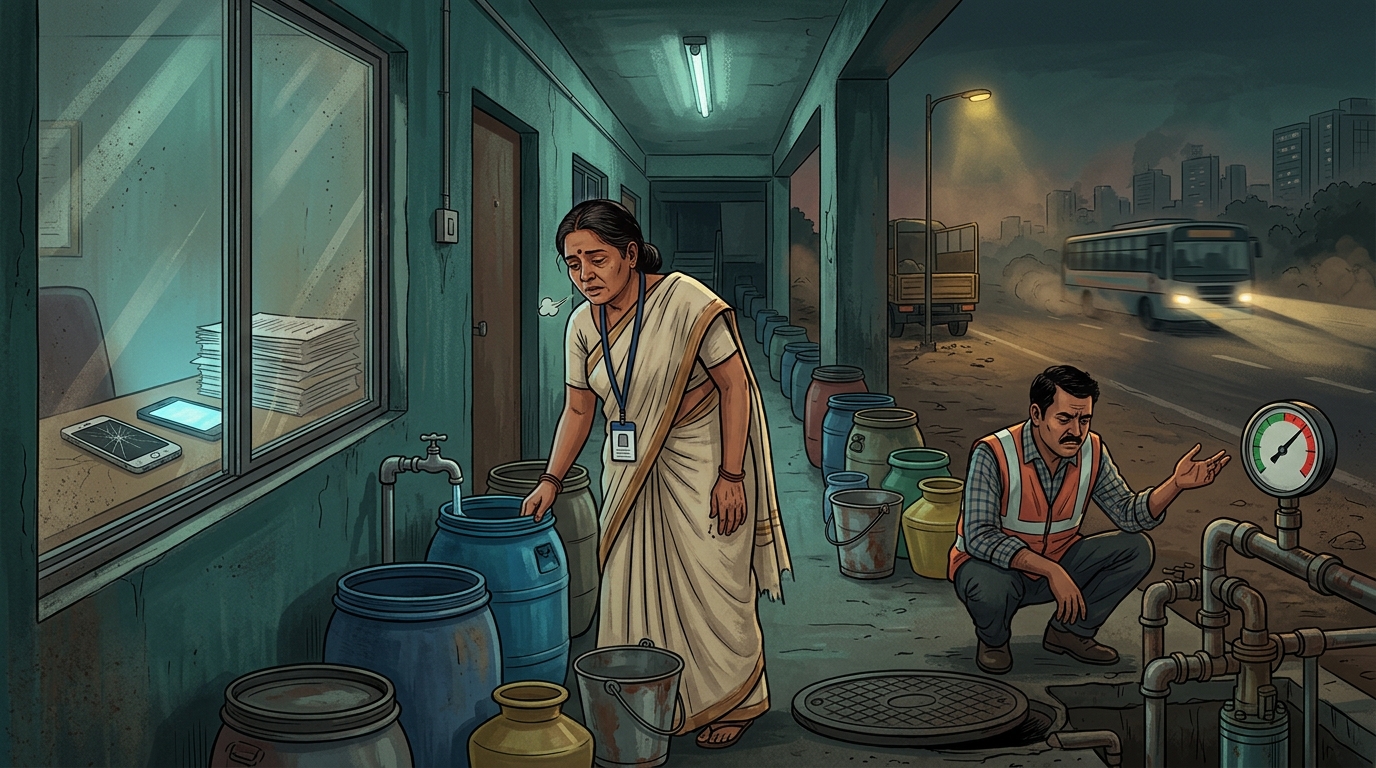
This week's city news carries a quiet urgency for Hyderabad's working professionals — the kind that doesn't make for dramatic headlines but shapes daily life in ways that compound over time. From the looming spectre of water rationing to a troubling road safety incident and a landmark consumer rights ruling against one of the world's most powerful tech companies, the city is sending signals worth paying close attention to.
Hyderabad May Soon Face Alternate-Day Water Supply
Perhaps the most consequential story this week: Hyderabad's drinking water infrastructure is under stress. According to reports, reservoir storage levels are declining and groundwater reserves are shrinking, prompting the Telangana government to prepare emergency measures that could include alternate-day water supply to parts of the city.
For IT professionals and startup founders operating out of Gachibowli, Hitec City, and the broader GHMC zone, this is not an abstract concern. Many co-working spaces, office campuses, and residential high-rises in these corridors depend heavily on municipal water supply supplemented by borewells — both of which are now under pressure. Facility managers at tech parks may need to revisit water storage and recycling infrastructure sooner than anticipated.
The water crisis is also a reminder of a structural failure: Hyderabad's rapid commercial and residential expansion — much of it driven by the IT boom — has consistently outpaced civic infrastructure planning. The burden of this mismatch falls disproportionately on salaried workers and residents who cannot afford private water tankers indefinitely, while large real estate and commercial developments have historically extracted groundwater with insufficient accountability.
15 Injured as TGSRTC Bus Rams Lorry on City Outskirts
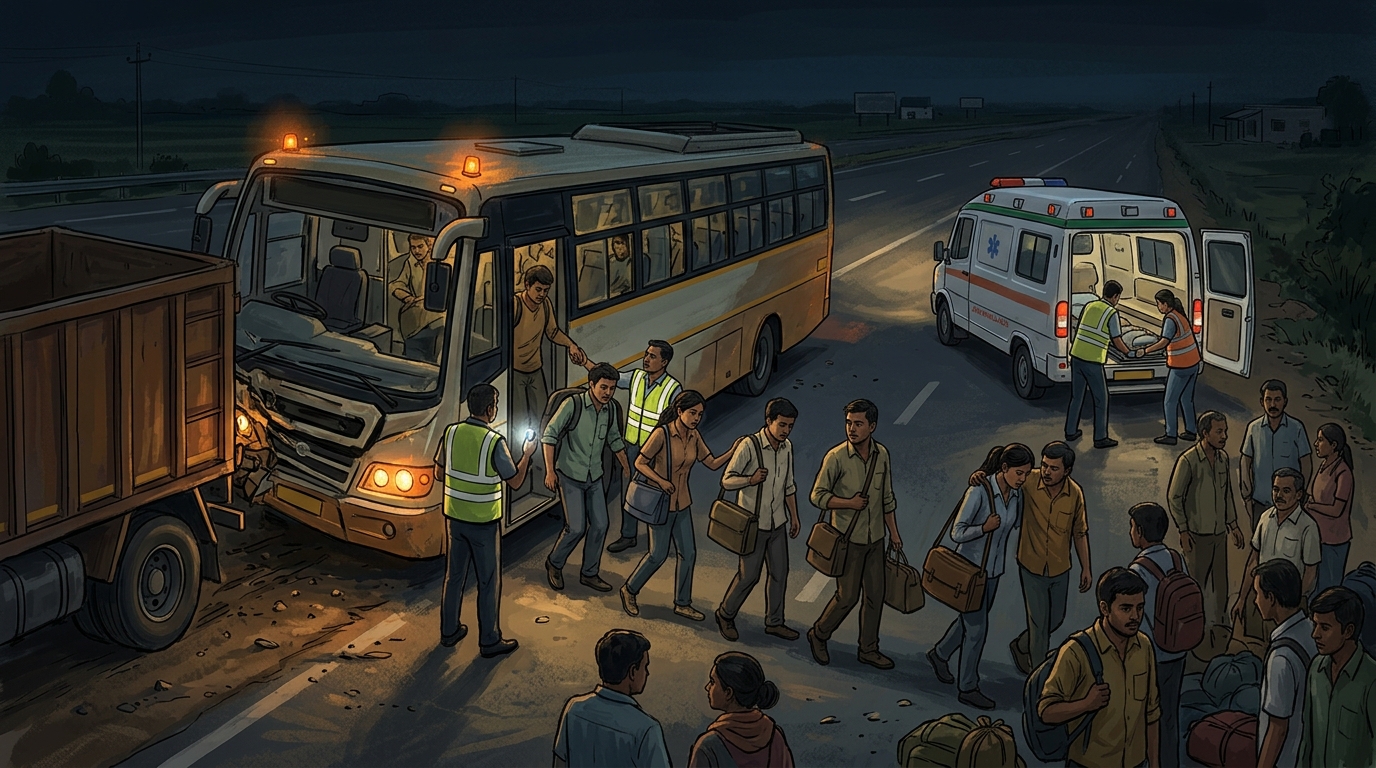
A TGSRTC bus from the Khammam depot collided with a parked lorry at Batasingaram in Abdullapurmet mandal on Monday, injuring at least 15 passengers. While the incident occurred on the city's outskirts rather than within the Hitec City corridor, it points to a persistent and underreported problem: the dangerous practice of parking heavy vehicles on active road shoulders, combined with inadequate roadside lighting and enforcement on routes that connect Hyderabad's urban core to its expanding periphery.
For employees who commute from satellite towns like Ibrahimpatnam, Pocharam, or Ghatkesar — many of them tech workers priced out of central Hyderabad's rental market — these arterial roads are daily realities. The TGSRTC, chronically underfunded and operationally strained, serves as the primary transit lifeline for a significant portion of the city's working population. Incidents like this underscore the urgent need for better road infrastructure investment and stricter enforcement of no-parking regulations on highways, rather than further cuts to public transport budgets.
Hyderabad Consumer Court Orders Apple to Replace iPhone 17, Pay Rs 35,000
In a ruling that has quietly resonated across the city's tech-savvy professional community, a Hyderabad consumer court ordered Apple to replace a defective iPhone 17 — priced at Rs 74,325 — and pay Rs 35,000 in compensation after the device exhibited freezing, focus failures, and video playback stuttering within days of purchase.
The significance of this ruling extends beyond one unhappy customer. Apple's premium pricing in India has long been shielded by aspirational brand value and a perception of unimpeachable quality. This judgment is a pointed reminder that consumer protection law applies equally to the world's most valuable company — and that Hyderabad's courts are willing to enforce it. For IT professionals who routinely spend significant portions of their salaries on premium devices for both personal and professional use, this case is a practical precedent worth bookmarking.
It also reflects a broader truth: monopolistic pricing without proportionate accountability is a consumer rights issue, not merely a market preference. Apple's after-sales service infrastructure in India has drawn criticism for being difficult to navigate, and this ruling may embolden other consumers to pursue grievances they might otherwise have abandoned.
What This Means for You
- Water supply: If you live or work in areas dependent on GHMC supply, consider auditing your building's water storage capacity now. Advocate with your RWA or facility management to install rainwater harvesting and greywater recycling systems before a crisis forces the conversation.
- Commute safety: If you or colleagues use TGSRTC services or commute on Hyderabad's outer ring roads, be aware of elevated risk during early morning and night hours on poorly lit stretches. Carpooling and staggered work hours can reduce exposure.
- Consumer rights: Keep all purchase documentation, service records, and complaint correspondence for high-value electronics. Hyderabad's consumer courts have demonstrated willingness to rule against large corporations. The National Consumer Disputes Redressal process is more accessible than many professionals realise.