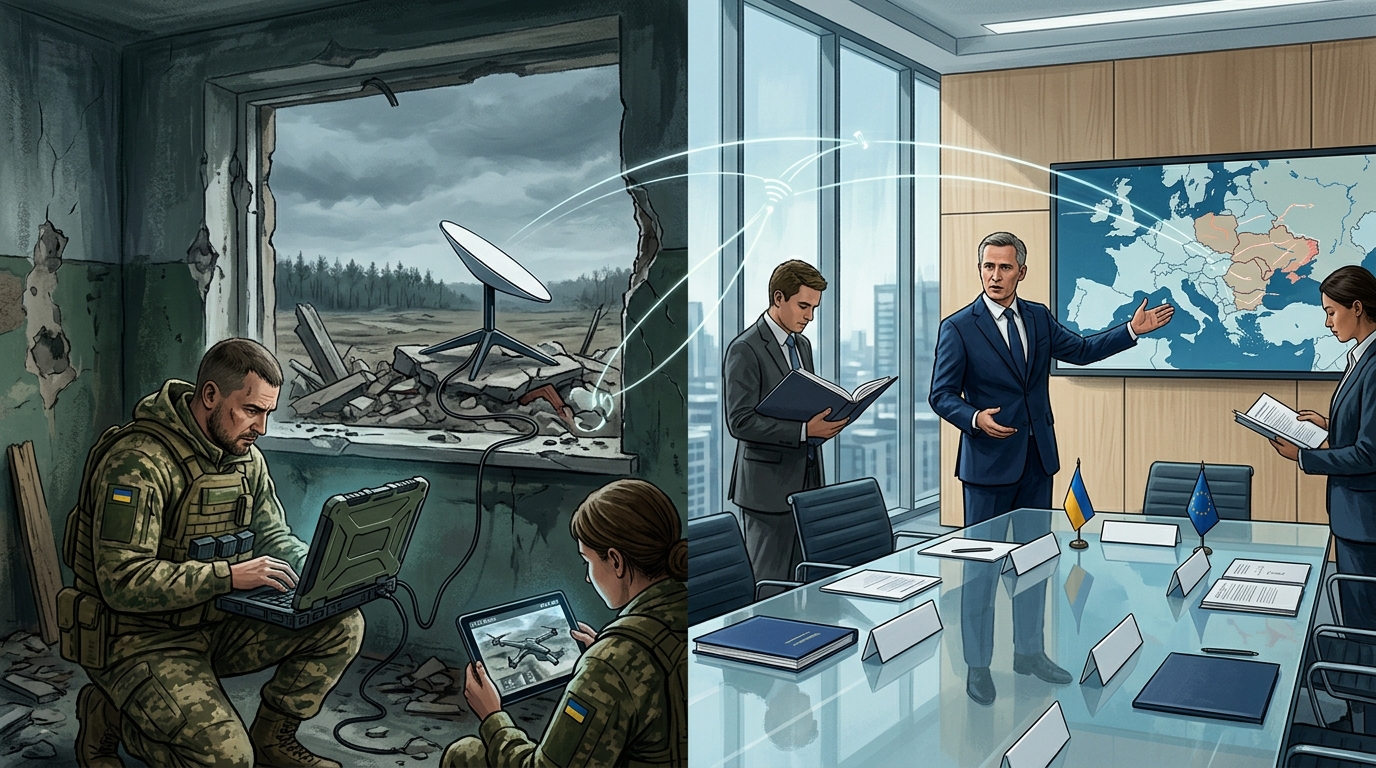
Two developments out of Europe this week deserve careful attention from Hyderabad's business and technology community — not because they are geographically close, but because in an interconnected global economy, instability in one corner of the world reliably transmits pressure to others.
Kyiv Weapons Depot Strike: The War's Human and Economic Toll Deepens
At least 37 people were killed and hundreds more evacuated after a strike hit a weapons depot near a residential area in Kyiv, according to BBC News. Ukrainian authorities have launched an investigation into why military munitions were stored in such proximity to civilian zones — a question that raises serious concerns about operational accountability, even within a nation fighting for its survival.
For professionals in Hyderabad's IT and business ecosystem, the immediate instinct may be to treat this as distant tragedy. That instinct deserves revision. The Russia-Ukraine conflict has been one of the most sustained disruptors of the global technology and energy economy since 2022. European cloud infrastructure investment, cross-border data routing strategies, and the availability of Eastern European engineering talent — a community that has historically collaborated with Indian IT firms on outsourced and co-development projects — all remain under pressure as long as this conflict continues.
More concretely, the war continues to drive energy price volatility across Europe. Higher energy costs compress margins for European clients of Indian IT firms, which in turn affects renewal rates on contracts, discretionary technology spending, and the pace of digital transformation projects that Hyderabad-based service companies depend upon. When European enterprises tighten belts, Indian IT vendors — from large-cap players to boutique startups — feel it in their order books.
There is also a humanitarian dimension that the professional community should not ignore. The storage of weapons near residential areas, and the civilian casualties that follow, represent a failure of governance that progressive voices worldwide have consistently flagged. The war's continuation is not a neutral market variable — it is a policy and diplomatic failure with cumulative human costs that demand accountability from all parties involved.
Norway's Royal Transition: Soft Power and Institutional Stability in Northern Europe
In a markedly different register, Norway welcomed a new monarch this week. King Haakon VIII delivered his first speech following the death of his father, Harald V, offering an emotional tribute and outlining his vision for his reign. While monarchies may seem ceremonially distant from the concerns of a tech professional in Hyderabad, Norway's political stability carries real economic weight.
Norway is one of the world's largest sovereign wealth fund holders through its Government Pension Fund Global, which holds stakes in thousands of companies worldwide — including major technology firms that Hyderabad professionals work for or aspire to work with. Institutional continuity in Norway signals that this enormous pool of patient capital will remain stable and professionally managed, which has downstream effects on global equity markets and technology investment cycles.
Norway is also a significant player in the green energy transition, particularly in offshore wind and hydrogen. As India accelerates its own clean energy ambitions, Norwegian institutional partnerships and investment frameworks matter — and a smooth, stable royal and political transition reinforces the reliability of those frameworks.
What This Means for You
- IT Services Professionals: Monitor European client communications for signs of budget reassessment. The Kyiv strike and continued conflict will maintain energy cost pressure on your European counterparts, potentially delaying project sign-offs or reducing scope in Q3 and Q4 planning cycles.
- Startup Founders and Investors: Eastern European tech talent pipelines — particularly from Ukraine — remain disrupted. If your hiring or co-development strategy depends on that corridor, build contingency partnerships now with talent pools in other regions.
- Corporate Employees in MNCs: Geopolitical risk modules are increasingly part of enterprise procurement and vendor assessments. Understanding how your organisation's European parent or client perceives conflict-zone risk can help you anticipate restructuring or offshoring decisions before they reach your desk.
- ESG-Conscious Professionals: Norway's stable green investment posture is a positive signal for sustainable finance globally. If your firm is pursuing ESG-aligned funding or partnerships, the Northern European institutional investor community remains a credible and values-aligned target.
The week's events are a reminder that global stability is not background noise for business — it is the operating environment itself. Professionals who track these currents thoughtfully are better positioned than those who wait for disruption to arrive at their inbox.