It is easy to dismiss a weekend hockey result or a youth football trophy as peripheral news for a city obsessed with funding rounds and sprint deadlines. But the flurry of grassroots sporting activity unfolding across Hyderabad this week tells a more substantive story — one about civic identity, community infrastructure, and the kind of city Hyderabad is quietly becoming beneath the surface of its gleaming tech corridors.
A City Finding Its Sporting Voice
Hyderabad saw several notable results on the local sports front this week. Railway defeated Police to claim the Department Hockey title, in a closely contested match where Rohit's 36th-minute strike proved decisive. Hyderabad Globe FC claimed the Under-21 football trophy, with Saifullah scoring a dramatic last-minute winner against host CCOB in the semifinal. Lakshya Football Academy delivered perhaps the week's most emphatic statement, defeating Hyderabad Football Academy 6-1 in the Golden Cup final. And on the women's side, an Under-19 Super League is set to feature eight teams competing in T20-format cricket — a format designed to draw younger audiences and participants alike.
Taken individually, these are results. Taken together, they represent a city with a genuinely diversified, multi-sport competitive culture that is growing from the bottom up rather than being handed down from a state or national mandate.
Recognition That Goes Beyond Trophies
The national award conferred upon SCF's Saibaba — an individual whose work spans both sports development and social upliftment — is worth pausing on. In a landscape where sports administrators are frequently criticised for prioritising politics over participation, Saibaba's recognition points to a different model: one where community-level investment in youth, particularly from underserved backgrounds, earns durable institutional respect. For a city like Hyderabad, which has significant socioeconomic stratification between its IT-boom neighbourhoods and older, underserved localities, this model deserves more visibility and, critically, more replication.
Chess, STEM, and the Knowledge City Narrative
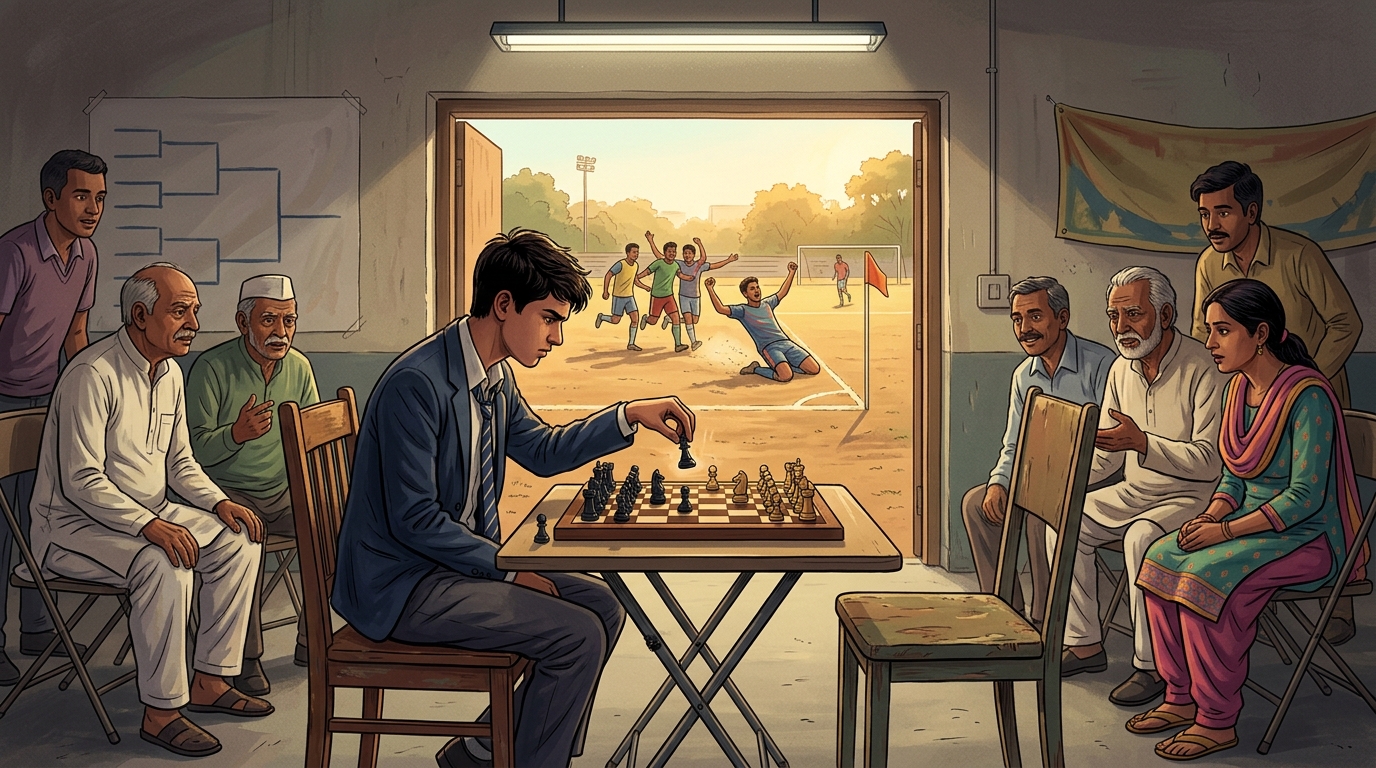
The announcement of the National Sub-Junior Chess Championship, to be held in Hyderabad next month for the Sri Duddilla Sripada Rao Gold Cup, adds another layer. Chess — long associated with cognitive discipline, strategic thinking, and patience — is a natural cultural complement to a city that markets itself as India's premier knowledge economy hub. Bringing a national-level junior championship here reinforces Hyderabad's position not just as a place where technology is deployed, but where intellectual culture is nurtured from an early age. Organising committee chairman K. S. Prasad's involvement signals that the local chess administration is engaged and organised — a prerequisite for events of this scale to succeed.
What the IT and Professional Community Often Misses
Hyderabad's professional class — concentrated in Hitec City, Gachibowli, and the Neopolis corridor — tends to engage with the city transactionally: commute, work, consume, repeat. But urban quality of life is not built solely on metro connectivity or co-working spaces. It is built on whether a city has public parks with football pitches, whether a young woman from a modest family can find a cricket team to play for, whether a child from Bahadurpura can compete in a national chess tournament without leaving the city.
These sporting developments, modest as they appear in isolation, are indicators of civic density — the richness of public and community life that makes a city worth living in, not just working in. Companies recruiting global talent increasingly weigh this. Founders building long-term enterprises here should too.
What This Means for You
- If you are a startup founder or corporate HR leader: Investing in or sponsoring local sports academies is now a credible employee engagement and community CSR strategy — not charity, but smart city-building.
- If you are an IT professional with children: Hyderabad's youth sports infrastructure is expanding. Seek out academies like Lakshya Football Academy or local chess associations — these are low-cost, high-value developmental environments.
- If you care about equitable growth: Pay attention to figures like Saibaba and institutions that work across sport and social development. They are doing the inclusion work that policy often promises but rarely delivers.
- If you are an investor: Sports infrastructure, coaching tech, and youth development platforms remain dramatically underfunded in Tier-1 Indian cities despite clear demand signals. Hyderabad's active grassroots scene is a market signal worth reading.