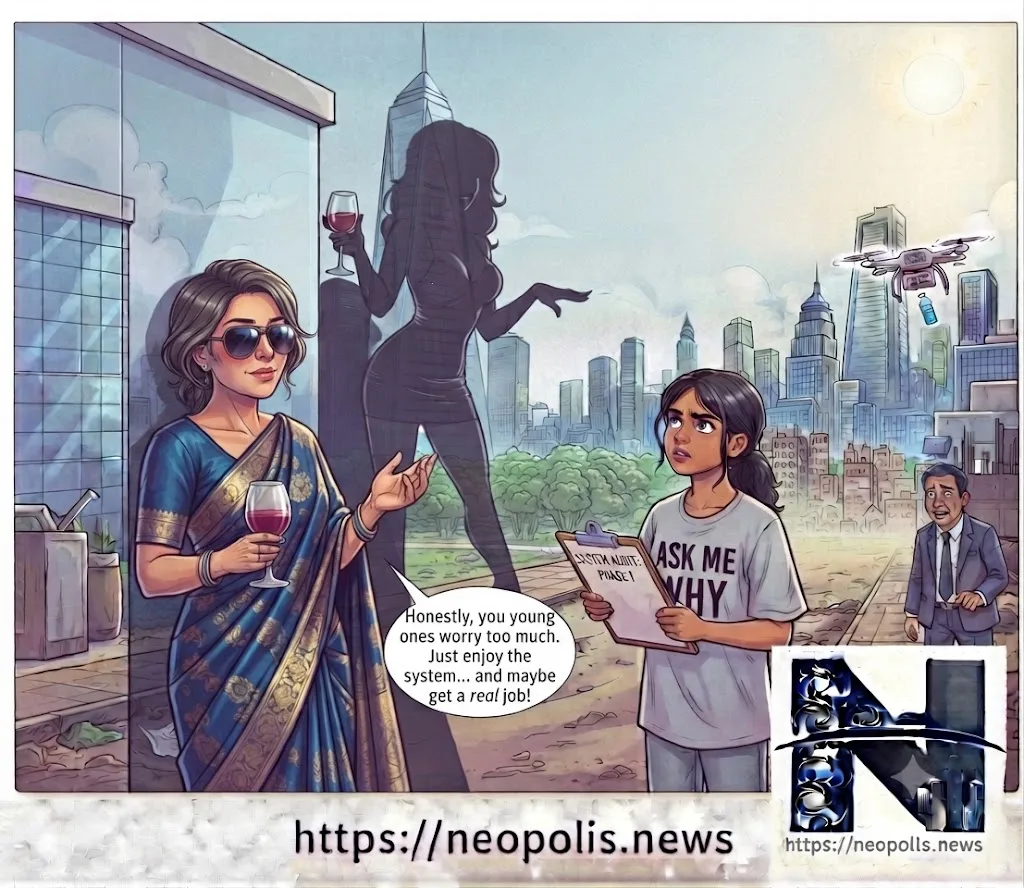
When actor-turned-BJP MP Kangana Ranaut publicly dismissed young Indians protesting against what they saw as injustice as a 'gutter generation,' the backlash was swift and widespread. For many residents of Neopolis — a district packed with young IT professionals, first-generation homeowners, and families raising children in one of Hyderabad's fastest-growing urban corridors — the episode struck a particular nerve.
The Remark and the Reaction
Ranaut's comments, directed at Gen Z protesters associated with the Citizens for Justice and Peace (CJP) campaign, drew sharp criticism from across the political and cultural spectrum. The irony noted by many observers: the same MP now positioning herself as a guardian of Indian cultural values built a career in Bollywood that was, by any conventional measure of 'sanskara,' considered deeply transgressive — bold roles, unconventional choices, and a public persona that courted controversy at every turn.
The pivot came, critics argue, when she joined the Bharatiya Janata Party. The transformation from provocateur to moralist has not gone unnoticed, and for many it feels less like genuine conviction and more like political branding.
The HRK Controversy: A Memory That Lingers
Equally relevant is Ranaut's well-documented public feud with filmmaker and creative force Hrithik Roshan — a conflict that at its peak threatened reputational damage to one of Hindi cinema's most respected figures, a man many regard as a genuine cultural ambassador of discipline, craft, and decency. That episode, whatever its private origins, was a reminder that Ranaut's public conduct has not always reflected the values she now champions loudly from a parliamentary platform.
That someone with this particular biography is now invoking 'sanskara' to condemn an entire generation of young Indians — many of them educated, civic-minded, and deeply engaged with constitutional values — is, for many observers, a credibility problem that no party membership card can paper over.
The Broader Pattern: Politics and Selective Morality
This is not an isolated phenomenon. Indian political culture has a long and well-documented tradition of leaders adopting moral high ground selectively. The Narada sting operation, for instance, exposed how several prominent political figures — people who routinely spoke of national values and public service — were filmed apparently accepting cash bribes from a fictitious company. The episode illustrated, starkly, the gap that can exist between public rhetoric about ethics and private conduct.
Similarly, the BRS party's pointed 'Washing Powder Nirma' hoarding welcoming Amit Shah to Hyderabad was less a policy critique and more a cultural signal: that voters and citizens are increasingly fluent in the language of political irony, and are not easily moved by manufactured moral authority.
What Neopolis Parents and Young Professionals Are Actually Saying
In conversations across apartment complexes in Kokapet and Narsingi — communities with a high density of educated, dual-income families — the sentiment is consistent. Parents are not looking to film celebrities or politicians to define values for their children. They are looking to institutions: good schools, honest workplaces, civic culture, and community behaviour.
Young IT professionals in this district, many of whom are themselves Gen Z or elder millennials, did not need a Bollywood career or a party ticket to develop a sense of right and wrong. They grew up watching both — and drew their own conclusions.
The broader anxiety is real: in a media environment saturated with noise, who actually shapes the moral imagination of the next generation? The answer, most Neopolis residents would say, is not someone whose credibility rests entirely on which political party currently employs them.
What This Means for You
- For parents in Kokapet and Narsingi: The debate around who 'teaches values' is a useful prompt for families to have direct conversations with children about distinguishing between performed morality and lived integrity.
- For young professionals: Your civic engagement — whether in protests, local governance, or community building — is itself a form of sanskara. It does not require celebrity endorsement or political validation.
- For the community: As Neopolis grows into one of Hyderabad's most dynamic districts, the values its residents choose to model and reward — in business, in building culture, in public discourse — will matter far more than what any MP says in a press conference.