This week's news cycle, filtered through a Telangana lens, offers two threads worth pulling carefully — one financial, one infrastructural — both with real consequences for the professionals, founders, and workers who make up Hyderabad's economic backbone.
The Rate Hike Shadow Over Hyderabad's Borrowers and Builders
A Systematix Group report, cited widely this week, suggests the Reserve Bank of India may soon initiate a rate-hike cycle as consumer and wholesale inflation trend upward, with the repo rate potentially approaching 6.5 per cent. While monetary policy is set at the national level, its consequences land squarely in Telangana's economy — and particularly on Hyderabad's professional class.
For IT employees servicing home loans in Hyderabad's rapidly appreciating real estate corridors — Gachibowli, Kondapur, Miyapur, Narsingi — even a 25 to 50 basis point increase in lending rates can translate to thousands of rupees added to monthly EMIs. Floating-rate borrowers, who constitute the majority of retail home loan customers, will feel this immediately.
The pressure extends beyond individual households. Hyderabad's startup ecosystem, which depends significantly on debt financing and venture credit lines, faces tighter conditions when the cost of capital rises. Early-stage founders already navigating a cautious funding climate since 2022 may find bridge loans and working capital facilities more expensive, compressing runway at a critical moment.
It is worth noting that rate hikes, while painful for borrowers, are a blunt instrument. They tend to discipline credit markets without addressing the supply-side causes of inflation — food prices, energy costs, logistics bottlenecks — that most directly hurt lower and middle-income workers. A policy that raises EMIs for Hyderabad's salaried class while doing little for vegetable prices is worth scrutinising, not celebrating.
Highway Connectivity Protests Reveal Telangana's Two-Speed Development
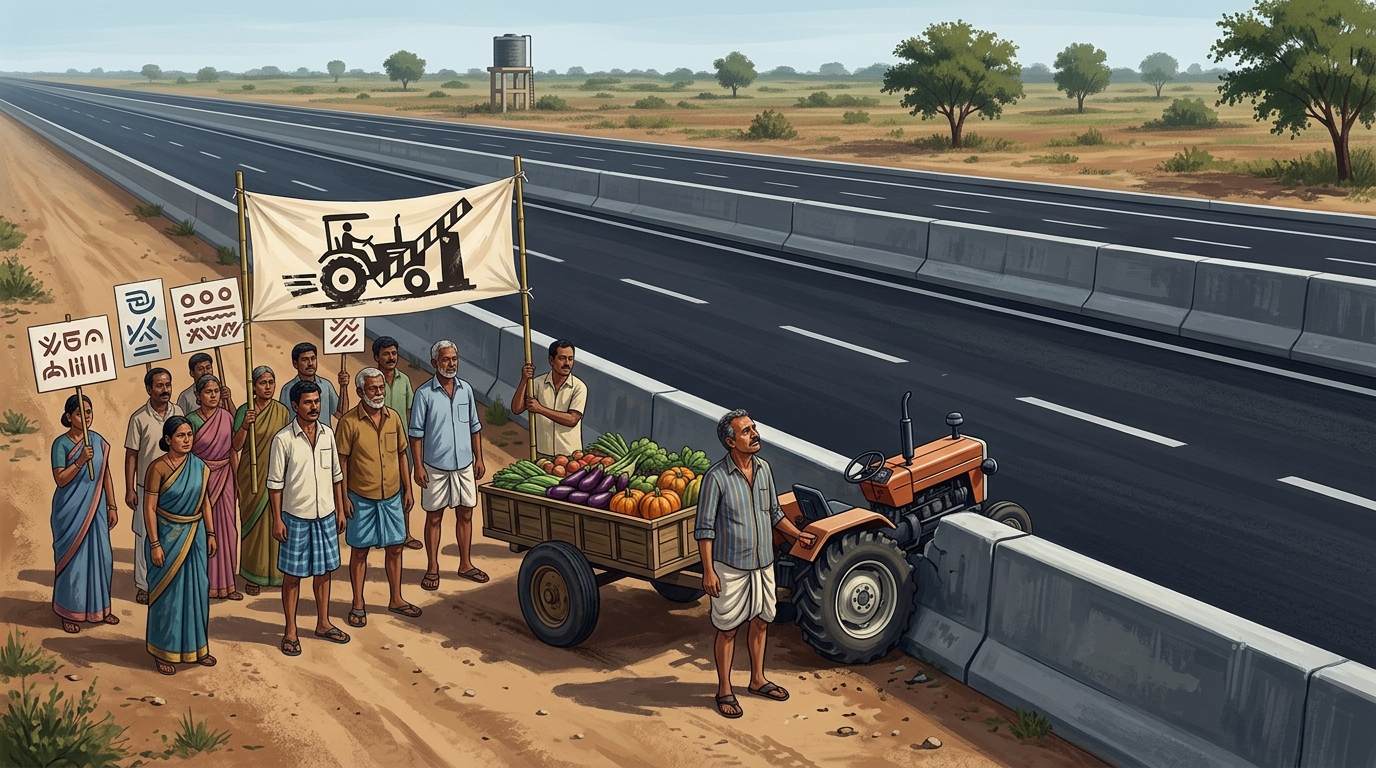
In Jogulamba Gadwal district, residents and farmers of Rajoli and Vaddepally staged protests this week demanding service roads and proper entry-exit linkages to the Bharatmala Highway. The agitation is localised, but the problem it represents is systemic.
Telangana's infrastructure narrative is often dominated by HMDA ring roads, the Hyderabad Metro Rail, and IT corridor flyovers. Yet the state's outlying districts — where agricultural supply chains feed the city, where future industrial corridors are planned, and where land acquisition has already displaced communities — frequently lack last-mile connectivity even after major highway projects are completed.
The Bharatmala programme, a centrally funded highway initiative, promises national-level arterial connectivity. But without service roads and local linkages, the highway becomes a wall rather than a corridor for small farmers and rural businesses. When a farmer in Gadwal cannot access the highway to move produce, Hyderabad's supply chains feel the ripple — in food prices, in logistics costs, in the very inflation that pressures the RBI to raise rates.
There is a structural irony here that Telangana's planners must confront: the same infrastructure that is meant to integrate the state's economy can deepen exclusion if local connectivity is treated as an afterthought.
What This Means for You
- Home loan holders: Review your loan agreements now. If you are on a floating rate, model your EMI scenarios at 6.25–6.5 per cent repo rate. Consider whether prepayment is viable before rate hikes materialise.
- Startup founders: Tighten cash flow projections. A tighter credit environment rewards lean operations and early revenue. Revisit any debt obligations tied to variable rates.
- Investors: Fixed income instruments and debt mutual funds may become increasingly attractive as rates rise. Equity-heavy portfolios in rate-sensitive sectors like real estate and NBFCs deserve a second look.
- Policy-aware professionals: The Gadwal highway protests are a reminder that Telangana's growth story has geographic fault lines. Sustainable regional development — not just IT corridor expansion — is what builds a resilient state economy. Advocate for it, vote for it, and hold the government accountable for it.
Hyderabad's professionals operate at the intersection of global capital and local infrastructure. This week's signals suggest both are under strain — and that informed, engaged citizens are the best corrective to either complacency or panic.