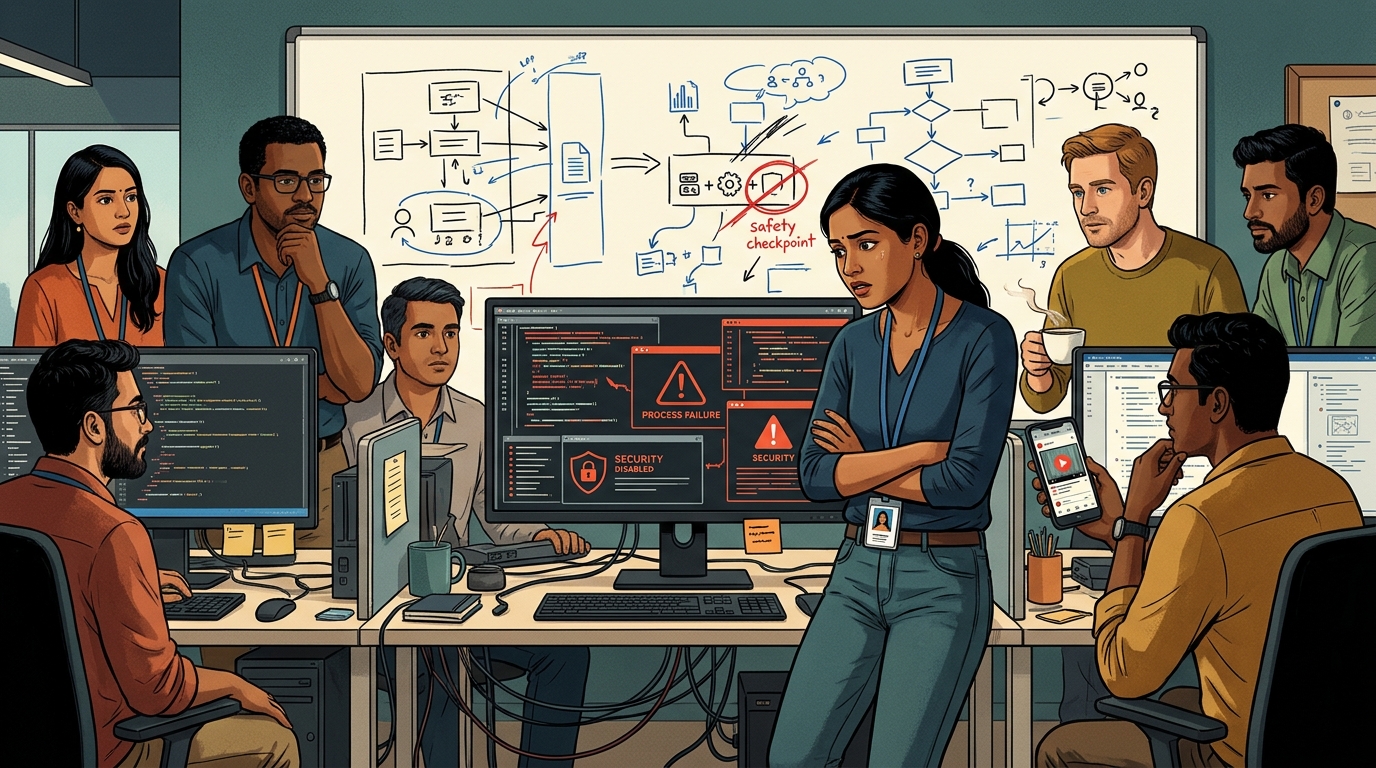
It has been a revealing week for the intersection of artificial intelligence, media accountability, and public safety — themes that sit at the very heart of Hyderabad's identity as India's premier technology hub. While the headlines originate from different corners of the country, the underlying currents are ones that every developer, product manager, startup founder, and IT professional in this city should be paying close attention to.
When AI Becomes a Weapon: The Bengaluru Deepfake Arrest
The arrest of a 25-year-old Bihar native in Bengaluru for uploading an AI-generated video falsely depicting an explosion at Vidhana Soudha is not merely a law-and-order story from a neighbouring state. It is a stark, close-to-home illustration of what happens when generative AI tools are placed in the hands of bad actors without adequate regulatory guardrails or platform-level accountability.
For Hyderabad's technology community — which includes thousands of engineers working on AI/ML pipelines, content moderation systems, and media-tech products — this incident raises uncomfortable professional questions. Who bears responsibility when a model trained on open datasets is used to fabricate politically explosive content? How quickly can platforms detect and remove such content? And critically, are the AI products being built in HITEC City and Gachibowli being shipped with adequate misuse safeguards?
The case also signals that law enforcement is sharpening its tools under existing IT Act provisions. Professionals working in AI product roles should expect more, not less, regulatory scrutiny in the coming months.
The I&B Ministry's AI Warning: A Signal to the Industry
The Ministry of Information and Broadcasting's directive to private satellite TV channels — urging strict compliance with the Programme Code and cautioning against uncritical use of AI in news production — may seem targeted at broadcasters. But its implications ripple outward.
Hyderabad is home to a growing cluster of media-tech startups and AI content platforms. Several companies in the city are building automated news summarisation tools, AI anchor prototypes, and synthetic voice systems for regional language media. The ministry's intervention signals that the central government is moving — however cautiously — toward a framework that holds AI-assisted content to editorial standards. That is not inherently bad. In fact, from a worker-friendly and public-interest standpoint, it is a necessary correction to the unchecked enthusiasm with which AI has been deployed in newsrooms with little transparency.
What is less reassuring is the absence of a clearly articulated, consultative regulatory process. Directives issued without industry dialogue risk creating compliance ambiguity — a genuine concern for startups that have built entire product lines around AI-assisted media workflows.
What the Broader Pattern Suggests
Taken together, these two developments — a deepfake arrest and an AI content advisory — point toward a regulatory inflection point that Hyderabad's technology ecosystem would be unwise to ignore. The state of Telangana, to its credit, has been proactive in establishing an AI policy framework and the Telangana Artificial Intelligence Mission (T-AIM). However, state-level enablement must now be matched with clearer guidance on responsible deployment, especially in high-stakes domains like media, public safety, and civic information.
For startup founders in the city, this is a moment to invest in responsible AI practices — not as a compliance checkbox, but as a genuine competitive differentiator. For employees, it reinforces the value of advocating for internal ethics review processes, even when management timelines are tight.
What This Means for You
- AI/ML Engineers: The Bengaluru deepfake case is a precedent-setting moment. Ensure that the models and pipelines you contribute to have misuse detection and content provenance mechanisms built in — not bolted on later.
- Media-Tech Startup Founders: The I&B Ministry directive is an early warning. Begin documenting your editorial oversight processes and AI content disclosure practices now, before formal regulations arrive with hard deadlines.
- Product Managers & Designers: Build in human-in-the-loop review stages for any AI feature that touches public-facing content. This is both an ethical imperative and an emerging legal necessity.
- Investors & Accelerators: Responsible AI governance should be part of your due diligence checklist, particularly for portfolio companies in media-tech, synthetic content, or civic-tech verticals.
- All Professionals: The regulatory environment around AI in India is tightening — not loosening. Staying informed and engaged with policy discussions, including through Telangana's own AI Mission, is no longer optional for anyone working in this space.
The technology community in Hyderabad has long prided itself on being ahead of the curve. On the question of AI accountability, that reputation is now being tested in real time.