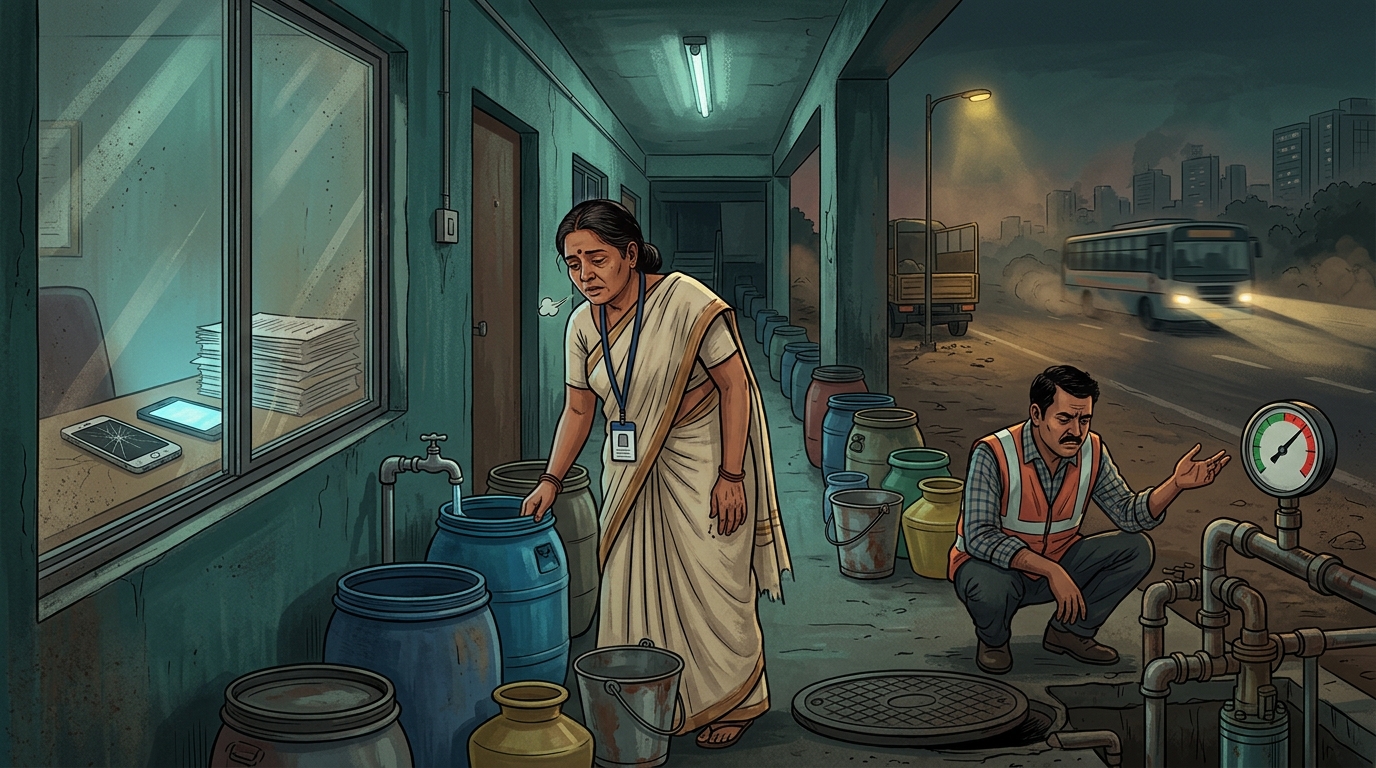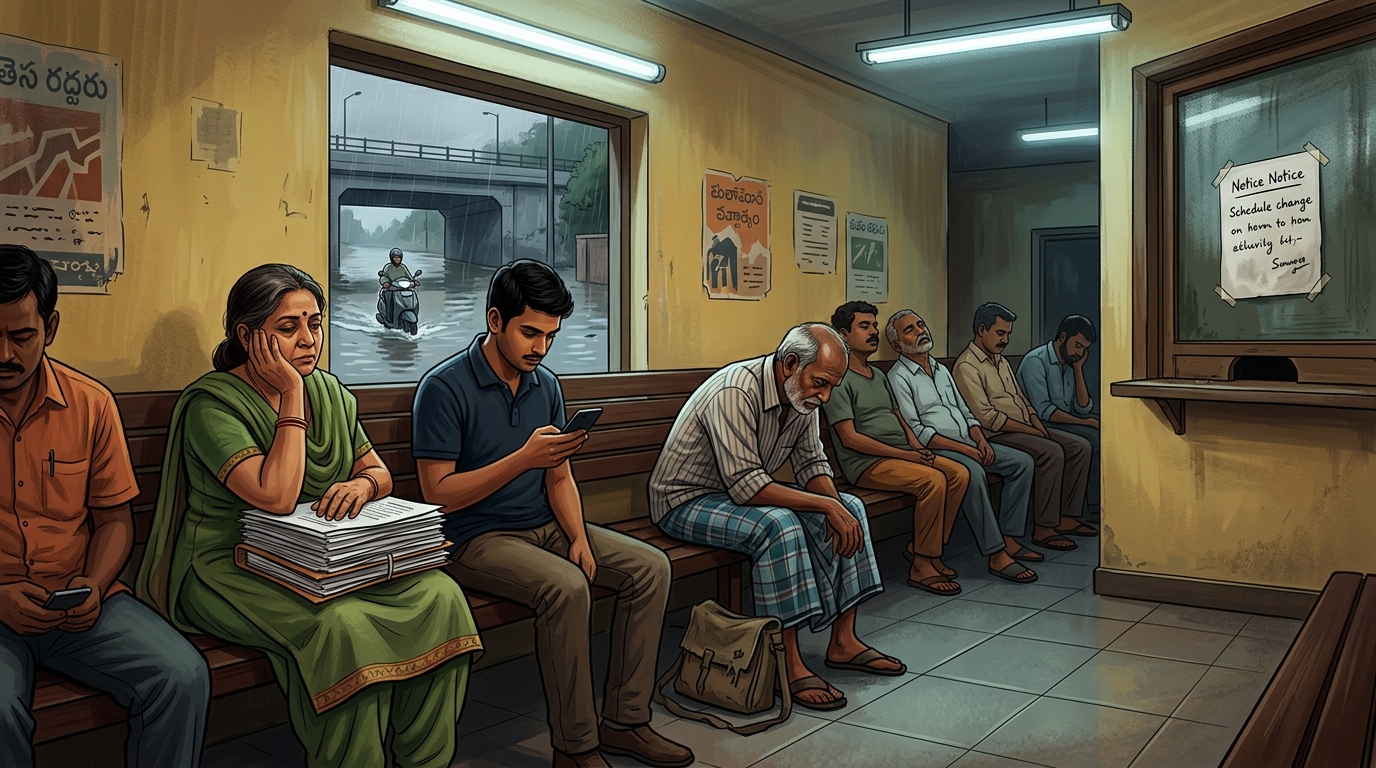
Wednesday morning brought a familiar double challenge for Hyderabad's working professionals: the city's roads, already strained by Ganesh Chaturthi processions and immersion routes, are now contending with light to moderate rainfall expected to persist until at least 8 am. For the thousands of IT employees, startup founders, and corporate staff who commute through Hitec City, Gachibowli, and the broader Cyberabad corridor, this combination of festive traffic and wet roads is a recipe for significant delays — and, more worryingly, safety risks on waterlogged stretches that GHMC has repeatedly failed to adequately drain.
Festival Rain and the Infrastructure Question
Every Ganesh Chaturthi, Hyderabad's civic infrastructure faces a stress test. The GHMC's drainage preparedness — or lack thereof — is thrown into sharp relief when even moderate rainfall causes flooding in professional hubs like Madhapur, Kondapur, and the Neopolis district. This year is no different. While the festival is a moment of deep cultural significance for the city, the predictable combination of large public gatherings and monsoon-season rainfall exposes an uncomfortable truth: infrastructure investment in Hyderabad's IT corridors has not kept pace with the city's explosive growth.
Tech workers who rely on cabs, metro, or personal vehicles are advised to plan for extended commute times this morning. Those with flexible work-from-home arrangements — still common in many Hyderabad-based MNCs and product startups — may find today a sensible day to exercise that option. However, it is worth noting that not all workers in the city's vast IT-adjacent services ecosystem — from delivery personnel to facility management staff — enjoy that privilege. The burden of infrastructure failure, as always, falls hardest on those with the least flexibility.
The AI Governance Debate: Why Hyderabad's Tech Community Should Pay Attention
Beyond the weather, a global conversation is reverberating with particular urgency in a city that hosts campuses for Microsoft, Google, Amazon, Meta, and hundreds of AI-focused startups. Microsoft CEO Satya Nadella has publicly backed the role of AI evaluators — independent or internal experts tasked with assessing the risks and outputs of AI systems — even as a broader industry debate rages about whether AI development should be slowed down.
That debate was sharpened by Jacob Coxon's advocacy for a so-called 'kill switch' for AI systems — a mechanism to shut down AI operations if they spiral beyond human control. Anthropic CEO Dario Amodei has gone further, calling for a deliberate slowdown in AI development, citing risks that include loss of human control over AI systems, misuse for cyberattacks and bioterrorism, and serious economic disruption.
For Hyderabad's tech community, these are not abstract philosophical concerns. The city is home to one of India's densest concentrations of AI and machine learning engineers, many of whom work on frontier models or build products powered by large language models. The governance frameworks that emerge from this global debate will directly shape what they can build, how they must document and audit their work, and what compliance obligations their employers will face.
What the AI Slowdown Debate Means for Local Talent and Startups
If international regulatory consensus moves toward mandatory AI evaluation, safety auditing, or even development moratoria on certain model types, Hyderabad's AI startups will face a fork in the road. Well-capitalised firms with dedicated compliance teams may adapt; leaner startups without the resources to build safety infrastructure could find themselves squeezed. Meanwhile, AI engineers may find their roles evolving — with 'AI safety' and 'AI evaluation' emerging as distinct, in-demand specialisations rather than afterthoughts.
The risk of AI misuse for cyberattacks is also locally relevant. Hyderabad's IT sector handles enormous volumes of sensitive financial, healthcare, and government data. A city that aspires to be a global AI hub must reckon seriously with the security implications of the very tools it is building and deploying.
What This Means for You
- Commuters today: Expect delays on Ganesh Chaturthi procession routes and waterlogged roads, particularly in Madhapur, Kondapur, Gachibowli, and surrounding areas. Use metro where possible, or consider working from home if your role allows it.
- AI engineers and product teams: The global AI governance debate is accelerating. Upskilling in AI safety, evaluation methodologies, and compliance frameworks is likely to become a professional differentiator in the next 12–24 months.
- Startup founders: Monitor how AI regulation evolves internationally — particularly in the EU and US — as these frameworks tend to cascade into India's regulatory environment. Building safety considerations into your product architecture now is cheaper than retrofitting it later.
- All professionals: Advocate for better civic infrastructure. The recurring disruption caused by predictable monsoon-season flooding in Hyderabad's IT corridors is a governance failure, not an act of nature. Demand accountability from GHMC and local representatives.