This week's national headlines may appear distant from the day-to-day concerns of Hyderabad's IT professionals and startup founders, but a closer reading reveals threads that connect judicial accountability, democratic stability, and India's evolving geopolitical weight — all of which shape the environment in which business and professional life unfolds.
Chief Justice Signals a Shift: Victims and Citizens at the Centre
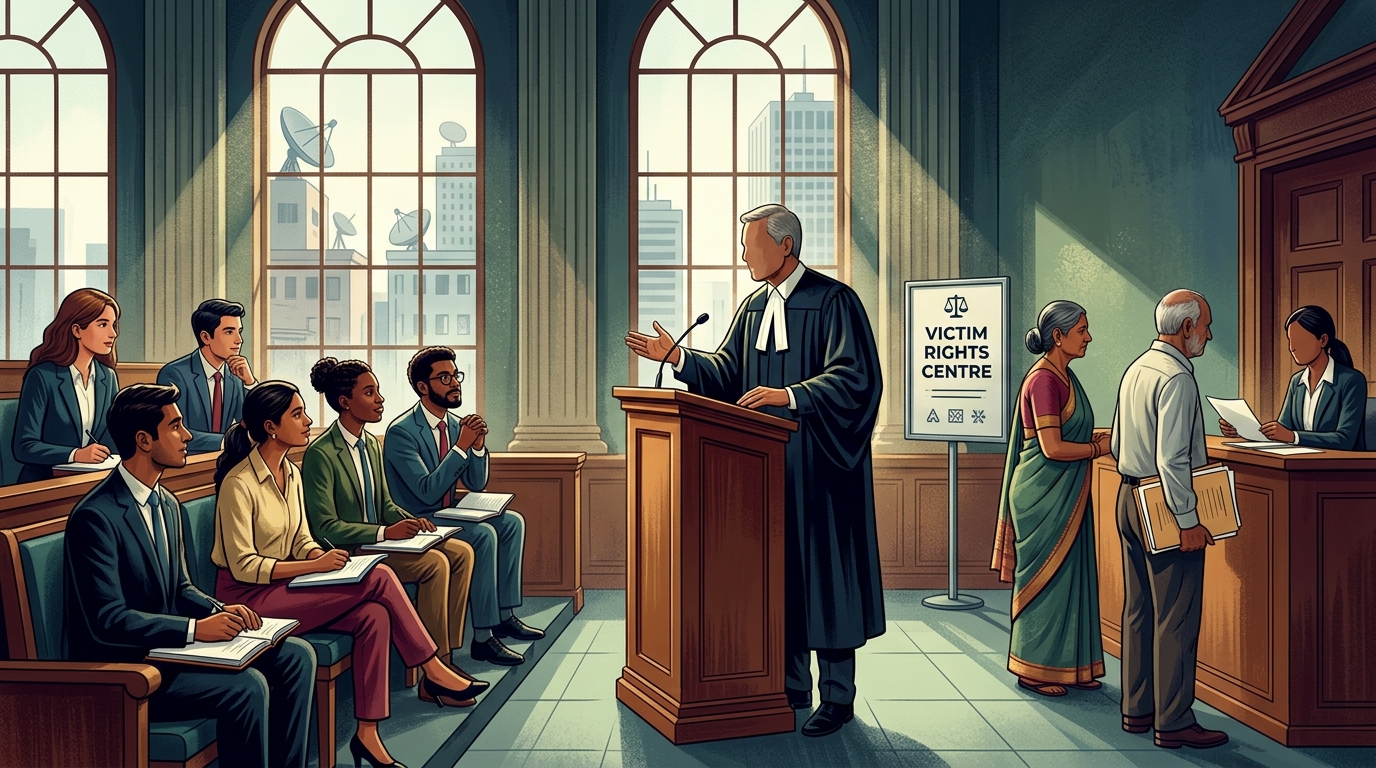
Chief Justice Surya Kant made two significant public statements this week that deserve attention beyond legal circles. At the inauguration of a Victim Rights Centre at the Bihar State Legal Services Authority, he acknowledged a long-standing structural imbalance: that India's judicial system has historically centred its attention on the accused and the offence, often leaving victims — and by extension, ordinary citizens — underserved by the system meant to protect them.
In a separate engagement at Chanakya National Law University in Patna, the Chief Justice went further, asserting that the judiciary is committed to protecting students' right to protest. He described the interaction as an "unfiltered" conversation, signalling a willingness to engage with civil society concerns rather than retreat behind institutional formality.
For India's professional class, these are not abstract pronouncements. A judiciary that takes citizen rights seriously — including the rights of workers, whistleblowers, and consumers — is foundational to a functioning economy. Startup founders navigating contract disputes, IT employees facing workplace grievances, and gig workers seeking legal recourse all depend on a system that is responsive, not merely procedural. The CJI's remarks suggest an institutional awareness, at least at the rhetorical level, that the courts must serve people, not just process cases.
Whether this translates into systemic reform — faster tribunals, better legal aid, stronger consumer protection enforcement — remains to be seen. But the framing matters. A judiciary that positions itself as a protector of civic expression and victim rights is one more likely to be trusted by the professional and entrepreneurial community when disputes arise.
Russia's Endorsement of India's UN Seat: Strategic Signal with Economic Undertones
At the United Nations, Russia formally backed India's bid for a permanent seat on the Security Council, with Moscow's representative cautioning against allocating additional seats to Germany or Japan — nations he characterised as trending toward militarism. Regardless of one's view of the source, the endorsement reflects something real: India's growing stature as a non-aligned but globally consequential power.
For India's business and technology community, permanent membership of the UN Security Council would represent a qualitative shift in the country's ability to shape global trade norms, technology governance frameworks, and international dispute resolution mechanisms. India's IT sector, which remains deeply integrated with global supply chains and export markets, has a material interest in a stable, rules-based international order where India has a seat at the table — not merely a voice in the gallery.
This is particularly relevant as debates around data sovereignty, AI regulation, and semiconductor supply chains increasingly play out in multilateral forums. A permanent Security Council seat would strengthen India's negotiating hand in those conversations.
Political Violence in Bengal: A Reminder of Democratic Fragility
The killing of a man during a clash between political groups in West Bengal's Medinipur is a grim reminder that political violence remains a feature — not an aberration — of democratic contestation in parts of India. While this is a state-level event, its national resonance matters: investor confidence, talent mobility, and the perception of institutional stability are all affected when political conflict turns lethal.
India's professional community, including the large number of Bengali professionals working across Hyderabad's tech corridor, has reason to follow such developments. Political instability in any major state creates ripple effects — in infrastructure investment, in the confidence of domestic and foreign capital, and in the lived experience of working families.
What This Means for You
- Legal recourse matters: The CJI's focus on victim rights and protest protections is a signal worth monitoring — better access to justice benefits employees, founders, and consumers alike. Track whether these statements translate into faster commercial courts and stronger labour tribunals.
- India's global role affects your sector: As India presses its case for greater multilateral influence, tech and services professionals stand to benefit from stronger IP protections and more favourable trade frameworks negotiated from a position of greater geopolitical weight.
- Democratic stability is an economic variable: Political violence and institutional erosion are not just moral concerns — they affect the investment climate, talent flows, and the rule of law that underpins every business contract you sign.
- Engage with civic institutions: Whether through bar associations, industry bodies, or civic tech initiatives, Hyderabad's professional community has both the capacity and the stake to push for the reforms that this week's headlines gesture toward but do not guarantee.