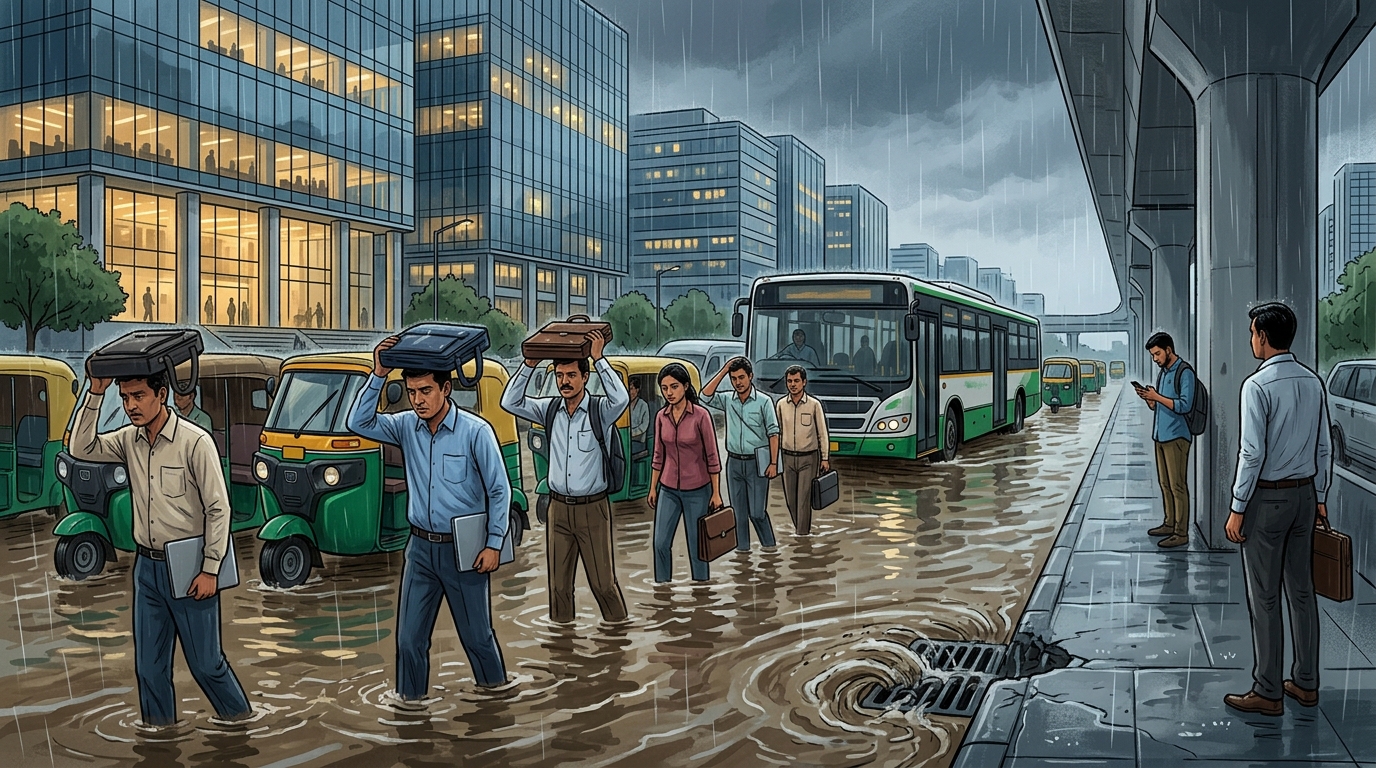
As Hyderabad's monsoon season intensifies, the city's working professionals — many of whom commute daily through flood-prone corridors like Gachibowli, Kondapur, and the Hitec City stretch — are once again confronting a familiar anxiety: will the city's civic infrastructure hold up, or will waterlogged underpasses and stalled traffic swallow another productive workweek?
The Monsoon Readiness Question No One in GHMC Is Answering Loudly Enough
While a review of monsoon preparedness was conducted in Chennai's Alandur and Adyar zones — where officials were instructed to keep motor pumps ready in low-lying, waterlogging-prone areas — Hyderabad professionals are left asking an uncomfortable but legitimate question: where is the equivalent public accountability exercise for our own city?
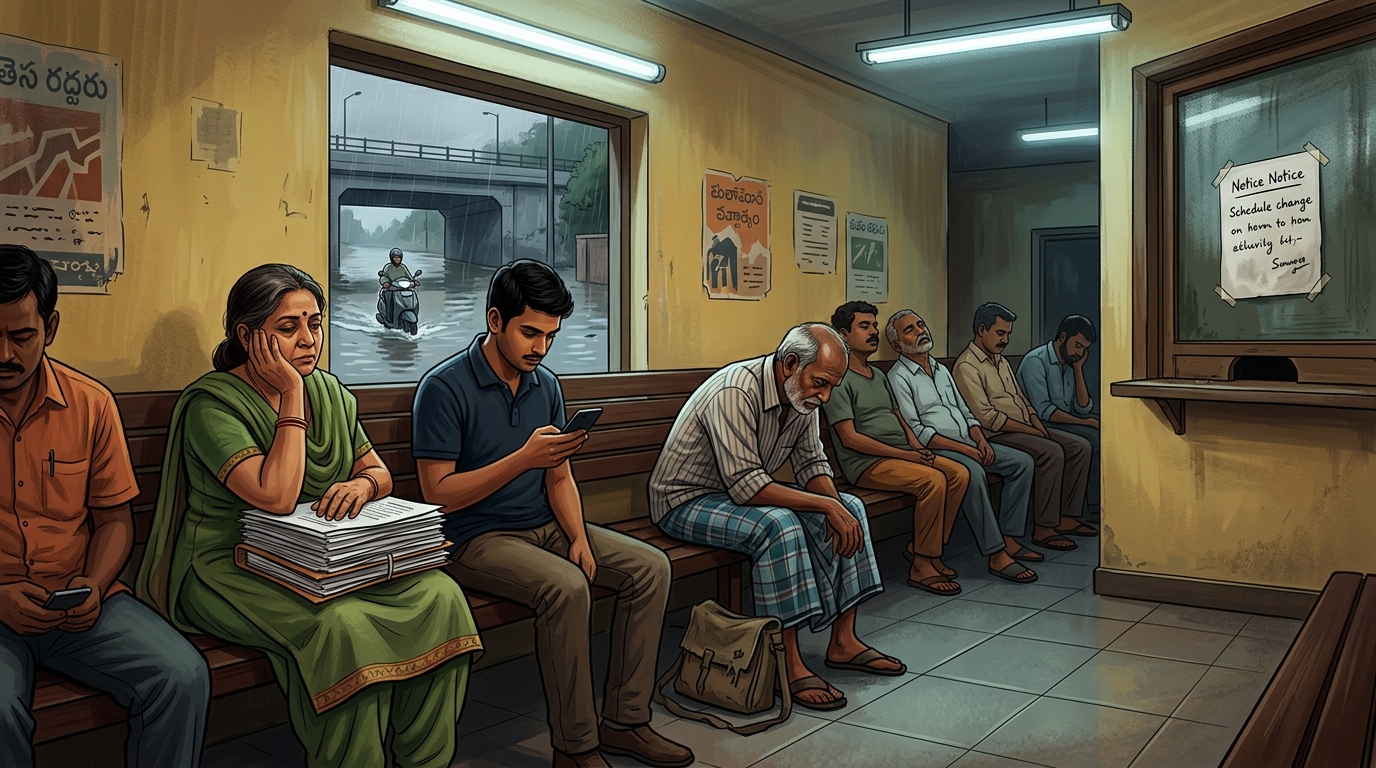
Hyderabad's track record during heavy rainfall has been, to put it charitably, inconsistent. The GHMC has repeatedly announced pre-monsoon drain-desilting drives, pump deployment plans, and stormwater drainage upgrades. Yet flooding in Manikonda, the Outer Ring Road service lanes, and underpasses near Raidurg Metro Station has continued to disrupt commutes and, on occasion, damage property. The absence of a transparent, ward-level monsoon readiness audit — publicly accessible and independently verified — remains a systemic gap that civic bodies have yet to address credibly.
For the roughly 6 lakh IT and business professionals who work across the HITEC City, Nanakramguda, and Financial District belt, this is not an abstract civic concern. It is a direct operational risk. Flooded roads translate into delayed client calls, missed stand-ups, and hours lost — costs that fall disproportionately on employees who depend on public roads and shared transport, not on the employers whose glass towers remain comfortably elevated above street level.
The GCC Expansion Narrative and What It Obscures
The broader business press this week has been awash in enthusiasm about how companies like Woodside Energy are building sophisticated Global Capability Centres in Bengaluru, integrating AI, finance, and operations capabilities under one roof. While this trend is real and significant, Hyderabad's own GCC ecosystem — which by many counts rivals Bengaluru's in scale — deserves a more critical read.
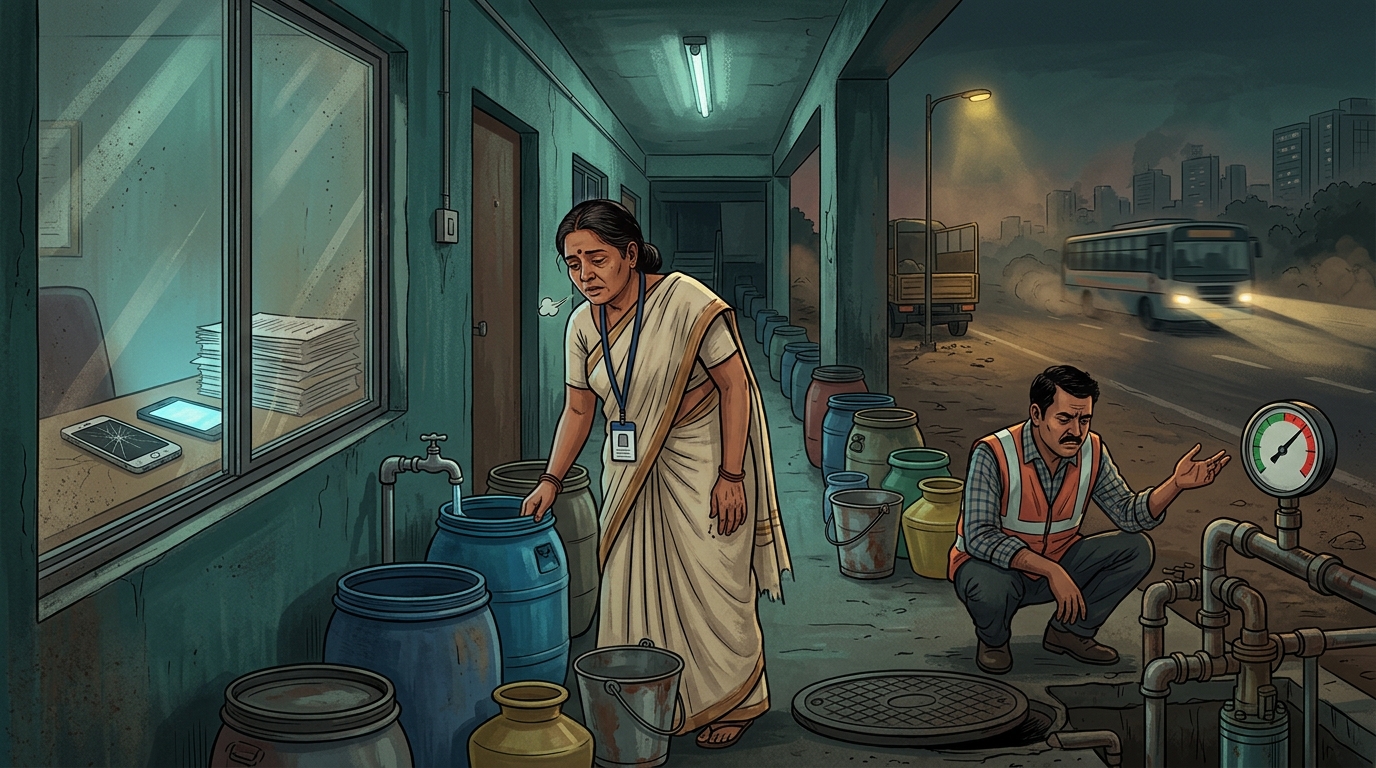
The GCC boom has undeniably brought high-quality jobs to Hyderabad. But it has also accelerated pressure on the city's civic infrastructure — roads, water supply, solid waste management — without a commensurate increase in ring-fenced infrastructure investment tied to commercial development approvals. HMDA's development charges and GHMC's property tax revenues have grown, yet the translation of that fiscal growth into visible, reliable public services for working residents remains patchy at best.
Professionals working in these centres — many of them skilled engineers, analysts, and product managers — deserve a city that functions as well as the offices they work in. That means reliable last-mile connectivity, functional footpaths, and drainage systems that do not collapse under the first significant rainfall of the season.
What This Means for You
- Plan your commute proactively: Monitor GHMC's official channels and community apps like Hyderabad Traffic Police's social handles for real-time waterlogging alerts this monsoon season. Do not rely solely on navigation apps, which are often slow to reflect on-ground flooding conditions.
- Engage your employer on work-from-home flexibility: Monsoon disruptions are predictable and recurring. If your organisation does not already have a formal bad-weather WFH protocol, now is the time to raise it — framed as a business continuity measure, not just a comfort preference.
- Hold your ward councillor accountable: GHMC's ward-level contacts are publicly available. Before the rains peak, ask your local representative specifically about pump deployment and drain-desilting status in your area. Collective, organised civic pressure — even via email or social media — has historically produced faster responses than individual complaints.
- Stay informed on HMDA approvals in your neighbourhood: Large commercial developments near residential zones often worsen localised flooding by increasing impermeable surface area. Tracking HMDA building permission data is increasingly possible through RTI filings and civic tech platforms.
Hyderabad's professional community is sophisticated, mobile, and vocal. It has the tools and the standing to demand a city that matches its ambitions — not just during investor summits and global capability centre inaugurations, but on an ordinary Tuesday morning when it rains.