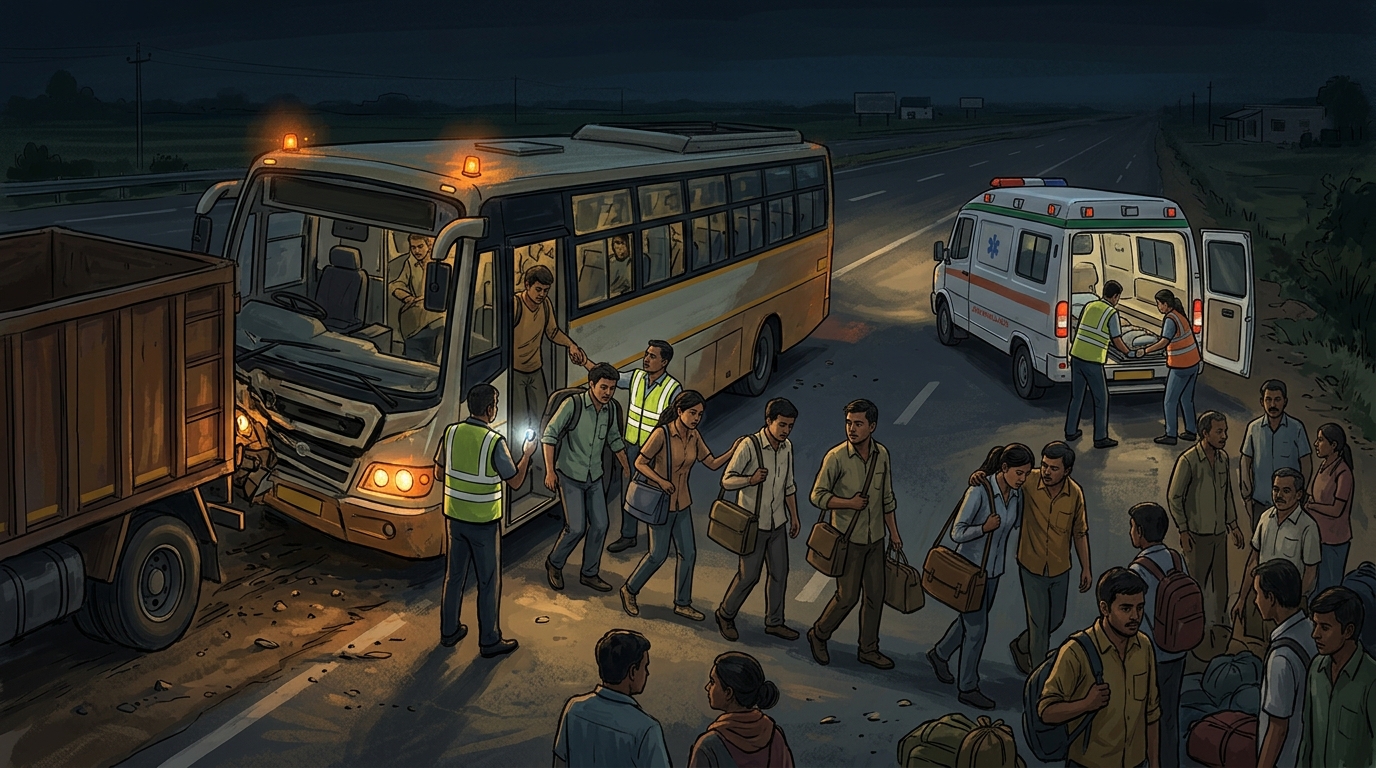
Hyderabad's monsoon arrived not with relief, but with a reminder of how fragile the city's urban infrastructure remains — and how that fragility falls hardest on the shoulders of the working professional. For the second consecutive day, persistent rainfall brought large stretches of the city to a near-standstill on Tuesday, with the IT Corridor — the economic spine connecting HITEC City, Gachibowli, and Kondapur — among the worst-affected zones.
The IT Corridor Gridlock: A Recurring Failure, Not a Natural Disaster
Traffic snarls of this scale are not simply an act of weather. They are, in large part, the consequence of deferred infrastructure investment and poor urban drainage planning in areas that have seen explosive commercial growth over the past two decades. Waterlogging on arterial roads, compounded by ongoing construction work, created cascading bottlenecks that stretched commute times for tens of thousands of IT employees, gig workers, and small business operators.
For the city's tech workforce — many of whom have returned to mandatory or hybrid office schedules — a two-hour commute becoming a five-hour ordeal is not a minor inconvenience. It translates into missed deadlines, unpaid overtime, increased fuel costs, and measurable mental fatigue. Ride-hailing surge pricing during rain events adds a quiet financial tax on workers who cannot afford to own or maintain personal vehicles.
The state government and the Greater Hyderabad Municipal Corporation (GHMC) must be held to account for the pace of stormwater drain upgrades in high-density IT zones. Infrastructure spending that benefits the city's most economically productive corridors should not require annual monsoon crises as its justification.
Fake Paneer at Keesara: A Supply Chain Problem With Everyday Consequences
In a separate but equally consequential development, the Malkajgiri Special Operations Team and food safety officials seized nearly 300 kilograms of suspected fake paneer from two autorickshaws near Keesara, arresting two individuals in the process. The consignment was allegedly destined for hotels and restaurants across the city.
This is not an isolated incident. Adulterated dairy products have been a persistent concern in Hyderabad's rapidly expanding food service sector. For professionals who rely on office canteens, quick-service restaurants, and food delivery platforms for daily meals, this bust is a pointed reminder that food safety enforcement in the supply chain remains inconsistent and under-resourced.
The fact that 300 kg of suspect paneer was being transported in autorickshaws — informal, lightly regulated vehicles — points to gaps in the cold chain logistics oversight that food safety authorities need to urgently address. Regulatory capacity must scale alongside the city's food economy.
A Trainee IPS Officer Arrested: Institutional Accountability in Focus
The arrest of a trainee IPS officer in connection with a sexual harassment complaint filed by a fellow trainee at the National Police Academy carries significance beyond the legal case itself. That the complaint was filed, investigated, and resulted in an arrest within an institutional law enforcement setting is notable — and reflects the slow but real impact of systemic pressure for accountability in workplaces, including uniformed services.
For Hyderabad's professional community, particularly women in corporate and public-sector roles, this case is a signal that POSH (Prevention of Sexual Harassment) frameworks, however imperfect, can produce consequences — even in hierarchical institutions historically resistant to internal accountability.
What This Means for You
- IT and tech workers: If your employer has not yet formalised a monsoon work-from-home policy, now is the time to raise it with HR. Two consecutive days of corridor gridlock is a productivity and wellbeing issue that warrants a structured response, not ad hoc arrangements.
- Entrepreneurs and startup founders: Factor monsoon-period commute disruption into your operational planning for July–September. Flexible hours or remote-first policies during peak rain events are no longer a perk — they are a business continuity measure.
- All professionals: Be cautious about dairy-heavy meals from unverified food vendors during this period. The Keesara seizure suggests the problem is active and city-wide in distribution.
- Investors and policy watchers: The IT Corridor's chronic drainage failures represent a genuine infrastructure investment gap — one that the state budget and GHMC capital expenditure plans need to address with more urgency and transparency than has been evident in recent cycles.