This week's international news cycle is defined by three distinct but interconnected themes: accelerating climate disruption, geopolitical anxiety at the highest levels of American power, and a humanitarian disaster in South America. For Hyderabad's technology workforce and business community — deeply integrated into global supply chains, client networks, and capital flows — none of these developments are distant abstractions.
Britain's Summer of Heat: A Climate Milestone Nobody Wanted
The UK Met Office has confirmed that Summer 2026 is on course to become the hottest on record, surpassing a benchmark set just last year in 2025. The threshold is so close that only average temperatures for the remainder of August are needed to break it. This is not a weather curiosity — it is a data point in a rapidly accelerating pattern that climate scientists have warned about for decades.
For the global technology industry, this matters in ways that are both immediate and structural. British and European data centres — many of which serve clients in South Asia, including large IT outsourcing firms headquartered in Hyderabad — face mounting cooling costs and energy stress during extended heat events. Hyperscalers like Microsoft, Google, and AWS have already begun rerouting workloads and investing in heat-resilient infrastructure across Europe. These cost pressures do not stay contained within European borders; they ripple into contract pricing, SLA negotiations, and cloud service costs that Indian IT firms and their clients absorb.
More broadly, the normalisation of record-breaking summers in Western economies is accelerating regulatory pressure. The EU's Corporate Sustainability Reporting Directive (CSRD) and related frameworks are pushing multinationals — including those who outsource to Indian IT firms — to demand carbon accountability across their entire vendor chains. Hyderabad-based technology service providers who are not already building credible ESG reporting frameworks are falling behind a curve that will soon determine contract eligibility, not just corporate optics.
Trump's Security Scare: Geopolitical Volatility at the Top
US media reports, cited by the BBC, suggest that President Donald Trump was secretly evacuated from Air Force One via a catering truck to avoid a reported threat to his life linked to Iran. The White House has not officially confirmed the details, and the story carries inherent uncertainty given the sensitivity of presidential security operations. Nevertheless, the episode — whether fully accurate in its specifics or not — reflects a genuine and documented pattern of elevated Iran-US tensions that has persisted through 2025 and into 2026.
For business professionals, the significance lies not in the dramatic imagery but in what sustained Iran-US hostility means for global markets. Oil price volatility, instability in Gulf shipping lanes, and the potential for rapid sanctions escalation are all live risks. India remains one of the world's largest importers of crude oil, and any significant disruption to Gulf energy flows has an immediate pass-through effect on fuel prices, logistics costs, and the broader macroeconomic environment in which Indian businesses operate.
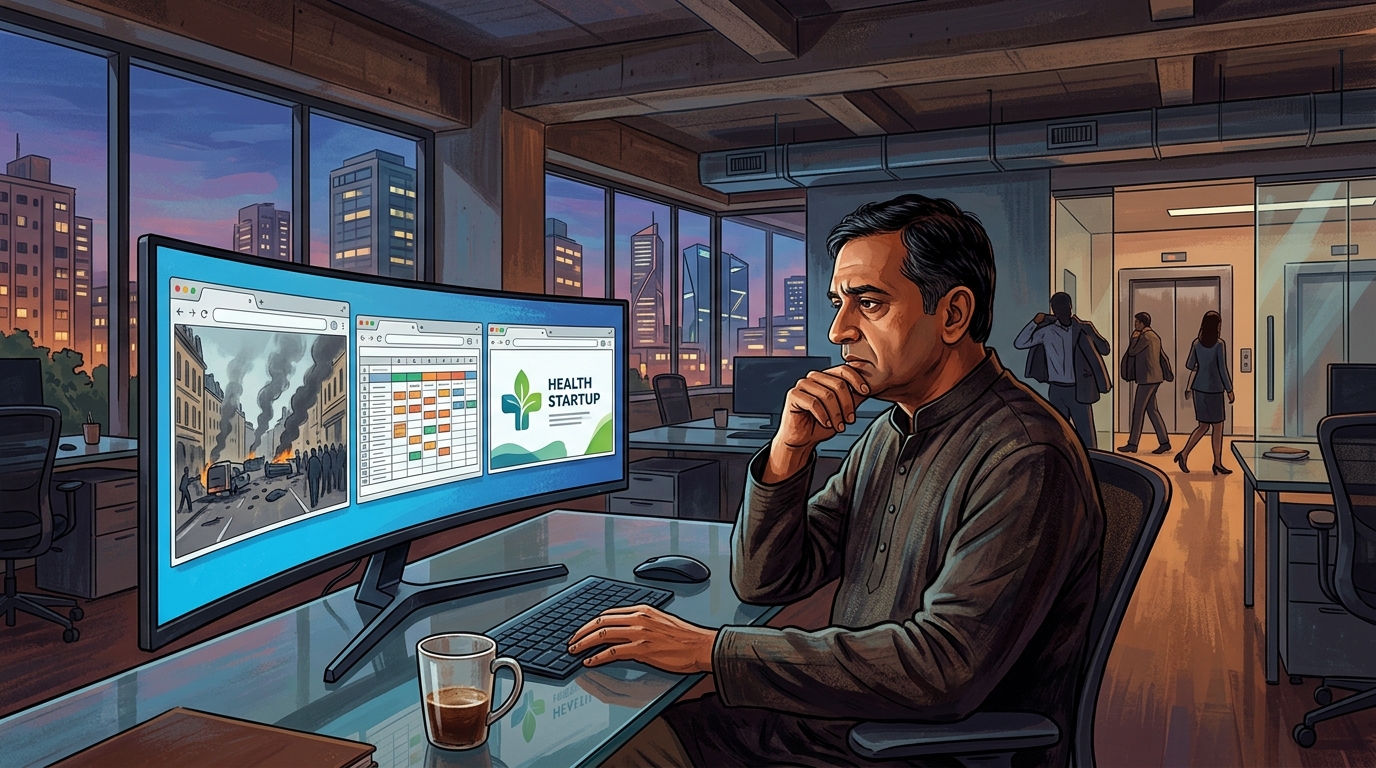
For Hyderabad's startup ecosystem in particular, which increasingly depends on US venture capital and strategic partnerships with American technology firms, a politically volatile Washington also means slower decision-making cycles, greater caution among institutional investors, and the ever-present risk of technology export controls being tightened in ways that affect cross-border software development and AI collaboration.
Colombia Earthquake: Humanitarian Crisis With Supply Chain Echoes
A powerful earthquake has killed at least 180 people in Colombia, with rescuers continuing to search for survivors in the rubble. Aftershocks compounded the crisis on Tuesday, hampering relief efforts across affected regions. While Colombia is not a primary technology hub in the way that the US or Europe are for Indian IT firms, the disaster carries supply chain relevance that professionals should not overlook.
Colombia is a significant producer of minerals and commodities that feed into global technology hardware supply chains, and is also home to a growing nearshore technology services sector that several US firms have been expanding into as a complement or alternative to Indian outsourcing. A major natural disaster of this scale disrupts not just local economies but the confidence of international investors in regional stability — redirecting attention and capital in ways that, over time, reshape competitive dynamics in the global IT services market.
Beyond the commercial dimension, the Colombia earthquake is a reminder of the compounding vulnerability that climate change and seismic risk together create for societies across the Global South. The humanitarian toll — overwhelmingly borne by working-class and lower-income communities — underscores why equitable disaster resilience, not just economic growth metrics, must be part of how governments and international institutions measure development progress.
What This Means for You
- IT and cloud professionals: Prepare for European data centre cost pressures to feed into cloud pricing and contract renegotiations over the next 12–18 months. Sustainability credentials are becoming a commercial prerequisite, not a bonus.
- Startup founders seeking US investment: Geopolitical volatility in Washington — whether driven by security concerns, Iran tensions, or trade policy shifts — creates unpredictable delays in capital deployment. Build runway assumptions that account for longer fundraising cycles.
- Business and procurement leaders: Monitor Gulf energy corridor developments closely. Any escalation in Iran-US tensions has a near-direct effect on Indian fuel and logistics costs, squeezing operational margins.
- All professionals: The convergence of climate records, geopolitical instability, and natural disasters is not coincidental — it reflects a world in which systemic risks are compounding. Building personal and organisational resilience, from diversified client portfolios to carbon-aware operations, is no longer optional strategic planning. It is table stakes.