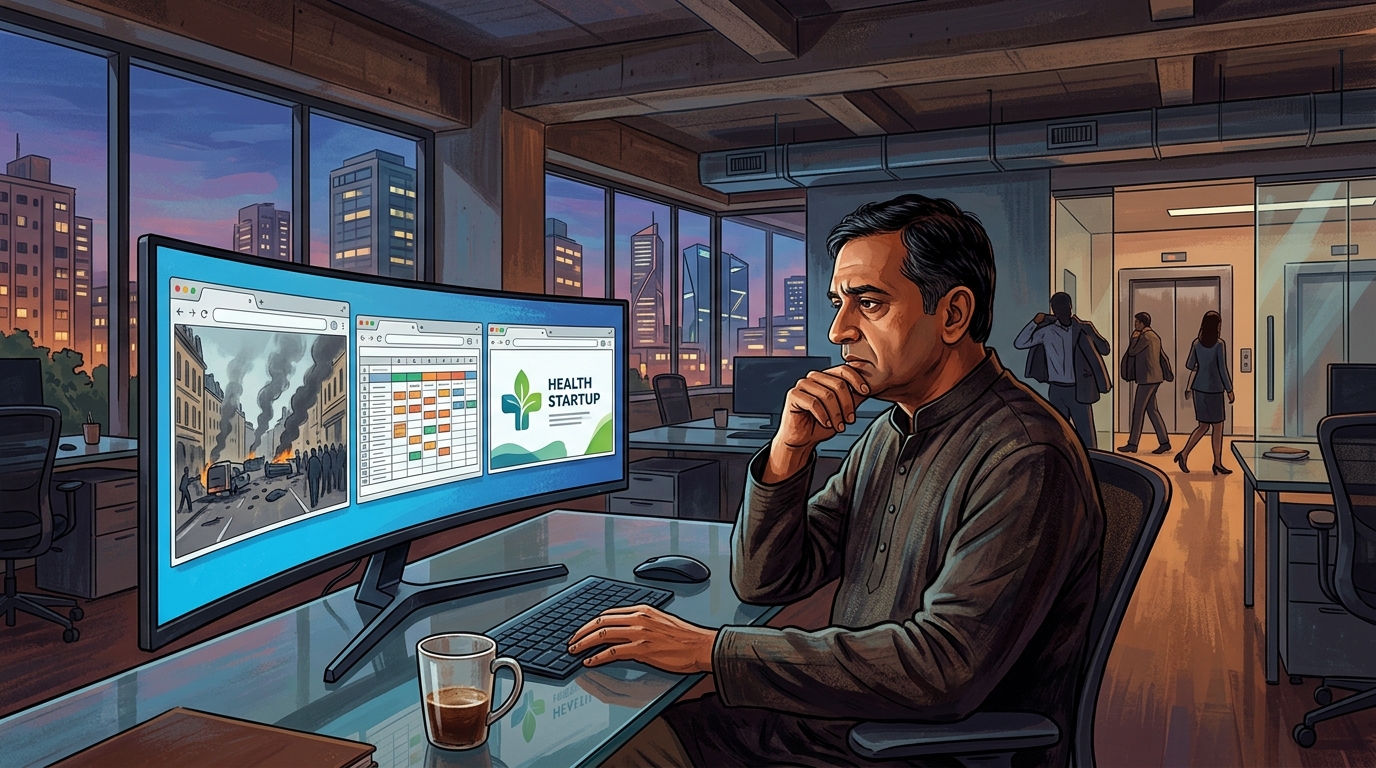
It has been a turbulent week on the world stage — one that, at first glance, may seem distant from the glass towers of HITEC City or the startup hubs of Gachibowli. Look closer, and the threads connect unmistakably to the professional lives of Hyderabad's IT workers, entrepreneurs, and investors.
US Army Secretary's Resignation: A Signal of Deeper Instability
Dan Driscoll, the youngest-ever US Army Secretary, has resigned after reportedly months of friction within the defence establishment. While the specifics of his departure remain under scrutiny, the resignation adds to a pattern of leadership churn within the current US administration's defence and national security apparatus. For Hyderabad's IT sector — which remains deeply intertwined with US federal contracts, cloud infrastructure projects, and defence-adjacent technology partnerships — this kind of institutional instability is worth watching carefully.
Several large IT services firms headquartered in or operating out of Hyderabad hold or pursue contracts linked to US government digital modernisation programmes. When leadership at the Pentagon and associated agencies turns over rapidly, procurement cycles slow, priorities shift, and contract renewals face delays. Project managers and delivery leads at these firms should be preparing for potential turbulence in their US public sector pipelines over the coming quarters.
More broadly, the resignation is a symptom of a wider erosion of institutional norms within US governance — a trend that creates unpredictability for global technology partners, investors, and supply chain actors who depend on the stability of the world's largest economy.
Nepal's Flooding Disaster: A Humanitarian and Regional Infrastructure Crisis
Rescuers in Nepal have resorted to blasting hillsides with explosives in a desperate bid to reach workers trapped in a flooded hydropower tunnel. The death toll from the wider flooding across the country has now reached 939 — a staggering human cost that demands acknowledgment before any economic analysis.
Nepal is a significant node in South and Southeast Asia's emerging clean energy infrastructure. Its hydropower potential has attracted growing interest from regional investors, development finance institutions, and infrastructure funds — including those with Indian and Hyderabad-based capital participation. When projects of this scale face catastrophic disruptions, it has ripple effects: insurance costs rise, risk premiums on regional infrastructure investment increase, and development timelines stretch.
For Hyderabad's growing community of climate-tech entrepreneurs and ESG-focused investors, Nepal's crisis is also a sobering reminder that the physical risks of climate change are not future hypotheticals — they are present-day financial variables. The frequency and intensity of extreme weather events in the Himalayan region is increasing, and any investment thesis that ignores climate risk modelling is increasingly incomplete.
Borneo's Wildfires and the Orangutan Crisis: A Corporate Accountability Moment
Wildfires blazing through Indonesia's Borneo have destroyed critical habitat for hundreds of orangutans, pushing an already endangered species closer to the edge. Environmentalists and scientists have long linked these recurring fires to land-clearing practices driven by the palm oil industry — one of the most consequential and controversial global commodity supply chains.
This matters to Hyderabad's professional community in ways that go beyond environmental concern. As Indian corporations — including several with significant Hyderabad operations in FMCG, pharmaceuticals, and food processing — deepen their sustainability reporting obligations under both domestic and international frameworks (the EU's Corporate Sustainability Reporting Directive is one such lever), supply chain exposure to deforestation-linked commodities like palm oil is becoming a material financial and reputational risk.
Tech professionals working in supply chain analytics, ESG data platforms, and enterprise software will find growing demand for tools that can trace and verify commodity sourcing. Startup founders in this space should note that the Borneo fires — and the global attention they draw — tend to accelerate regulatory and investor pressure on corporate clients to clean up their supply chains.
What This Means for You
- IT Services Professionals: Monitor US government IT contract pipelines closely. Leadership instability in Washington creates procurement delays. Flag this risk in your Q3/Q4 project forecasting conversations.
- Investors and Fund Managers: Nepal's flooding underscores that climate risk is infrastructure risk. Revisit due diligence frameworks for any regional infrastructure or clean energy exposure to ensure physical climate vulnerability is being priced in.
- Startup Founders (Climate-Tech, Supply Chain, ESG): The Borneo fires will sharpen corporate appetite for supply chain transparency tools. If you are building in this space, the commercial moment is accelerating — but so is the moral responsibility to build tools that genuinely drive accountability, not just optics.
- All Professionals: The week's events collectively reinforce a single theme — the cost of institutional and environmental neglect is rarely contained to where it originates. Preparedness, diversification, and long-term thinking are not just virtues; they are professional imperatives.