For Hyderabad's working professionals, the city's livability and local governance are not abstract concerns — they shape daily commutes, lunch breaks, neighbourhood economies, and the broader civic contract that holds a fast-growing metropolis together. This week, two stories with genuine local weight emerged from the noise of national headlines: GHMC's directive to shut down meat shops and slaughterhouses, and the ongoing Golconda Masters Golf tournament drawing competitive talent to the city. Together, they offer a window into how Hyderabad manages — and sometimes fumbles — its urban responsibilities.
GHMC's Meat Shop Closure Order: Civic Enforcement or Community Disruption?
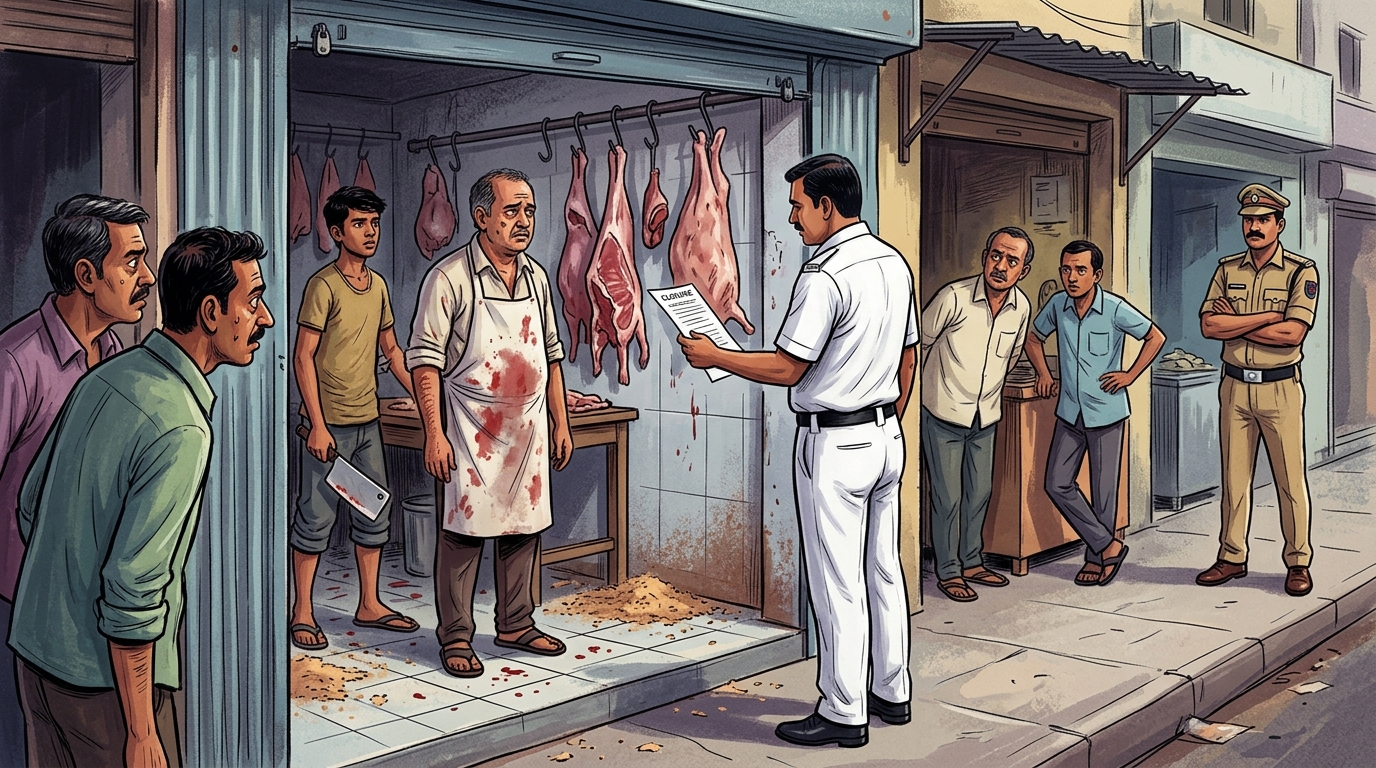
GHMC Commissioner R.V. Karnan has formally urged Hyderabad Police Commissioner V.C. Sajjanar to deploy police support in enforcing the closure of meat shops and slaughterhouses across the city. The directive, framed as a hygiene and regulatory compliance measure, has immediate implications for thousands of small traders operating in neighbourhoods spanning Secunderabad, Tolichowki, Mehdipatnam, and areas adjacent to Hitec City's residential catchment zones.
On the surface, this is routine civic administration — the GHMC has long-standing powers to regulate food establishments on public health grounds. However, the manner of enforcement matters enormously. Meat retail in Hyderabad is overwhelmingly a small and micro-enterprise sector, employing daily-wage workers and supporting thousands of working-class families. A blanket closure order, executed without adequate notice periods, grievance mechanisms, or support for affected traders to meet compliance standards, risks functioning as punitive disruption rather than public health improvement.
For IT professionals and entrepreneurs living in gated communities near Gachibowli, Kondapur, and Manikonda, this may seem distant. It isn't. The informal food economy — including street vendors, neighbourhood meat shops, and small eateries — provides affordable, accessible meals to a significant portion of the city's service workforce: security guards, delivery personnel, domestic workers, and construction labour whose proximity enables Hyderabad's tech economy to function. Disrupting this supply chain without structured rehabilitation has cascading effects.
What the GHMC should be doing — and what professionals should demand of their civic body — is a transparent, time-bound compliance framework: clear hygiene standards published in multiple languages, a reasonable window for traders to upgrade facilities, and targeted closure only for those who demonstrably fail to meet those standards. Enforcement via police muscle, without this scaffolding, is governance by intimidation, not governance by design.
Golconda Masters Golf: Sport, Prestige, and the City's Soft Economy
On a lighter but economically relevant note, the Golconda Masters Golf tournament continues at Hyderabad's historic Golconda course, with Vishesh holding joint lead after the cut fell at one-over 141, with 59 players from a field of 132 advancing. Separately, young paddlers Adhira and Vihaan claimed under-13 titles at the GSM table tennis event in the city.
These sporting events matter more than their leisure optics suggest. Hyderabad's ability to attract and sustain quality sporting tournaments — golf, in particular, draws a high-spending professional and corporate audience — contributes to the city's hospitality, events, and MICE (Meetings, Incentives, Conferences, Exhibitions) economy. For startup founders and corporate professionals who network through golf, a well-maintained competitive circuit strengthens Hyderabad's positioning as a peer to Bengaluru and Pune in the premium professional lifestyle stakes.
What This Means for You
- If you live near enforcement zones: Monitor GHMC notices in your neighbourhood. If local meat or food shops you depend on are being shuttered, engage your ward councillor and ask for the specific compliance grounds — residents have a right to this information.
- If you are a startup founder or employer: The working-class food economy supports your workforce indirectly. Advocacy for fair, transparent GHMC enforcement is also advocacy for your team's daily welfare.
- If you are an investor or events professional: The Golconda Masters is a marker of Hyderabad's sustained sports infrastructure. Watch how the city government maintains and funds these facilities — underfunding of public sports infrastructure is a long-term civic risk.
- Broadly: This week is a reminder that effective city governance requires both regulatory spine and social sensitivity. Hyderabad's growth story is only as strong as the civic institutions managing its complexity.