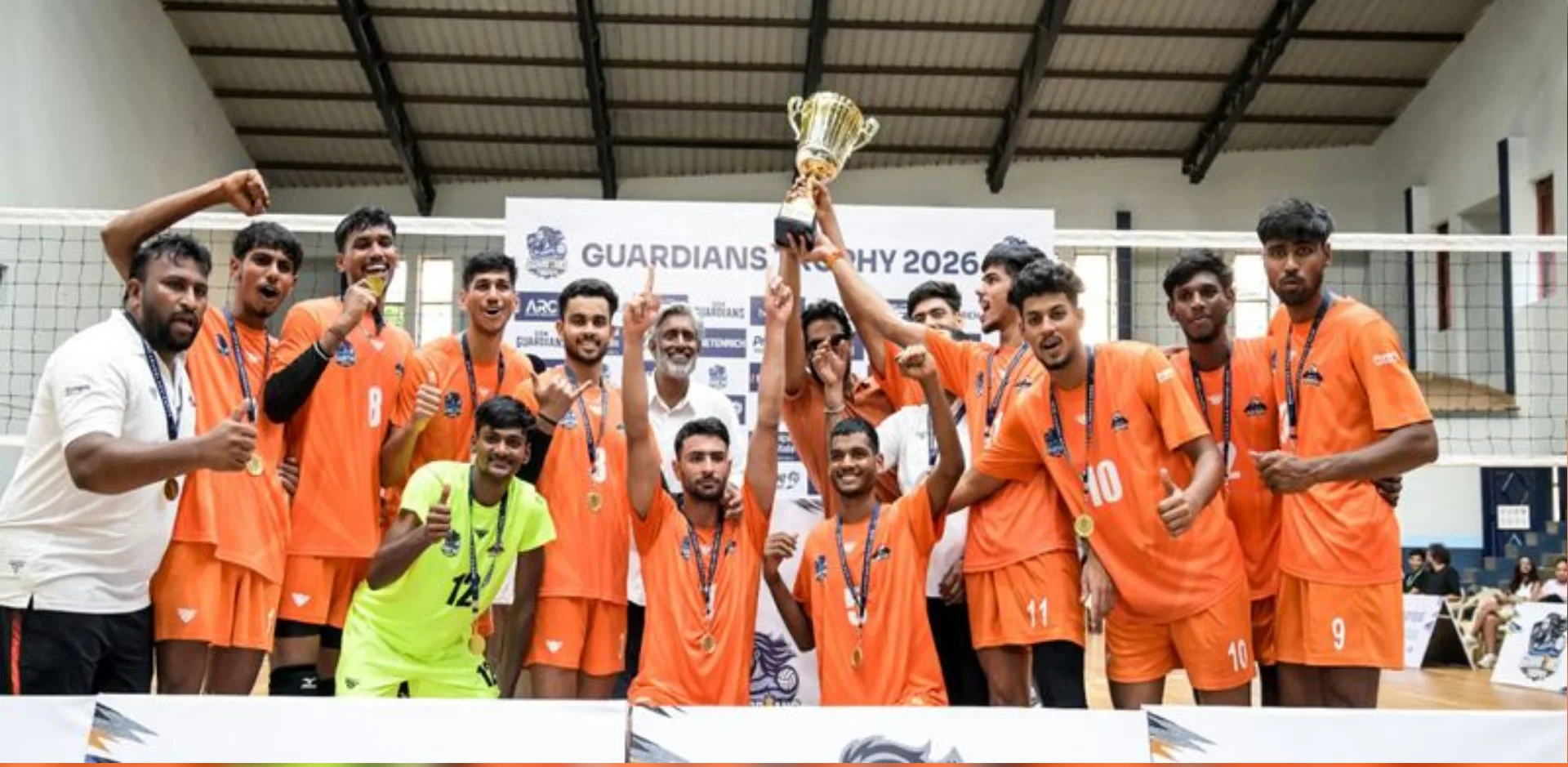
In a week where Hyderabad's headline news cycle was dominated by national political theatre and state-level legislative drama — none of which falls within our city's immediate purview — one genuinely local story cut through the noise with clarity and quiet significance: the Hyderabad Black Hawks' commanding victory at the Guardians Trophy Volleyball championship.
The Hawks' Triumph: More Than a Scoreline
The Black Hawks defeated hosts Goa 3-1 — with set scores of 15-7, 11-15, 16-14, and 15-8 — in what by all accounts was a disciplined, tactically mature campaign. Standout performer Sarthak Singh anchored the team's attacking play, and the victory marks a meaningful moment for organised community sport in a city that has long been defined, almost exclusively, by its IT economy.
For Hyderabad's professional class — engineers, startup founders, analysts clocking long hours across Hitec City, Gachibowli, and the Neopolis corridor — this kind of achievement deserves more than a passing glance. Organised competitive sport at the city level is one of the few genuine community-building mechanisms that cuts across corporate hierarchies and neighbourhood boundaries.
Why Community Sport Matters to Working Professionals
There is a growing body of evidence that cities with active, well-funded community sports ecosystems report better mental health outcomes, stronger civic participation, and higher levels of workplace productivity. Hyderabad, for all its infrastructure investment in IT parks and expressways, has historically underinvested in public recreational facilities and grassroots sports development. Victories like the Hawks' — built on consistent team effort rather than individual celebrity — are a reminder of what structured, community-level sport can produce when given even modest support.
- Mental health dividend: For tech workers navigating high-pressure delivery cycles and hybrid work fatigue, accessible community sport offers genuine respite — something that no amount of office ping-pong tables adequately replaces.
- Networking beyond the boardroom: Entrepreneurs and startup professionals often cite informal community spaces — sports clubs, local leagues — as underrated networking environments where relationships are built on terms other than transactional ones.
- Civic investment signal: A city that produces national-level champions in a sport like volleyball is a city where someone — coaches, associations, local sponsors — is quietly doing the unglamorous work of institution-building. That deserves recognition and, ideally, greater GHMC and HMDA attention to public sports infrastructure funding.
A Note on Editorial Scope This Week
It would be journalistically dishonest to pad this digest with stories that belong to Bengaluru, New Delhi, or national-level policy debates. A flu outbreak at a Bengaluru school, Supreme Court proceedings on a Delhi constituency election petition, and a Karnataka assembly adjournment are consequential stories — but they are not Hyderabad stories. Our city deserves coverage that is genuinely local, granular, and accountable to the people who live and work here.
We acknowledge that some weeks, city-level news is quieter. That is not a failure — it is an invitation to look more carefully at the stories that do exist, rather than inflating national noise into false local relevance.
What This Means for You
- If you work in Hitec City or Gachibowli: Keep an eye on local sports leagues and community clubs. They are increasingly viable alternatives to expensive corporate wellness programmes — and they build the kind of social capital that sustains professional communities over the long term.
- If you are a startup founder or investor: Community sport sponsorship remains one of the most cost-effective forms of local brand-building in Hyderabad. The Hawks' win is a reminder that there is an engaged, competitive sporting community here that is largely under-sponsored.
- As a citizen: Press your ward councillors and GHMC representatives on public sports infrastructure. Volleyball courts, multi-use grounds, and community recreation centres are not luxuries — they are public health assets, and Hyderabad's rapid urbanisation makes them more urgent, not less.