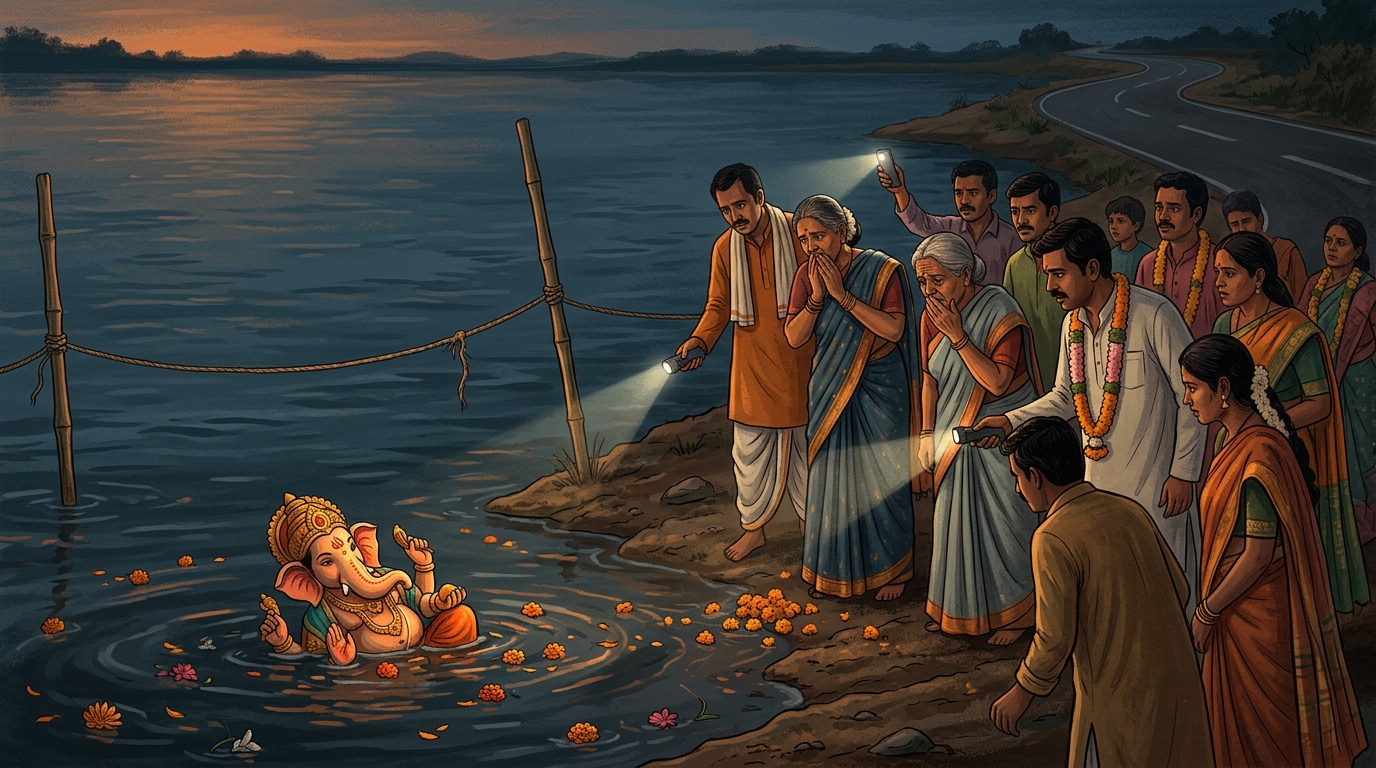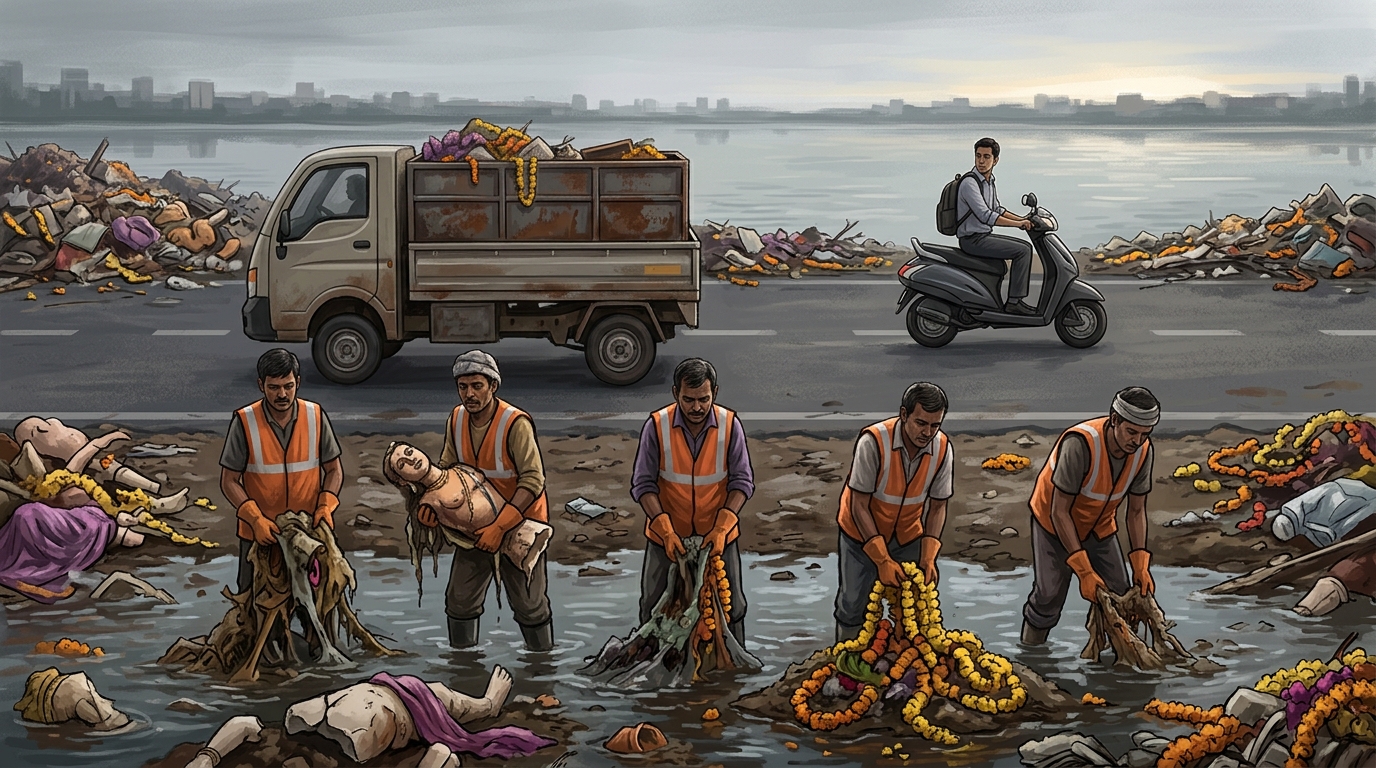
Hyderabad exhaled this week as the 40-hour Ganesh Chaturthi immersion marathon drew to a close, restoring a measure of normalcy to the city's roads and public spaces. But the relief was tempered by a sobering reality: sanitation workers were left to manage roughly 6,000 metric tonnes of post-immersion waste — a figure that puts the city's civic infrastructure squarely in the spotlight, even as traffic restrictions across key corridors including Tank Bund and the city's arterial roads were finally lifted.
The Civic Cost of Scale
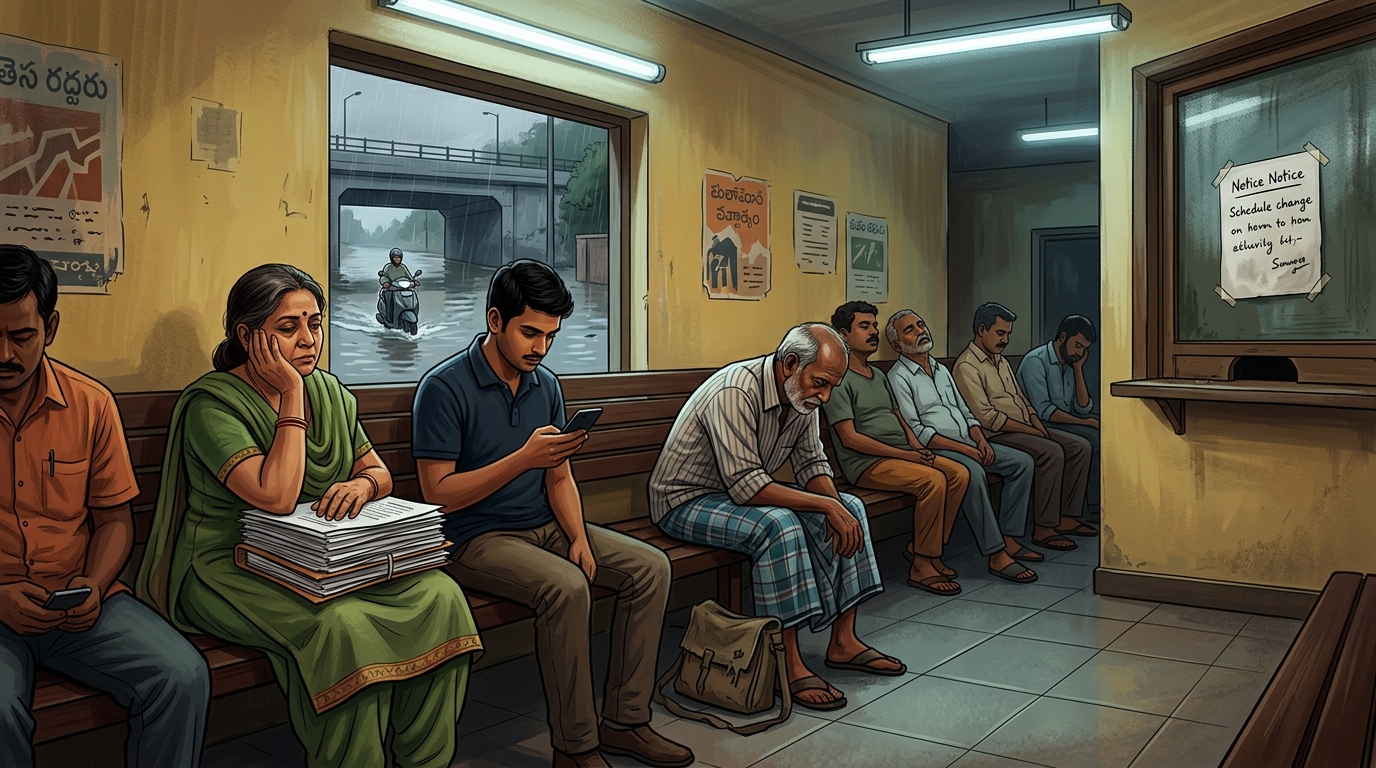
For Hyderabad's working population — many of whom commute daily through the Hussain Sagar belt, Banjara Hills, and Jubilee Hills corridors — the easing of traffic restrictions brings immediate relief. The immersion processions had, over the past several days, significantly disrupted movement across parts of the city that serve as connective tissue between the Old City, central business districts, and the IT clusters of Hitec City and Gachibowli.
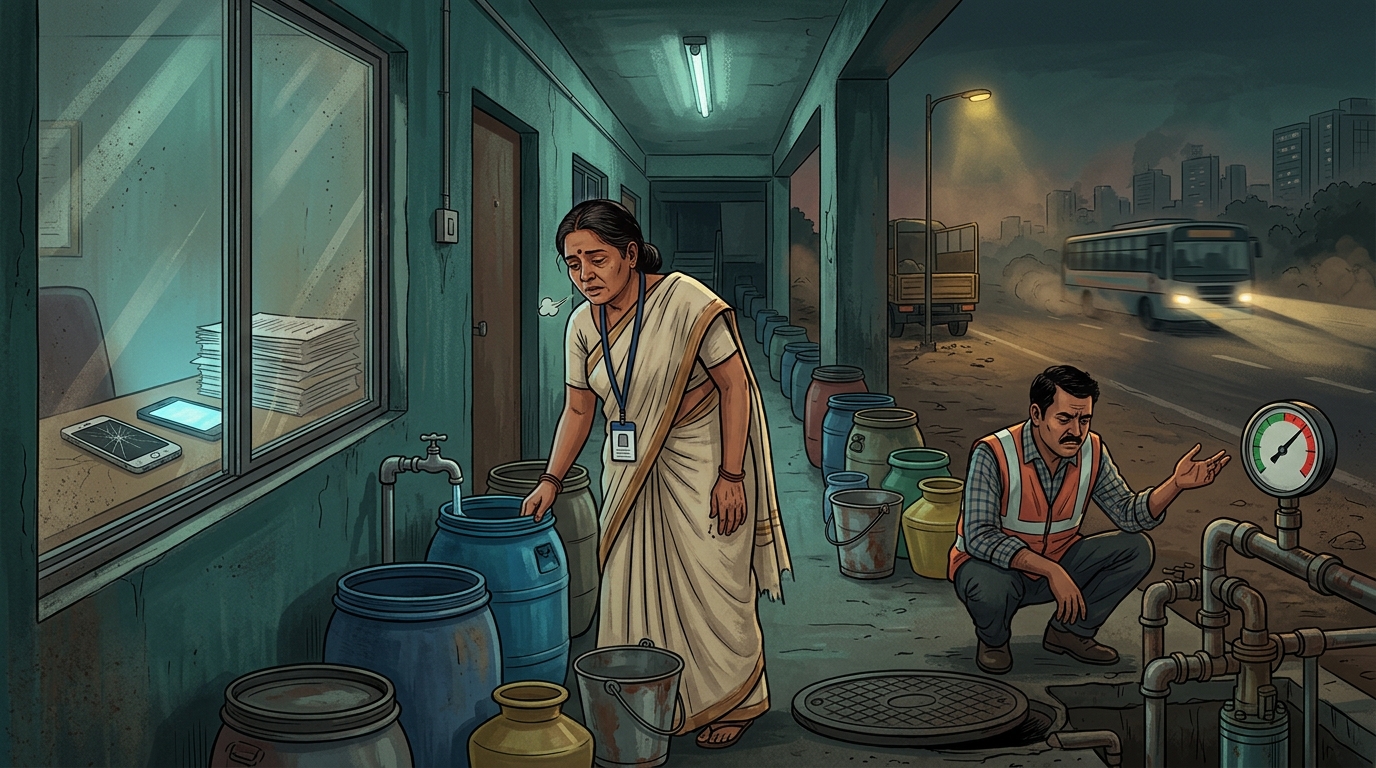
Yet the 6,000 MT waste figure demands more than a passing mention. It represents an enormous burden placed, as always, on the city's largely contract-based sanitation workforce — workers who operate without adequate job security, healthcare benefits, or hazard pay commensurate with the scale of what they handle. GHMC's sanitation crews deserve recognition not merely in press statements, but in sustained policy commitments around fair wages and safe working conditions. The city's ability to function after events of this magnitude rests entirely on their labour.
What This Tells Us About Urban Planning
The immersion season also functions as a stress test for Hyderabad's urban infrastructure. For IT professionals and entrepreneurs whose daily productivity is directly tied to commute times and civic functionality, recurring large-scale disruptions highlight the need for better pre-event coordination between GHMC, Hyderabad Traffic Police, and event organisers. Cities like Pune and Chennai have experimented with artificial immersion tanks in distributed locations to reduce the convergence of lakhs of people at single points — a model worth examining seriously for a city of Hyderabad's scale and ambition.
There is also an environmental dimension that the city's professional community, increasingly attuned to ESG considerations, cannot afford to ignore. The chemical runoff from painted idols into Hussain Sagar and other water bodies remains an annual concern. Sustainable alternatives exist, and civic bodies have the leverage to incentivise — or mandate — their adoption more aggressively than they currently do.
What This Means for You
- Commuters and hybrid workers: Traffic restrictions have eased across major corridors. Expect gradual normalisation over the next 48–72 hours as road-clearing and waste collection operations wind down.
- Startup founders and office managers: If your teams experienced attendance disruption over the immersion period, this is a useful data point for building more flexible hybrid policies around the city's dense festival calendar.
- ESG-conscious businesses and investors: The annual post-immersion waste and water pollution data is publicly available through GHMC and Pollution Control Board reports. Companies building sustainability narratives in Hyderabad should be engaging with these numbers — and with local civic bodies — rather than treating them as background noise.
- Anyone who relies on the city working: The sanitation workers who made this clean-up possible are employed largely on contract terms. Supporting civic advocacy for their regularisation and fair pay is not just an ethical position — it is an investment in the city's resilience.