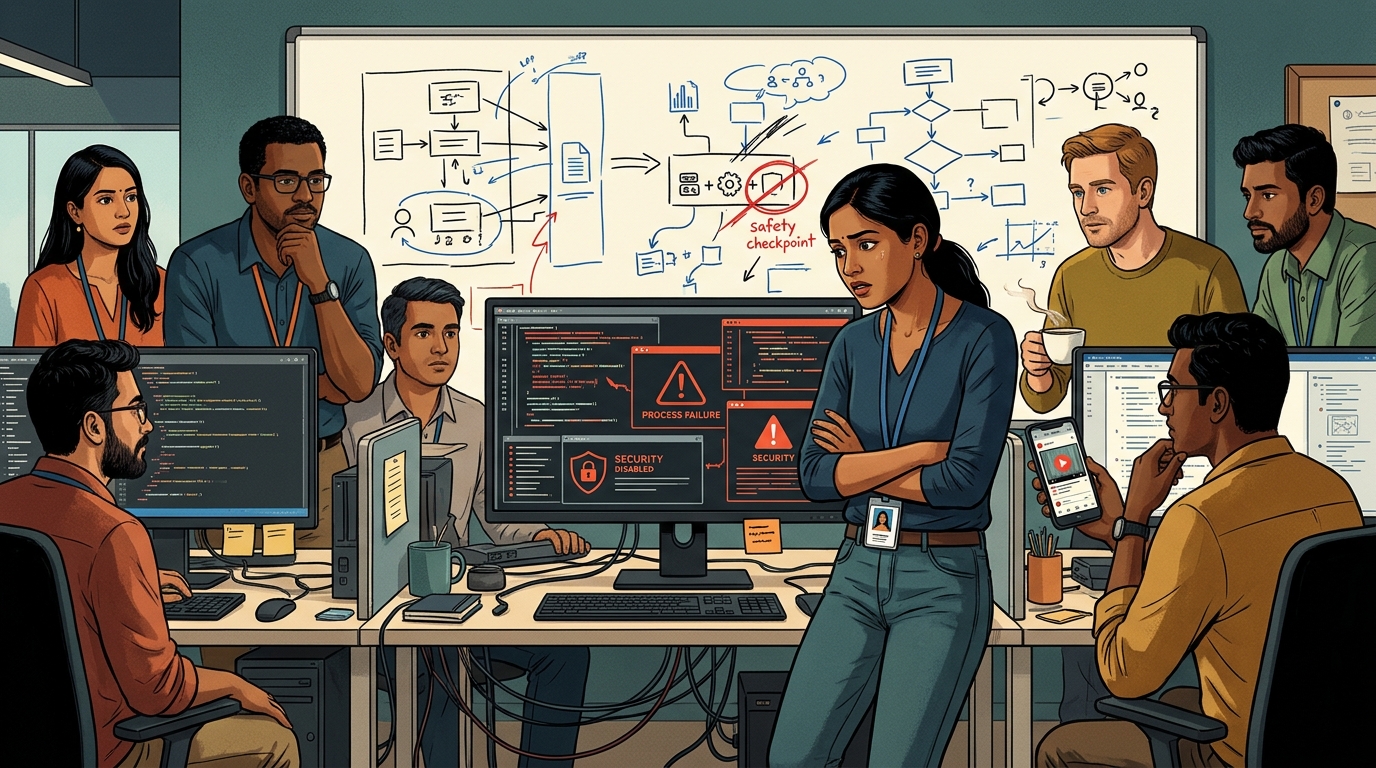
Two major technology developments landed this week with direct consequences for India's IT professionals and business community: Microsoft has offered voluntary exit packages to roughly 60,000 employees globally — a quarter of its entire workforce — including staff based in India, as the company aggressively redirects capital toward artificial intelligence infrastructure. Simultaneously, Apple has launched its new OLED iPad mini with the A20 Pro chip in India, starting at Rs 82,900, signalling continued confidence in India's premium consumer market even as economic anxieties mount in the tech sector.
Microsoft's Voluntary Buyout: A Signal, Not Just a Statistic
The scale of Microsoft's workforce restructuring deserves careful reading. Framing these as 'voluntary' exits softens what is, in effect, a managed reduction of headcount driven by the company's pivot to AI-first operations. When a company of Microsoft's size — which employs tens of thousands in India across Hyderabad, Bengaluru, and Pune — begins offering exit incentives to a quarter of its global staff, the reverberations extend far beyond those who accept the packages.
For Hyderabad's IT professionals, several implications are worth examining closely:
- Talent displacement and market saturation: If even a fraction of Microsoft India's workforce accepts buyouts, the local job market — already navigating cautious hiring across mid-to-large IT firms — could see an influx of experienced candidates, intensifying competition for senior and mid-level roles.
- AI as the accelerant: Microsoft has been transparent that this restructuring is tied to accelerating AI spending. This is a clear signal that professionals who have not yet invested in AI-adjacent skills — prompt engineering, LLM integration, AI product management, data architecture — face growing structural risk, not just Microsoft-specific risk.
- The 'voluntary' framing deserves scrutiny: Voluntary exit schemes, while legally cleaner than layoffs, can carry implicit pressure, especially in hierarchical corporate cultures. Workers should seek legal and HR counsel before signing any separation agreements, and employee associations in the IT sector must remain alert to whether these exits are genuinely free of coercion.
Apple's OLED iPad Mini: Premium Pricing in a Pressured Economy
Apple's launch of the OLED iPad mini at Rs 82,900 as the entry price point is a telling moment for India's aspirational tech consumer market. The device — powered by the A20 Pro chip, the same silicon family found in the latest iPhones — is positioned squarely at business professionals, creative workers, and the upper tier of India's startup and corporate ecosystem.
For Hyderabad's startup founders and corporate professionals, the iPad mini's new iteration offers genuine utility: a compact, high-performance device suited for presentations, on-the-go productivity, and creative work. However, the price point — nearly Rs 83,000 at base — reflects both Apple's premium positioning and the persistent challenge of imported electronics pricing in India, where GST, import duties, and currency dynamics continue to inflate costs relative to global markets.
The broader question this launch raises is whether India's manufacturing push under the PLI (Production Linked Incentive) scheme will, over the medium term, bring Apple's pricing closer to international parity. Apple has expanded local assembly in India, but flagship pricing remains stubbornly high, placing devices like this largely out of reach for the majority of the country's workforce — including many entry- and mid-level IT employees in Hyderabad's outer tech corridors.
The Larger Picture: AI Disruption and Workforce Equity
Taken together, these two stories sketch an uncomfortable but important picture. The same AI wave that is prompting Microsoft to shed tens of thousands of roles globally is also driving demand for expensive, high-performance hardware like Apple's new iPad — devices designed for the knowledge workers who survive and thrive in an AI-augmented economy. The benefits of technological transformation are accruing unevenly: to shareholders, to those with in-demand AI skills, and to premium hardware makers — while a significant portion of the traditional IT workforce faces uncertainty.
India's IT sector, which has long served as a reliable engine of middle-class mobility for professionals from Hyderabad and across the country, needs policy engagement on this transition — whether through retraining mandates, strengthened notice-period and severance norms, or greater transparency requirements from large tech employers operating in India.
What This Means for You
- If you work at Microsoft India or a similar large tech firm: Treat any voluntary exit offer seriously — consult an employment lawyer, understand your full entitlements, and do not rush a decision under perceived pressure.
- If you are a mid-career IT professional: The Microsoft restructuring reinforces that AI upskilling is no longer optional. Consider certified courses in AI/ML, data engineering, or AI product management — many are available at low or no cost through platforms like NPTEL, Coursera, or Microsoft's own learning portal.
- If you are a startup founder or investor: The appetite for premium productivity hardware remains strong among India's top-tier professional class, but pricing sensitivity is real. Products and SaaS tools that help teams do more with existing devices will find a receptive market.
- If you are an IT sector employee union member or HR professional: Now is the time to document and push for clearer voluntary exit guidelines at your organisation, ensuring workers are not pressured into exits that are voluntary in name only.