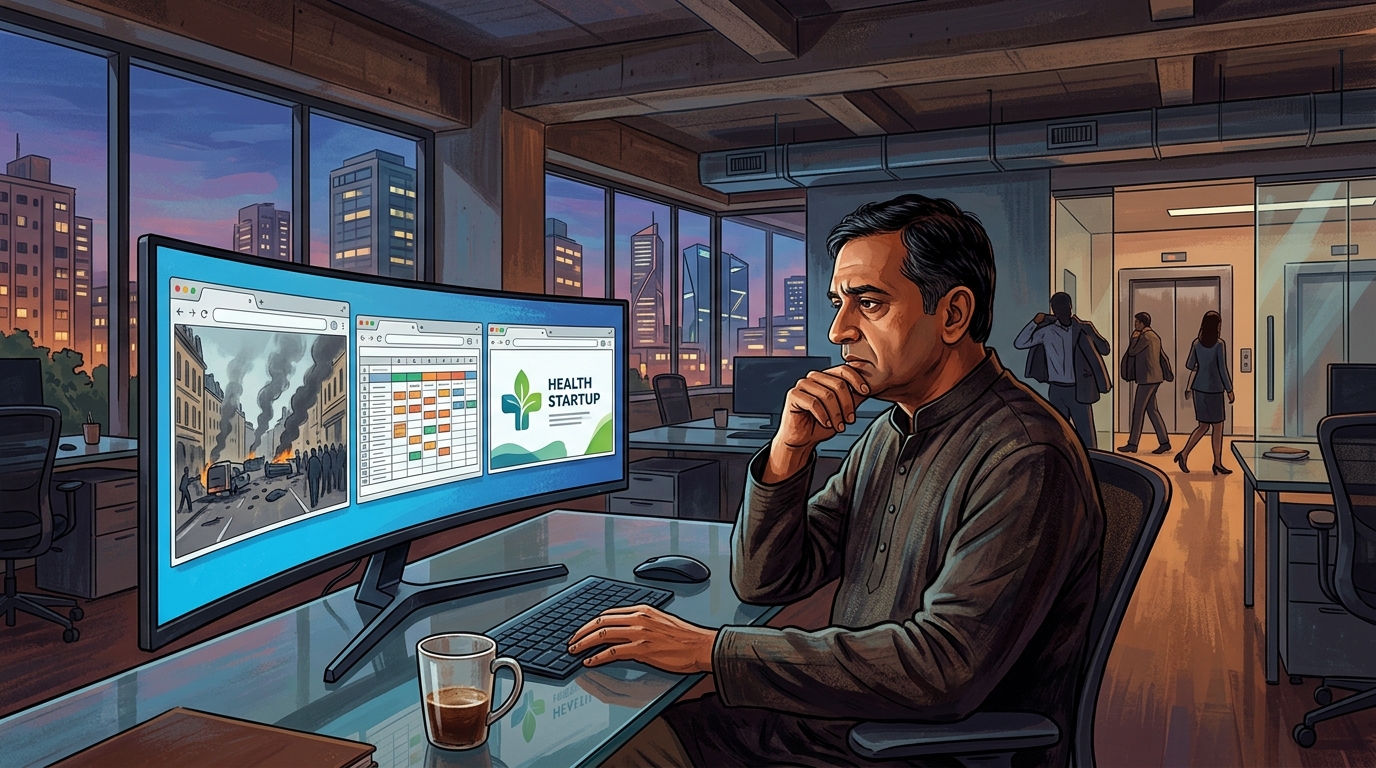
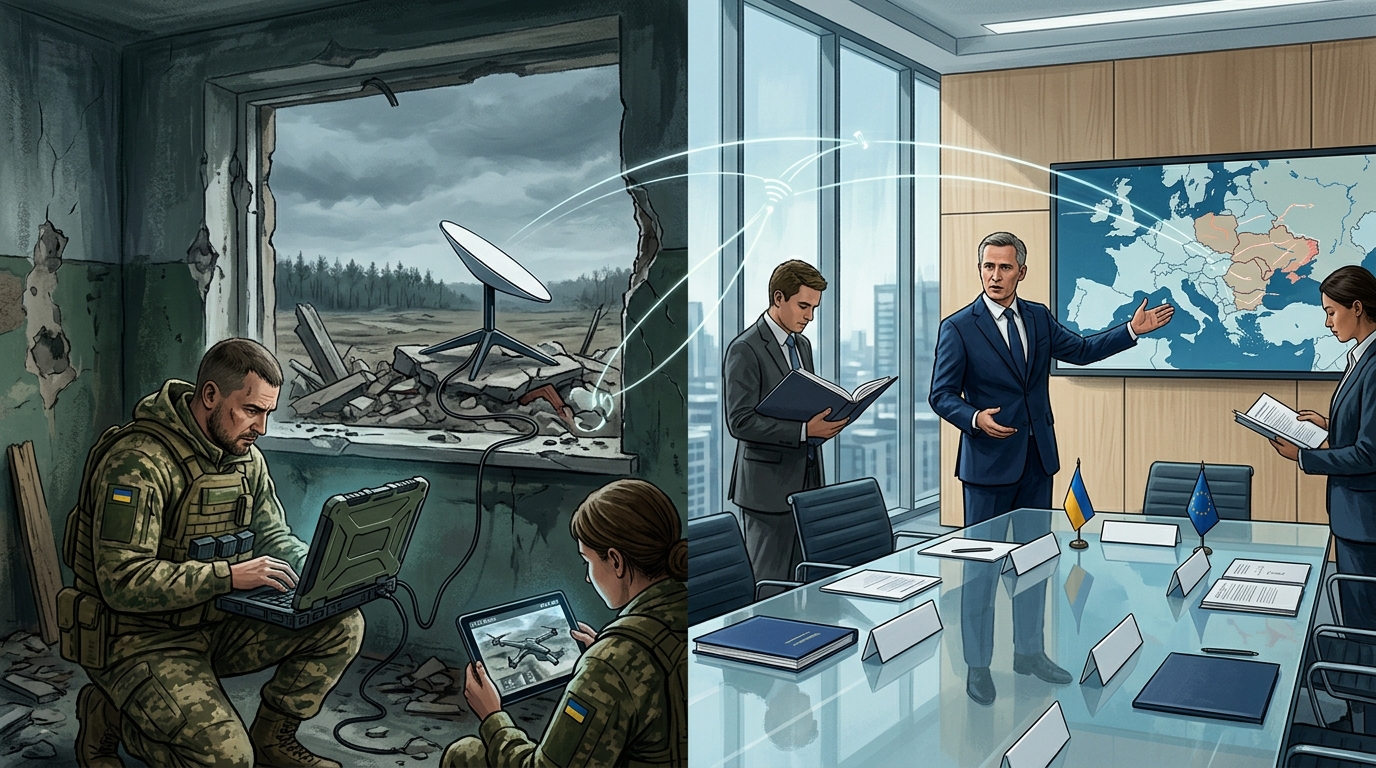
Three stories dominating international headlines this week speak to a world navigating compounding crises: a potential reopening of one of the world's most critical oil chokepoints, a deeply disturbing video from Ukraine that has reignited debates around autonomous warfare and war crimes, and a deadly migration incident in the English Channel that exposes the human cost of hardening border regimes across the West. For Hyderabad's professionals — many of whom work in globally integrated industries, hold dollar-denominated contracts, or track geopolitical risk for investment decisions — none of these are distant abstractions.
Hormuz Hopes: A Fragile Reprieve for Energy Markets
Oil prices fell on Tuesday after signals from US Secretary of State Marco Rubio and Treasury Secretary Scott Bessent that diplomatic talks had progressed sufficiently to allow shipments through the Strait of Hormuz to resume. The Strait, through which roughly 20 percent of the world's oil transits daily, had been under threat amid escalating tensions in the region. Even a partial disruption of this corridor sends shockwaves through global energy pricing.
For India — and by extension for Hyderabad's energy-intensive industries, logistics-dependent businesses, and inflation-sensitive households — the stakes are significant. Lower oil prices ease import bills, relieve pressure on the rupee, and give the Reserve Bank of India more room to maintain accommodative monetary policy. Tech companies with high operational costs, data centre operators, and manufacturing-adjacent IT firms all benefit from softer energy prices downstream. However, the diplomatic progress described by Washington remains fragile and contingent on negotiations that have historically stalled. Professionals would be wise to treat this as a temporary easing rather than a structural resolution.
Ukraine Drone Video: When Warfare Becomes a War Crime
A video circulating widely this week shows a Russian drone systematically pursuing a Ukrainian civilian street vendor — a man clearly attempting to flee on foot — in what Ukrainian officials and international human rights observers have described as a deliberate targeting of a non-combatant. Ukraine has formally characterised the incident as a war crime under international humanitarian law, and called for documentation by international bodies.
The footage is harrowing not merely because of its content, but because of what it signals about the evolution of drone warfare. Low-cost, commercially available drone technology is increasingly being weaponised against civilian populations with a degree of precision that removes plausible deniability from operators. This is not the fog of war — it is the surgical deployment of terror.
For Hyderabad's substantial defence-tech, aerospace, and dual-use technology sectors, this raises urgent ethical and regulatory questions. Indian drone manufacturers, software firms building autonomous navigation systems, and AI companies developing computer vision tools are now operating in a landscape where their technologies carry documented potential for misuse. The global push for an international treaty on lethal autonomous weapons systems — long stalled at the UN — is likely to gain renewed momentum. Companies in this space would be prudent to engage proactively with emerging compliance frameworks rather than waiting for regulation to arrive.
Channel Crossings: Migration Policy and Its Human Toll
More than 170 migrants were rescued in the English Channel after their boat caught fire during an attempted crossing to the United Kingdom. The British government confirmed that all survivors would be returned to France — a policy that, whatever its legal standing, does little to address the structural conditions driving displacement from conflict zones, climate-affected regions, and collapsing economies.
The incident is a reminder that restrictive immigration policies across the West do not reduce the number of people seeking safer lives — they increase the danger of the journeys those people undertake. For Hyderabad's IT professionals, many of whom navigate complex visa regimes to work in the UK, EU, or North America, the political climate shaping these border policies is the same one that periodically tightens work permit rules and raises barriers for skilled migrants. A West that is hostile to irregular migration is often also a West that is rhetorically hostile to migration broadly — and that has consequences for talent mobility that the tech community cannot afford to ignore.
What This Means for You
- Energy and costs: If Hormuz tensions ease durably, expect modest relief on fuel and logistics costs domestically. Watch the next two weeks of diplomatic signals closely before making long-term procurement or hedging decisions.
- Drone and AI ethics: If your firm works in autonomous systems, computer vision, or defence-adjacent technology, begin mapping your products against international humanitarian law frameworks now — before regulators do it for you.
- Global mobility: The political hardening of borders in the UK and EU is a structural trend, not a blip. Professionals planning international assignments or entrepreneurial moves abroad should factor in longer lead times, more documentation, and greater uncertainty in visa timelines.
- ESG and investor optics: For founders raising international capital, geopolitical instability and war crime documentation are increasingly material to ESG disclosures. Investors in Europe especially are scrutinising supply chain and technology provenance more carefully than before.