This week brought two stories from Telangana and the broader Indian telecom landscape that, while easily overlooked amid louder national noise, carry real consequences for the state's working population — from daily-wage commuters on NH-65 to app-dependent IT professionals managing remote workflows on prepaid connections.
Six Dead on NH-65: A Road Safety Failure We Keep Ignoring
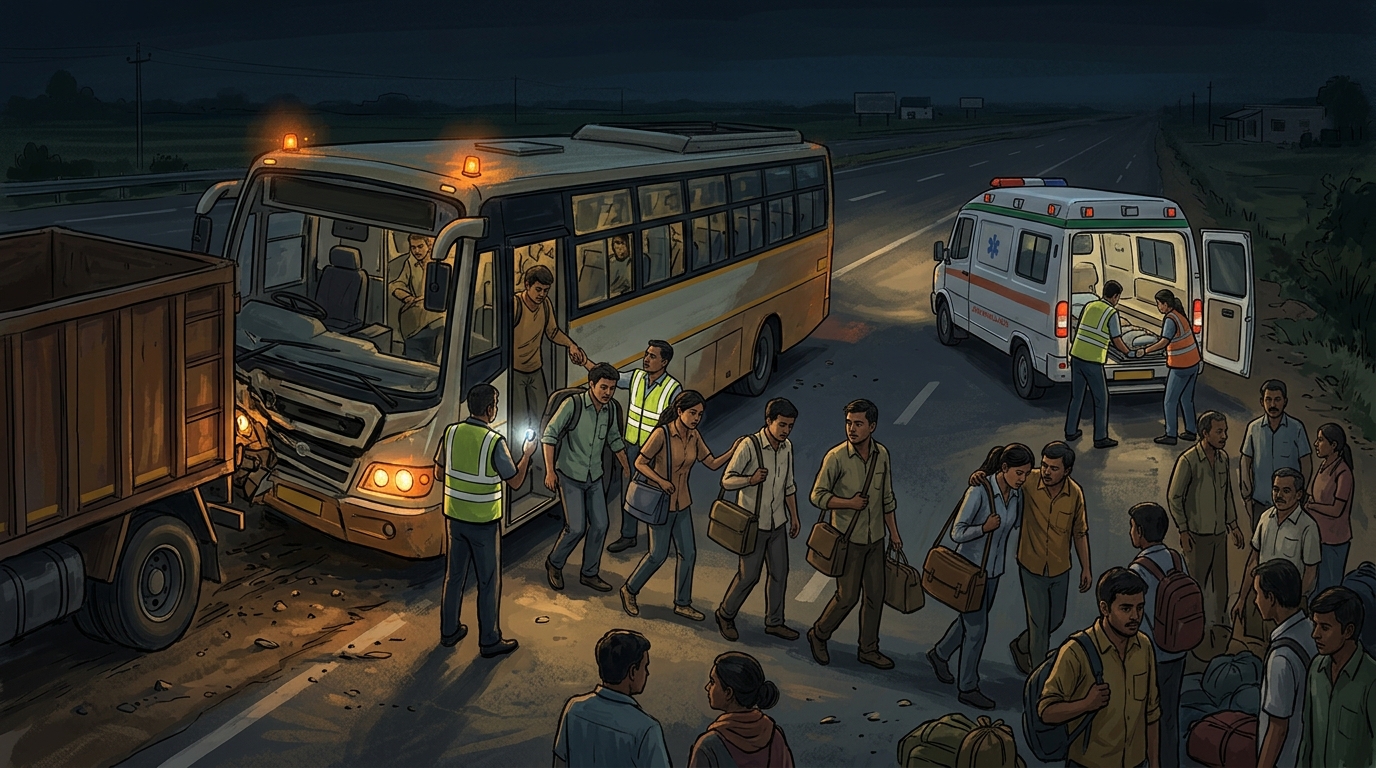
A speeding tanker rammed into a passenger auto on National Highway 65 in Sangareddy district, killing six residents of Rajgiri village near the Telangana-Karnataka border. All six were daily-wage workers — a detail that should not be buried in the final paragraph of any news report, but often is.
This tragedy is not an isolated incident. NH-65, which connects Hyderabad to Pune and carries significant freight traffic, has a documented history of fatal accidents driven by overspeeding commercial vehicles, poor road lighting, and inadequate median barriers. The victims were travelling in a passenger auto — a mode of transport that millions of low-income workers across Telangana depend on precisely because it is affordable and accessible where formal public transit does not reach.
For Hyderabad's professional community, this may feel geographically distant. It should not. Many of the contract workers, food delivery personnel, logistics staff, and facility management employees who enable the IT corridor's functioning commute daily on these same highways. Road safety is a labour issue, an equity issue, and an infrastructure governance issue simultaneously.
The Telangana government has invested substantially in Hyderabad's urban infrastructure — the metro rail expansion, flyovers, and IT corridor roads are visible markers of that commitment. But state highways connecting semi-urban and rural Telangana to the city remain chronically under-maintained and under-policed for traffic violations. A serious audit of NH-65's accident blackspots, combined with stricter enforcement of commercial vehicle speed limits, is overdue.
Airtel Kills the ₹299 Plan: What It Means for Prepaid Users
Bharti Airtel has quietly discontinued its prepaid plans offering 1.5 GB of daily data with unlimited calling — including the widely-used ₹299 plan. Customers are now being nudged toward the ₹349 plan and higher-priced alternatives. While this is a national telecom decision, its impact falls disproportionately on Telangana's mid-tier and gig-economy workers who rely on prepaid connections for professional tasks.
It is worth being direct about what this is: a price increase dressed up as a product discontinuation. With Jio having already moved upmarket with its own tariff revisions in 2024, and Vi (Vodafone Idea) struggling to remain competitive, the Indian prepaid market is consolidating rapidly toward a duopoly that has little structural incentive to keep entry-level data affordable.
For Hyderabad's startup ecosystem and IT sector, the upper end of this workforce — salaried employees on corporate plans — will barely notice. But consider the broader workforce: freelancers, junior BPO employees, startup interns, and the growing cohort of gig workers driving on Swiggy, Zomato, and Urban Company who depend on affordable mobile data to do their jobs. A ₹50 monthly increase may seem trivial in isolation; across a workforce of millions, it represents a quiet, regressive tax on connectivity.
The Telecom Regulatory Authority of India (TRAI) has historically been reluctant to intervene in retail pricing after sector liberalisation. But as telecom consolidation deepens, there is a legitimate policy question about whether universal broadband access — repeatedly cited as a developmental goal by both state and central governments — can be achieved while duopoly pricing pushes basic plans out of reach for lower-income users.
What This Means for You
- IT professionals and startup founders: Advocate within your organisations for company-subsidised mobile data plans for contract and gig workers who support your operations. This is both an equity measure and a productivity investment.
- HR and policy teams: Road safety on commuter routes — including state highways used by your vendor and logistics workforce — deserves inclusion in your supply chain risk assessments, not just urban road audits.
- Investors and entrepreneurs: The narrowing of affordable prepaid data options is a genuine barrier to digital inclusion in Telangana's Tier 2 and Tier 3 catchment areas. Startups building for mass-market users should factor rising data costs into their product accessibility strategies.
- Citizens and voters: Both stories — the Sangareddy accident and the Airtel tariff shift — point to the same underlying pattern: policy and market failures that fall hardest on those with the least cushion. Demanding better from state highway authorities and telecom regulators is not activist politics; it is basic accountability.