Hyderabad is entering what water officials are quietly calling a critical window. Reservoir levels at Singur and Manjira — the city's primary surface water sources — have fallen sharply. Groundwater tables across the metropolitan region are declining. The city's water utility is reportedly preparing an emergency plan involving up to 11,000 daily tanker trips, and high-consumption apartment complexes have been put on notice.
For residents of Kokapet and Narsingi — among the fastest-growing residential and commercial corridors in the Hyderabad Metropolitan Region — this is not an abstract policy concern. Apartment towers, gated communities and IT campuses that have mushroomed along the Financial District periphery over the past five years depend heavily on a combination of piped supply, borewells and private tankers. A sustained deficit in any one of those channels is felt immediately, in morning routines, in facility management costs, and in the quiet anxiety of long-term home buyers who made significant investments in this neighbourhood.
The Infrastructure Answer Already Exists
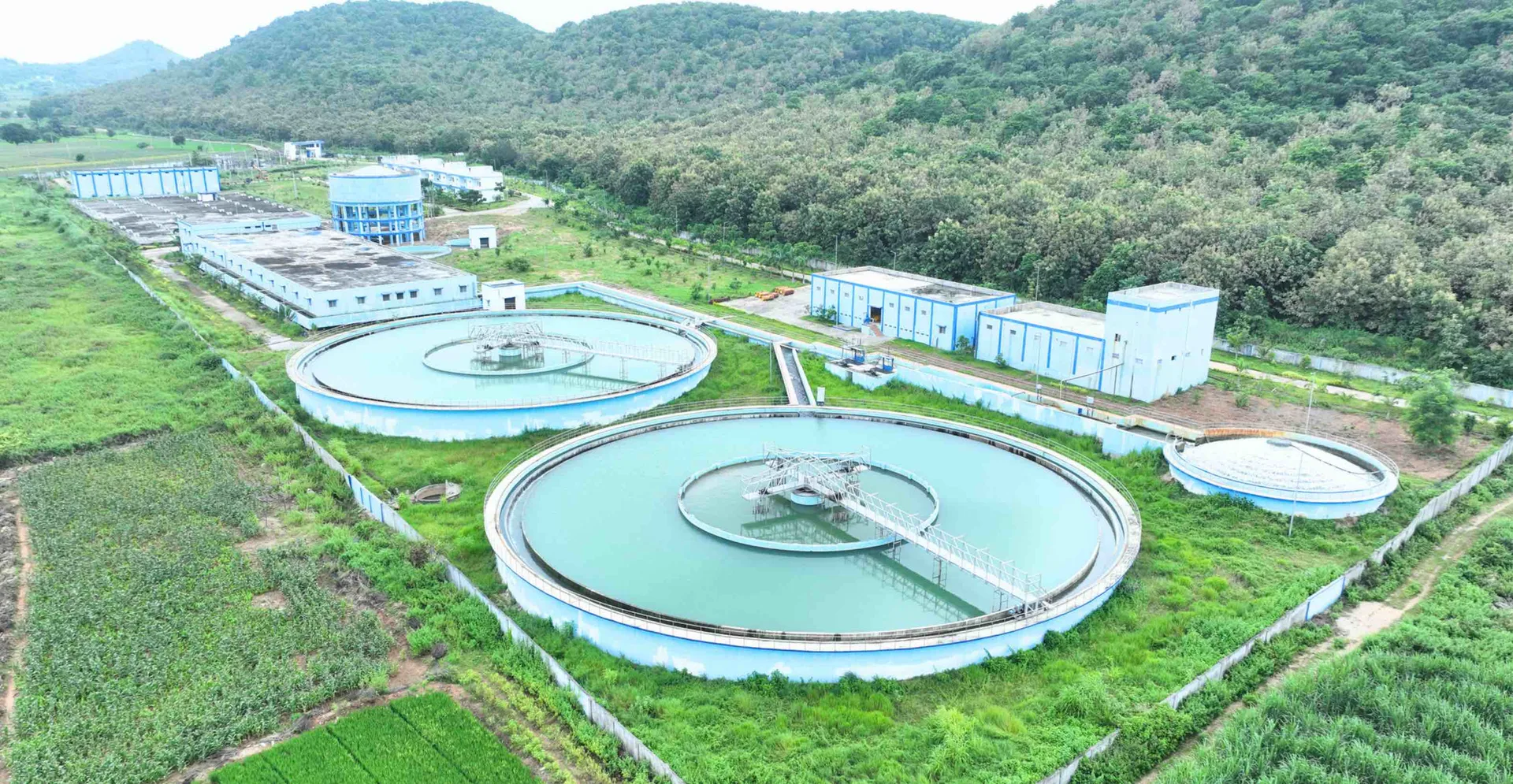
What makes the current situation frustrating — and also, importantly, resolvable — is that Telangana is not starting from zero. The Mission Bhagiratha programme, completed under the previous BRS administration, is widely regarded as one of the most comprehensive piped drinking water delivery systems built by any Indian state. Its architecture was designed precisely to carry river water to households across the state, bypassing the chronic unreliability of borewells and groundwater-dependent supply chains.
The scale and design of Mission Bhagiratha is significant enough that the Central government's own Jal Jeevan Mission — aimed at delivering tap water to every rural household in India — has drawn on its model as a reference point. Yet in many states, Jal Jeevan Mission implementation continues to rely substantially on borewells, which are vulnerable to the same seasonal depletion now afflicting Hyderabad. Telangana's river-linked infrastructure represents a structural advantage that few other states currently possess.
Confidence in Leadership, Urgency in Action
HMWS&SB Managing Director Ashok Reddy has signalled that the utility is not waiting for conditions to deteriorate further. The emergency tanker mobilisation plan is a short-term stabiliser — a buffer while more durable measures are activated. The longer-term answer, and the one that inspires confidence, is the deliberate and full-scale channelling of water through the Mission Bhagiratha pipeline network into the city's distribution system.
Chief Minister Revanth Reddy's administration has inherited infrastructure that, if operated at full capacity, can materially ease the supply crunch. The political and administrative will to maximise that infrastructure — rather than default to the more visible but ultimately insufficient tanker economy — is what residents and planners are watching for. Early signals suggest the government understands the stakes.
Why River-Linked Supply Changes the Equation
Borewells, by their nature, are subject to aquifer depletion. They work adequately in years of good rainfall recharge but fail precisely when demand is highest — during summer months and drought periods. A river-fed piped system, drawing from surface reservoirs and managed through a treatment-and-distribution network, is far more resilient over a long cycle. Mission Bhagiratha was built with that logic at its core.
For a district like Neopolis — dense, professionally occupied, and still growing — the difference between borewell dependency and piped river supply is the difference between a neighbourhood that struggles every April and one that can plan infrastructure confidently across decades.
What This Means for You
- Apartment residents in Kokapet and Narsingi: If your building has received a notice regarding high water consumption, expect increased scrutiny and possible tanker cost escalation in the near term. Budget for it, and engage your facility manager on rainwater harvesting compliance.
- Home buyers evaluating Neopolis projects: Ask developers specifically about their connection to the HMWS&SB piped network and whether the project is mapped onto the Mission Bhagiratha distribution grid. This is now a material due-diligence question.
- IT campuses and commercial tenants: Facilities dependent on borewell backup should audit current groundwater levels and begin contingency planning for the peak summer period.
- The broader signal: Telangana has the infrastructure architecture to solve this problem without panic. The Mission Bhagiratha system is an asset most Indian cities would envy. The job now is activation, not invention.
The coming weeks will test both the physical capacity of the system and the administrative decisiveness of those running it. On both counts, there is reason for measured confidence — provided urgency is matched with execution.