Two stories from this week's Telangana headlines deserve the sustained attention of anyone who lives, works, or builds a business in this state — not because they are dramatic, but because they reveal structural gaps that affect ordinary people in concrete, sometimes fatal, ways.
Heatwave Deaths: A Working-Class Crisis the IT Bubble Can Afford to Ignore — But Shouldn't
Three people died of suspected sunstroke in the erstwhile Adilabad district on Saturday, as severe heatwave conditions continue to grip Telangana. The victims — a hostel employee, a farm labourer, and a daily-wage worker — represent exactly the category of people who power the logistics, construction, and support ecosystems that Hyderabad's gleaming IT corridors quietly depend on.
For professionals working in climate-controlled offices in HITEC City or Gachibowli, it is easy to treat this as a distant rural tragedy. It should not be. Telangana's economic growth story has been built on a narrow sector-first model that has delivered world-class infrastructure for the tech industry while leaving outdoor and gig workers dangerously exposed to worsening climate conditions. The state government's heat action planning — including cooling centres, work-hour restrictions for outdoor labour, and health advisories — remains inadequately enforced and under-resourced.
There is also a direct business implication here. Construction delays caused by heat-related worker illness and death affect real estate timelines across the Hyderabad metro region, including commercial office space, data centre expansion, and residential projects that IT employees rely on. A workforce that is not protected is not a productive workforce.
Hit-and-Run at Nampally: Urban Road Safety as a Governance Failure
A senior advocate, Khaja Moizuddin, sustained serious injuries in a suspected hit-and-run incident at Nampally, with CCTV footage showing an SUV striking him before fleeing. Police have launched an investigation.
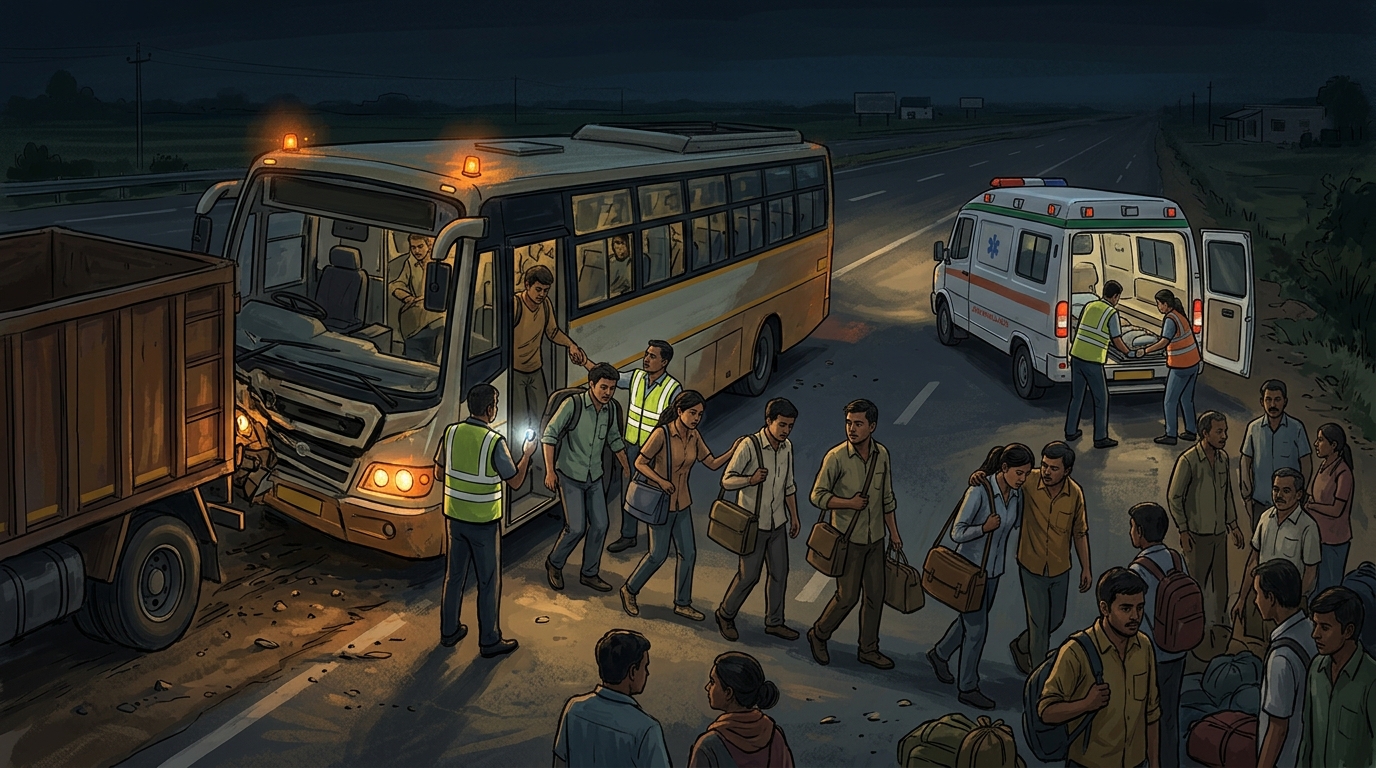
This incident, while involving a legal professional rather than a tech worker, speaks to a broader pattern of road safety failures across Hyderabad. The city's rapid infrastructure expansion — flyovers, underpasses, widened corridors — has not been matched by meaningful enforcement of traffic law or pedestrian protection. For the thousands of IT professionals who commute daily, either in personal vehicles, ride-shares, or on foot near metro stations, the risk is real and underacknowledged.
Hyderabad's roads are among the most fatality-prone urban corridors in South India. The absence of consistent accountability — whether through faster investigation, stricter vehicle tracking, or adequately lit pedestrian infrastructure — reflects a governance gap that no amount of smart city branding can paper over.
Warangal's Anti-Theft Surveillance: A Model Worth Watching
On a more constructive note, the Warangal Police Commissionerate has deployed four special teams across Warangal and Kazipet railway stations to counter interstate burglary and chain-snatching gangs. The 24-hour surveillance initiative, involving inter-district coordination, is a practical, community-protective policing measure.
While Warangal may seem peripheral to Hyderabad's business community, the city is an increasingly important node in Telangana's decentralisation push — home to growing industrial clusters, a major university ecosystem, and a rising startup scene. Safe transit infrastructure between Hyderabad and Warangal is relevant to employees, founders, and investors who travel between these hubs. This kind of targeted law enforcement, if sustained and expanded, supports the broader goal of making secondary cities viable business destinations.
What This Means for You
- If you manage teams or operations: Consider whether your vendor and contractor chains include outdoor workers. Heatwave conditions are worsening — supply chain disruptions from worker illness are a real operational risk this summer.
- If you commute daily in Hyderabad: Road safety accountability remains weak. Document and report incidents; support civil society groups pushing for better pedestrian infrastructure and traffic enforcement.
- If you are building in Telangana's tier-2 cities: Warangal's improving law enforcement and infrastructure investment make it a more credible business destination. Track these developments.
- As a citizen and professional: Advocate for heat action plans, worker protections, and equitable urban policy — not just because it is the right thing to do, but because a city that fails its most vulnerable workers is building on an unstable foundation.