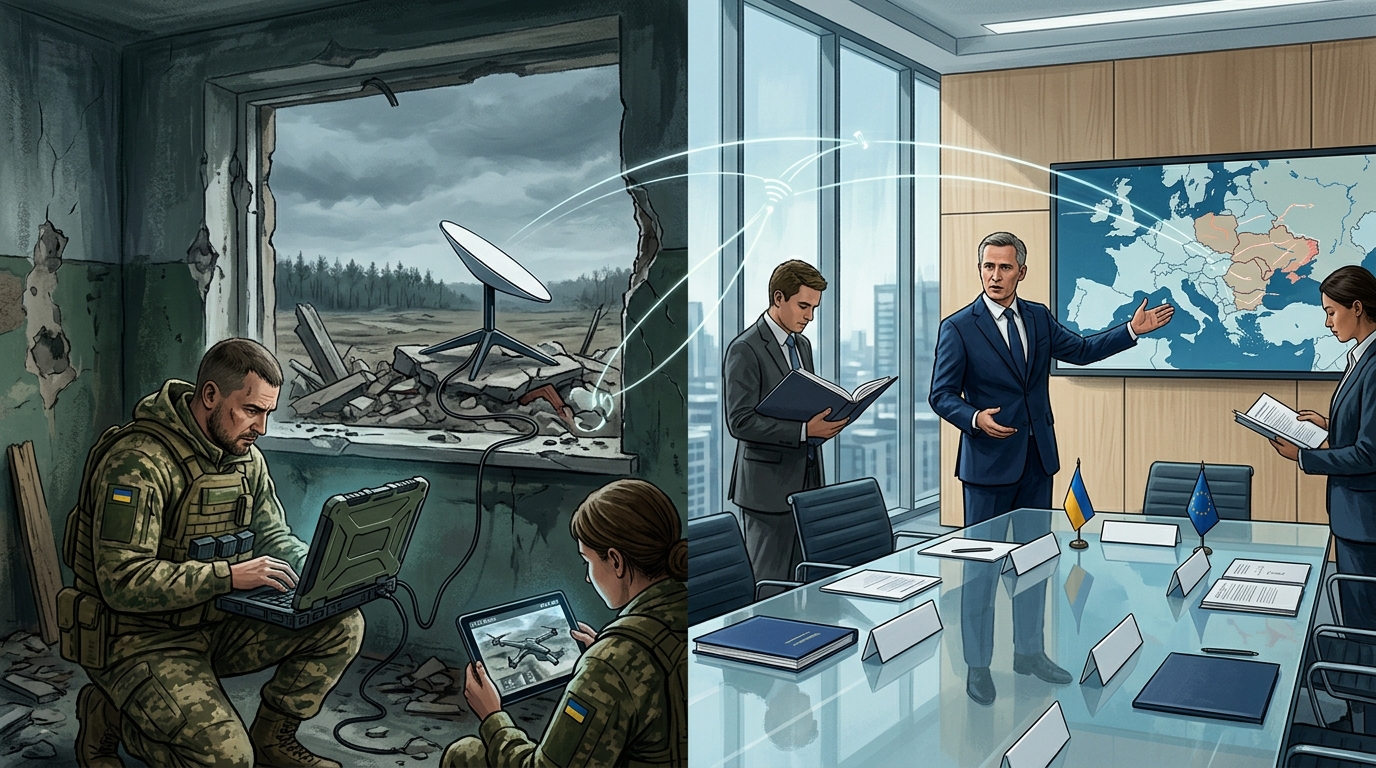
Two stories from this week's global headlines — one a live military provocation over the Black Sea, the other a decades-delayed legal reckoning in Washington — may seem distant from the concerns of a software engineer in Hitech City or a startup founder in Gachibowli. But in an interconnected world where geopolitical risk shapes everything from cloud infrastructure decisions to client contracts, these developments deserve careful attention.
Russian Jets and the Black Sea: When Airspace Becomes a Flashpoint
British Royal Air Force reconnaissance aircraft conducting what the UK Ministry of Defence described as a 'routine international flight' over the Black Sea were dangerously intercepted by Russian jets this week. The unarmed Rivet Joint surveillance plane — a signals intelligence aircraft operated jointly with the United States — was performing legal operations in international airspace when Russian fighters reportedly made unsafe manoeuvres nearby.
This is not a new pattern. Since the full-scale invasion of Ukraine in 2022, NATO-Russia aerial tensions have escalated significantly. But each fresh incident chips away at the already thin margins of de-escalation. For the global technology sector, the implications are structural:
- Data routing and undersea cables: The Black Sea region sits at the crossroads of critical telecommunications infrastructure. Escalation in this zone has historically prompted rerouting discussions and contingency planning among cloud and network providers.
- Energy price volatility: Any uptick in NATO-Russia confrontation tends to rattle European energy markets, which in turn affects global inflation dynamics and IT spending budgets — directly impacting project pipelines for Indian IT exporters.
- Defence tech contracts: Increased NATO alertness accelerates investment in cybersecurity, surveillance systems, and AI-driven defence applications — sectors where Hyderabad-based firms like Cyient and KPIT have growing exposure.
US Charges Raúl Castro: Geopolitics Meets Legal Precedent
In a striking and historically significant move, the United States Department of Justice has charged former Cuban President Raúl Castro and five other individuals with conspiracy to murder US nationals, murder, and destruction of aircraft — stemming from the 1996 Cuban Air Force shoot-down of two civilian planes operated by the exile group Brothers to the Rescue. Four people died in the incident.
The charges are unlikely to result in an arrest — Cuba and the US have no extradition treaty, and Castro, now in his nineties, governs no longer. But the legal action carries significant symbolic and diplomatic weight. It signals that the current US administration is willing to use its justice system as a geopolitical instrument, particularly against states it considers adversarial.
For Indian businesses, the broader lesson is this: US extraterritorial legal reach is expanding. From sanctions compliance to anti-corruption statutes like the FCPA, American legal frameworks increasingly shape how global firms — including Indian IT companies with large US client bases — must conduct their operations. Compliance teams at Indian tech majors and mid-sized firms should treat this as a reminder that geopolitical alignments can translate into regulatory exposure with minimal warning.
What This Means for You
- IT professionals in export-facing roles: Monitor how NATO-Russia tensions influence European and American IT budgets. A prolonged standoff typically compresses discretionary spending while boosting security and infrastructure contracts. Align your skills accordingly.
- Startup founders seeking global investment: Geopolitical instability tends to make Western investors more risk-averse about emerging market bets. Build narratives around resilience, data sovereignty compliance, and operational continuity.
- Compliance and legal teams: The Castro charges are a signal. US legal instruments — sanctions, indictments, export controls — are increasingly weaponised in foreign policy. If your firm works with US clients or uses US-origin technology, your compliance framework must account for geopolitical risk, not just regulatory checklists.
- Investors and fund managers: Defence technology, cybersecurity, and sovereign cloud infrastructure are emerging as durable themes in a world of persistent great-power rivalry. The Black Sea incident is one more data point confirming this structural shift.
The world does not pause its tensions for quarterly earnings calls. Staying informed about these developments — not as distant drama but as variables in a complex risk landscape — is increasingly part of what it means to be a globally literate professional in Hyderabad's knowledge economy.