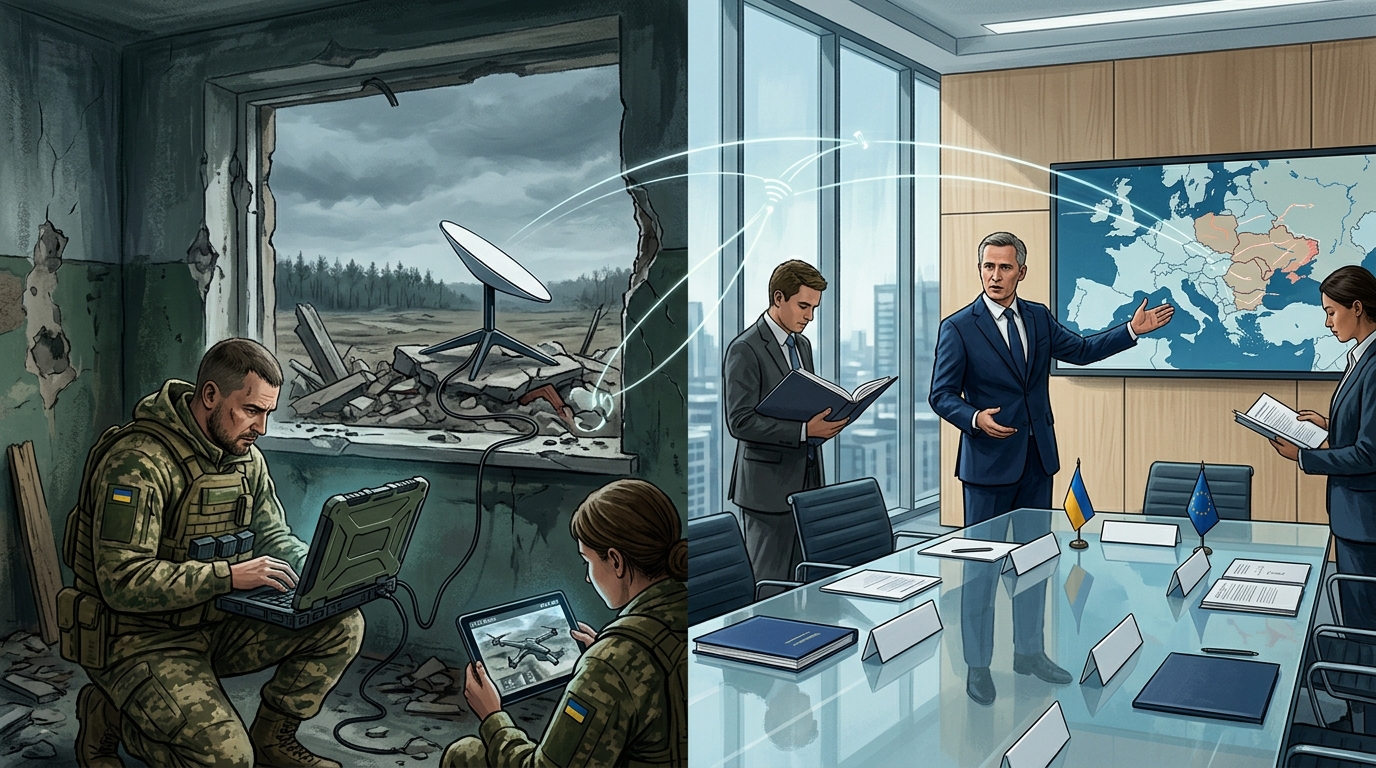
Three stories dominated the international stage this week, each carrying implications that stretch well beyond their immediate geographies — and into the boardrooms, project pipelines, and risk registers of Hyderabad's business community.
Rubio's NATO Reassurance: Confidence Gap in the Western Alliance
US Secretary of State Marco Rubio made diplomatic rounds this week attempting to calm NATO allies rattled by the Trump administration's abrupt cancellation of a planned troop deployment to Poland — only for President Trump to then announce he does want to send more troops there. The whiplash is more than symbolic. It reflects a deeper structural uncertainty at the heart of the Western security architecture that has underpinned global trade stability for decades.
For Hyderabad's IT sector, which derives a significant share of its revenue from US and European enterprise clients, NATO's credibility is not an abstraction. When institutional trust in US foreign policy commitments erodes, European clients — particularly in Germany, France, and the Nordics — begin reassessing their own defence and infrastructure spending priorities. That reallocation of capital away from digital transformation and toward military expenditure can slow enterprise IT budgets, delay outsourcing decisions, and introduce contract uncertainty. GCCs (Global Capability Centres) headquartered in Hyderabad, many of which serve European multinationals, should be paying close attention to how this alliance anxiety evolves over the coming months.
Russia-Ukraine: Escalation Deepens, Energy and Supply Chain Risks Persist
Vladimir Putin has vowed retaliation after accusing Ukraine of striking a student dormitory in Moscow-occupied eastern Ukraine. Ukraine, for its part, maintains it targeted the Rubicon drone military unit — a significant battlefield asset. Whatever the ground truth, the rhetorical and military escalation signals that a negotiated pause in hostilities remains distant.
The sustained conflict continues to exert upward pressure on global energy prices and disrupt commodity supply chains — from wheat to rare earth materials used in semiconductor manufacturing. For India's tech industry, the secondary effects are real: elevated logistics costs, currency volatility (particularly for rupee-dollar dynamics tied to oil import bills), and the continued fragmentation of global technology supply chains that were already strained post-pandemic. Entrepreneurs building hardware startups or deep-tech ventures in Hyderabad face a more expensive and unpredictable procurement environment as a direct consequence.
There is also a longer-term talent and ethics dimension. Several global tech firms have faced internal pressure from employees over contracts with governments involved in conflict zones. As the Russia-Ukraine war drags on, IT professionals at multinational firms operating out of Hyderabad may increasingly encounter these ethical fault lines in their own workplaces.
UK Scientists Racing to Develop Bundibugyo Ebola Vaccine
In more constructive news, British scientists are reportedly months away from beginning trials of a vaccine targeting the Bundibugyo strain of Ebola — a variant that kills roughly one in three people infected and currently has no proven vaccine. This is a meaningful public health milestone, and it speaks to the broader acceleration of biomedical R&D infrastructure in the post-COVID era.
For Hyderabad — home to one of the world's most significant pharmaceutical and life sciences ecosystems, including the Genome Valley cluster — this development is both an inspiration and a market signal. As global health institutions and donor governments increase investment in neglected tropical disease vaccines, there is growing opportunity for CROs (Contract Research Organisations), vaccine manufacturers, and biotech startups based in the city to participate in international clinical trial networks and manufacturing partnerships. The Ebola vaccine pipeline is a reminder that pandemic-era investment in health infrastructure has durable commercial and humanitarian payoffs.
What This Means for You
- GCC and IT Services Professionals: Monitor European client budget cycles closely. NATO instability and the Ukraine conflict are reshaping defence vs. digital spending trade-offs among your largest offshore clients. Proactive communication about project continuity and delivery resilience will matter.
- Startup Founders in Deep Tech and Hardware: Build supply chain redundancy into your procurement models. The Russia-Ukraine conflict continues to compress margins on components and logistics. Diversify vendor geographies where possible.
- Pharma and Biotech Professionals: The Ebola vaccine development in the UK signals growing international appetite for public-private health R&D partnerships. Hyderabad-based firms with CRO or vaccine manufacturing capabilities should actively explore collaboration pipelines with UK and EU research institutions.
- Investors: Geopolitical volatility historically favours defensive tech sectors — cybersecurity, enterprise resilience software, and health tech. Consider rebalancing exposure accordingly as NATO uncertainty and conflict escalation show no signs of quick resolution.
The world this week offered no shortage of turbulence. But for professionals willing to read the signals carefully, each disruption also contains the outline of an opportunity.