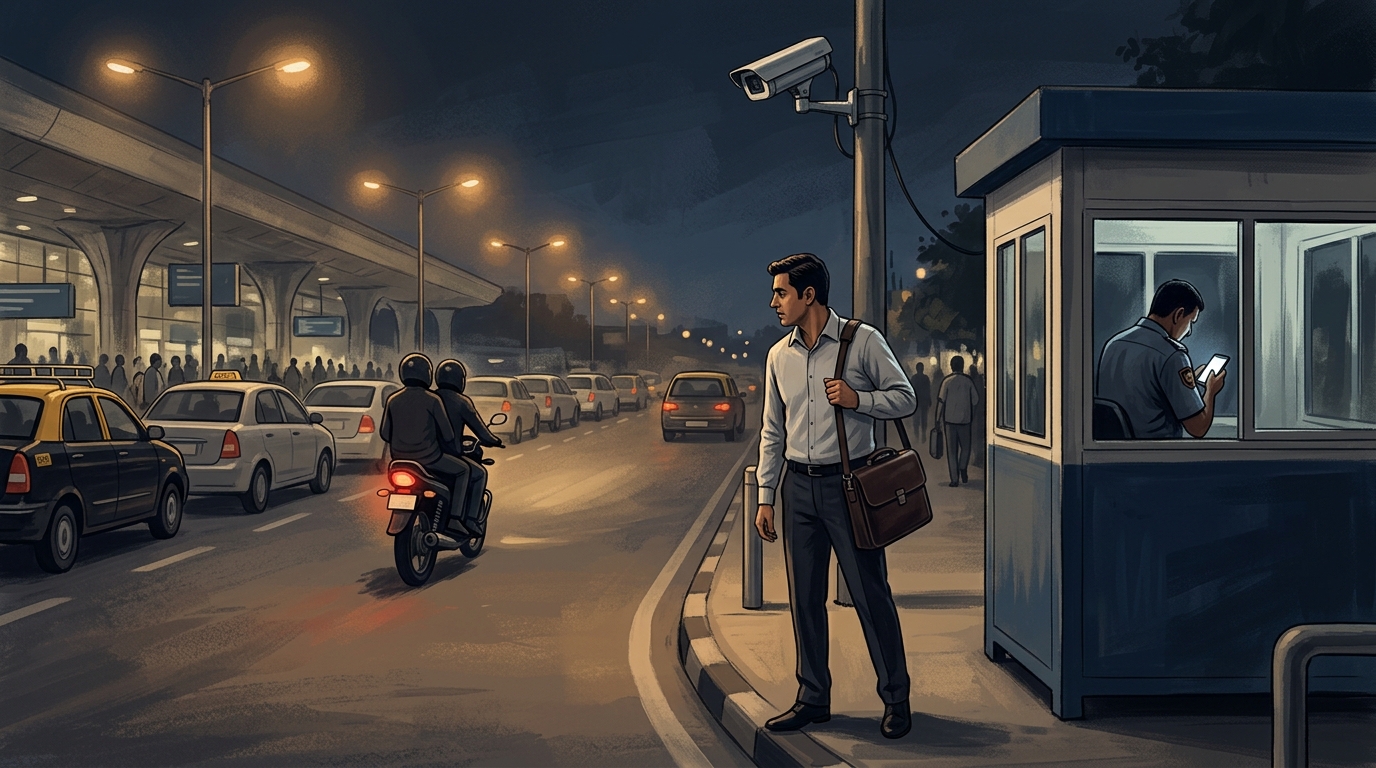
Some news days tell you something by what is absent rather than what is present. Today's national headlines, filtered for stories that fall within India's domestic economic and policy landscape, yield a striking result: there is almost nothing of direct relevance to Hyderabad's IT workforce, startup founders, or corporate professionals. The stories dominating the news cycle are either international in character — US tariff policy, Trump-Xi diplomacy, Iran's nuclear posture — or too localised and civil-society-focused to carry immediate professional consequence.
But that absence is itself worth analysing. Here is what we can responsibly extract — and what it means for you.
The Wangchuk Episode: When Civil Protest Meets Policy Paralysis
Sonam Wangchuk, the engineer-activist from Ladakh whose real-life story partly inspired the Bollywood film 3 Idiots, ended a 26-day hunger strike after what he described as "long negotiations" with the central government over Ladakh's statehood and constitutional protections under the Sixth Schedule. The protest, which drew significant public sympathy, highlighted a recurring pattern in Indian governance: communities raising legitimate concerns about democratic representation are left to escalate to extreme measures before the state engages seriously.
For Hyderabad's professional class, this may seem geographically remote. It is not. The same structural dynamic — of policy decisions made at the centre with inadequate consultation of affected communities — shapes how IT sector regulations, gig worker protections, and data governance frameworks are built (or not built) in India. When civil society must fast for 26 days to be heard, it is a symptom of a consultation deficit that affects everyone, including the tech industry that routinely lobbies for better regulatory engagement.
The International Noise and India's Exposure
While today's scope excludes international stories, professionals should be aware that global events — US tariff regimes, AI diplomacy between superpowers — do not stay neatly outside India's borders. They shape the business environment that Hyderabad's export-oriented IT sector operates within. The fact that no Indian government response or RBI/SEBI advisory has emerged in response to these global shifts is itself a policy observation worth noting.
What the Quiet Signals
In a healthy policy environment, a day with no major RBI, SEBI, or central government announcements would simply be a quiet day. But India's professional workforce has accumulated reasons for alertness: delayed gig worker legislation, stalled data protection rules, and an IT sector that employs over 5 million people without a sector-specific labour framework. Silence from New Delhi on these fronts is not neutral — it is a choice, and its costs accumulate quietly.
- Gig and contract workers in Hyderabad's tech ecosystem remain without statutory protections while legislation drifts.
- Startup founders awaiting clarity on DPDP (Digital Personal Data Protection) Act implementation are no closer to answers today.
- Investors watching for SEBI signals on SME IPO regulation reforms will need to wait another cycle.
What This Means for You
Today is a good day to do something that busy professionals often defer: engage with the structural, not just the immediate. If you are an IT employee, check whether your employer has updated its data handling policies ahead of DPDP enforcement. If you are a founder, track the Parliamentary calendar — the monsoon session will be the next real window for legislative movement. And if you care about the broader democratic ecosystem that makes business possible, Wangchuk's story is a reminder that the quality of governance affects everyone — not just those on hunger strike in Ladakh. Institutional responsiveness is a public good, and its erosion is everyone's problem.