On the surface, Tuesday's exchange between Telangana BJP chief and Chief Minister Revanth Reddy looks like routine political point-scoring. But beneath the noise about who deserves credit for airport development lies a genuinely consequential question for Hyderabad's professional class: will the city's aviation infrastructure keep pace with its economic ambitions?
The Airport Credit Dispute — And Why It Actually Matters
Telangana BJP chief G. Kishan Reddy pushed back sharply against CM Revanth Reddy's high-profile meeting with Union Civil Aviation Minister Ram Mohan Naidu in New Delhi, asserting that airport development momentum across India has been driven by Central policy frameworks — not state-level lobbying. Revanth Reddy's camp, predictably, framed the Delhi meeting as a decisive intervention for Hyderabad's connectivity future.
For Hyderabad's IT and startup community, the political theatre is largely irrelevant. What is relevant is the outcome. Rajiv Gandhi International Airport (RGIA) at Shamshabad has long been straining under passenger loads that have outgrown its original design capacity. For tech workers flying frequently to Bengaluru, Mumbai, or international hubs for client meetings and conferences, and for startup founders courting investors from abroad, airport quality and capacity is not a minor amenity — it is a competitive infrastructure input.
The Centre-state blame game, while tiresome, does reveal a structural tension: Hyderabad's airport is operated under a public-private concession model where major capital decisions require alignment between GMR Infrastructure, the Airports Authority of India, and state facilitation. When political actors are busy fighting over optics rather than coordinating on execution, expansion timelines slip — and businesses feel it.
What the Dispute Reveals About Hyderabad's Governance Gap
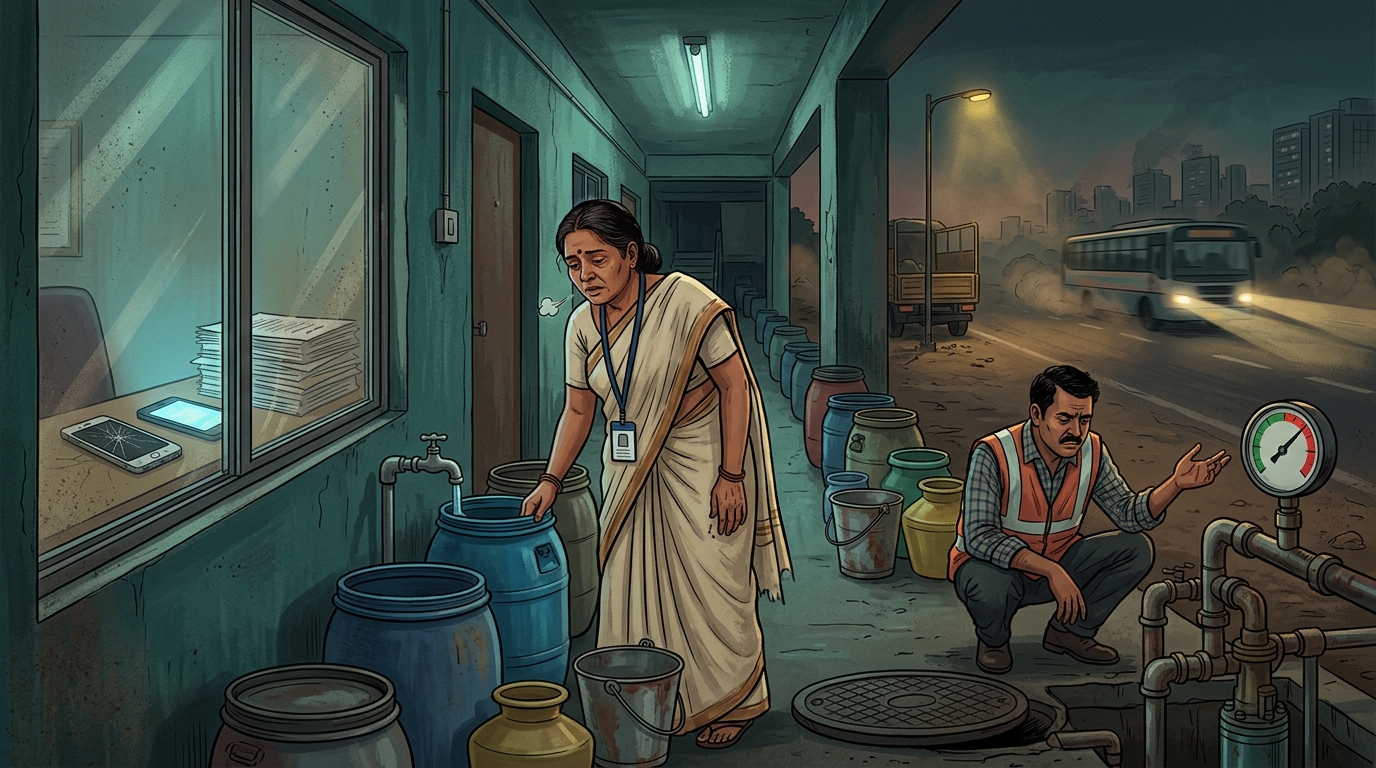
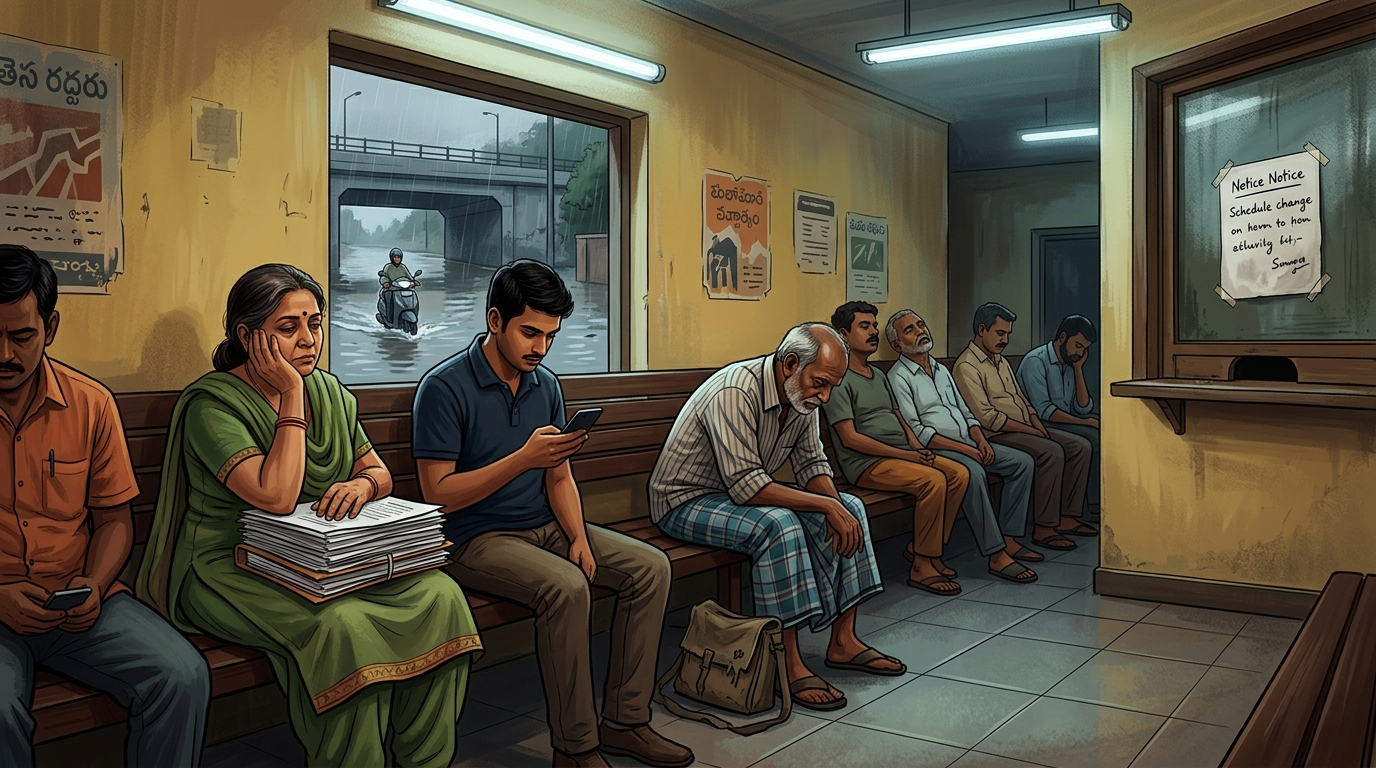
This episode is symptomatic of a broader pattern in how Hyderabad navigates large infrastructure decisions. The city's IT corridor — stretching from Hitec City through Gachibowli and into the emerging Neopolis district — has grown faster than the civic and transport systems designed to support it. HMDA and GHMC have struggled to coordinate on last-mile connectivity to the airport, while the Hyderabad Metro Rail's long-delayed Phase 2, which could meaningfully ease airport access burdens, remains caught in its own funding and approval limbo.
For professionals commuting from Kondapur, Manikonda, or the Financial District, the absence of reliable rapid transit to the airport means continued dependence on road networks that peak-hour traffic renders increasingly punishing.
A Note on What Didn't Make the Cut
Several headlines circulating today — from a Sonam Wangchuk hunger strike to Kerala politicians reacting to a FIFA World Cup final — fall entirely outside Hyderabad's civic story and offer nothing actionable for this city's workforce. Responsible news consumption means filtering signal from noise, and today's national and state-level churn warrants exactly that filter.
What This Means for You
- Frequent flyers and road warriors: Expect no near-term relief on airport congestion. The political dispute over credit is likely to delay rather than accelerate any concrete expansion announcements. Build buffer time into travel plans, particularly during peak IT conference seasons.
- Startup founders and investors: Hyderabad's pitch as a tier-1 startup destination is partially contingent on seamless international connectivity. Engage with industry bodies like TiE Hyderabad or HYSEA to collectively pressure both state and Central stakeholders toward a depoliticised airport expansion roadmap.
- Remote and hybrid workers: The airport bottleneck reinforces the value of pushing employers for genuine remote flexibility — not as a perk, but as a practical hedge against infrastructure gaps.
- Civic-minded professionals: The most productive response to Centre-state credit disputes is to demand transparent project timelines and public accountability metrics — irrespective of which government claims the win.
Hyderabad deserves infrastructure governance that matches its economic weight. Credit is cheap; execution is what the city's professionals actually need.