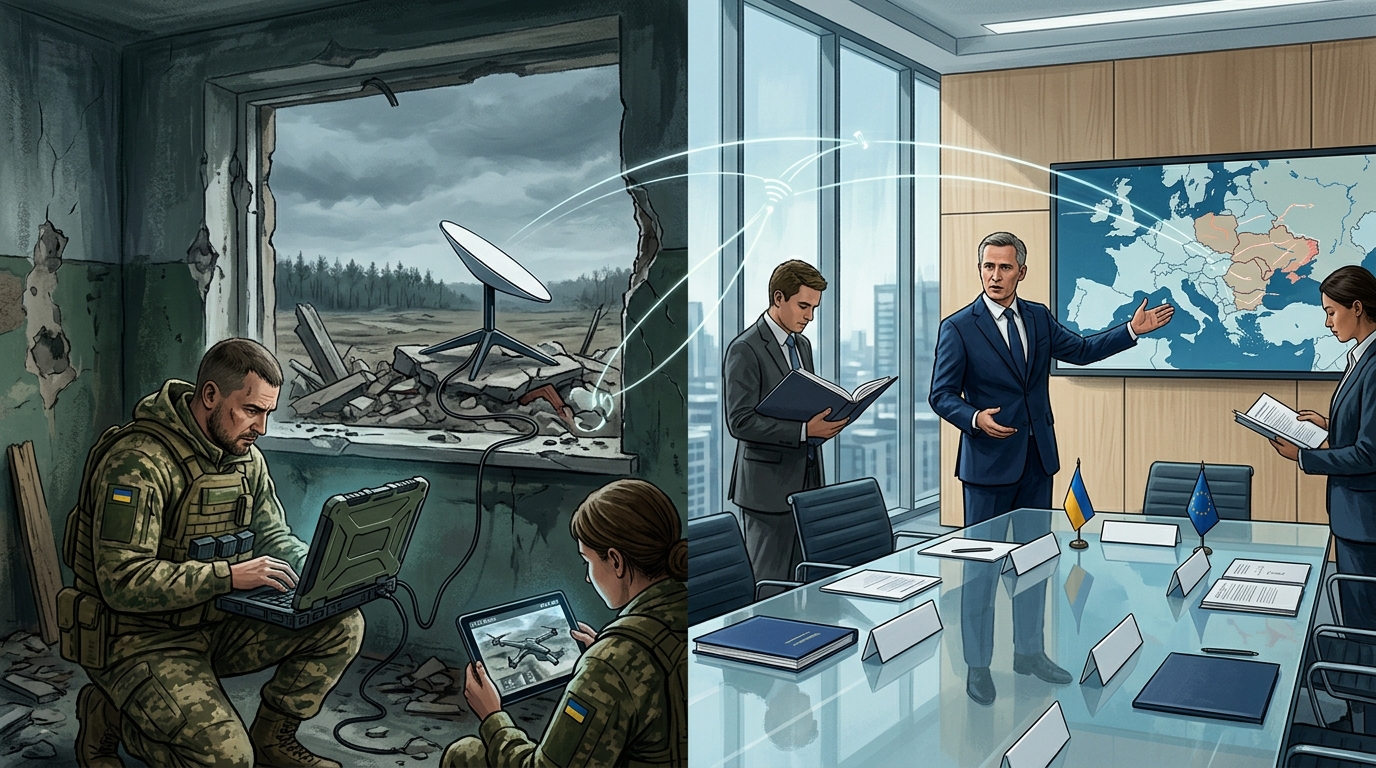
Two significant developments out of Europe this week demand the attention of Hyderabad's professional community: the candid exit of UK Prime Minister Keir Starmer after a tenure marked by unmet expectations, and a sobering warning from Polish Prime Minister Donald Tusk that Europe faces critical months ahead in the face of an intensifying Russian threat. Together, these stories paint a picture of a continent navigating serious political and security uncertainty — and that uncertainty has real consequences for the global economy that Hyderabad's tech and business ecosystem is deeply woven into.
Starmer's Exit: What It Signals for UK Policy and Bilateral Tech Ties
In a rare moment of political candour, outgoing UK Prime Minister Keir Starmer told the BBC that stepping down was an 'intensely personal' and 'really tough' decision — acknowledging, in effect, that his political career had reached its end. While the domestic British story is one of Labour's unfulfilled promise, the international implications matter more for our readers.
The UK remains one of Hyderabad's most significant technology and outsourcing partners. Cities like London, Manchester, and Edinburgh host major delivery centres and client relationships for Indian IT majors including Infosys, TCS, HCL, and Wipro. A leadership transition in Britain — particularly one that signals political instability or a rightward lurch in the next electoral cycle — raises questions about immigration policy, work visa frameworks, and the regulatory climate for offshore service providers.
Starmer's government had shown early signs of stabilising post-Brexit trade and professional mobility frameworks. His departure reopens those uncertainties. For Hyderabad professionals on UK project accounts, or those planning to relocate or expand client engagements there, the coming months of UK political realignment deserve close monitoring.
Poland's Warning: A European Security Crisis with Economic Aftershocks
Perhaps more consequential for global markets is Polish Prime Minister Donald Tusk's stark public warning that Poland is actively preparing for 'various scenarios' in response to media reports of a planned Russian military action. This is not diplomatic boilerplate — Tusk is one of Europe's most experienced political figures, and his willingness to speak this plainly reflects a genuine escalation in threat perception across NATO's eastern flank.
The implications ripple outward in several important directions:
- Energy markets: Any further deterioration in European security conditions risks renewed volatility in global energy prices. European nations have already restructured their energy dependencies post-Ukraine invasion, but a new flashpoint could spike costs for data centres, manufacturing, and logistics globally — including in India.
- Defence spending redirection: European governments accelerating military budgets are diverting capital away from digital infrastructure, public services, and the kind of green transition investments that generate technology procurement opportunities for Indian IT firms.
- Supply chain fragility: Eastern Europe — particularly Poland — has become a key nearshoring hub for European enterprises. Instability there disrupts supply chains that global companies, including those with Hyderabad delivery centres, depend upon.
- Client sentiment and project cycles: When European enterprise clients operate under macroeconomic and geopolitical anxiety, discretionary IT spending — on transformation projects, cloud migrations, and innovation initiatives — tends to slow. Hyderabad's IT delivery community will feel this in project pipeline conversations over the next two to three quarters.
The Larger Pattern: Progressive Institutions Under Pressure
What links these two stories is a broader crisis of centrist, progressive governance in the West. Starmer's Labour government, despite its worker-friendly rhetoric, struggled to translate values into durable policy. Meanwhile, the security threat from authoritarian expansionism — embodied by Russia's continued aggression — is forcing even social-democratic governments in Europe to prioritise military preparedness over social investment. This is a structural shift, not a temporary blip.
For Hyderabad's startup founders and entrepreneurs with global ambitions, this environment demands a more sophisticated reading of geopolitical risk. The era when 'Europe' could be treated as a stable, predictable market is giving way to a more complex reality — one where political transitions, security anxieties, and policy reversals require active scenario planning.
What This Means for You
- IT professionals on UK accounts: Track the UK political transition closely. If a more conservative successor government tightens skilled worker visa rules or reshapes public-sector IT contracts, project pipelines and relocation plans may need revision.
- Startup founders targeting European markets: Build geographic diversification into your go-to-market strategy. Over-reliance on any single European market — particularly those in proximity to the Russia-Ukraine conflict zone — carries elevated risk in the near term.
- Investors and fund managers: European equities and currency positions warrant caution. Energy price volatility and defence-driven fiscal reallocation could affect sector valuations, particularly in tech and green infrastructure.
- Delivery centre heads and account managers: Prepare for slower decision cycles from European clients. Proactively communicate value, demonstrate cost resilience, and have contingency plans for delayed project approvals through the next two quarters.
Geopolitics, once the domain of foreign policy specialists, is now firmly a business intelligence concern. The professionals who thrive in the coming years will be those who read these signals early and adapt with clarity and purpose.